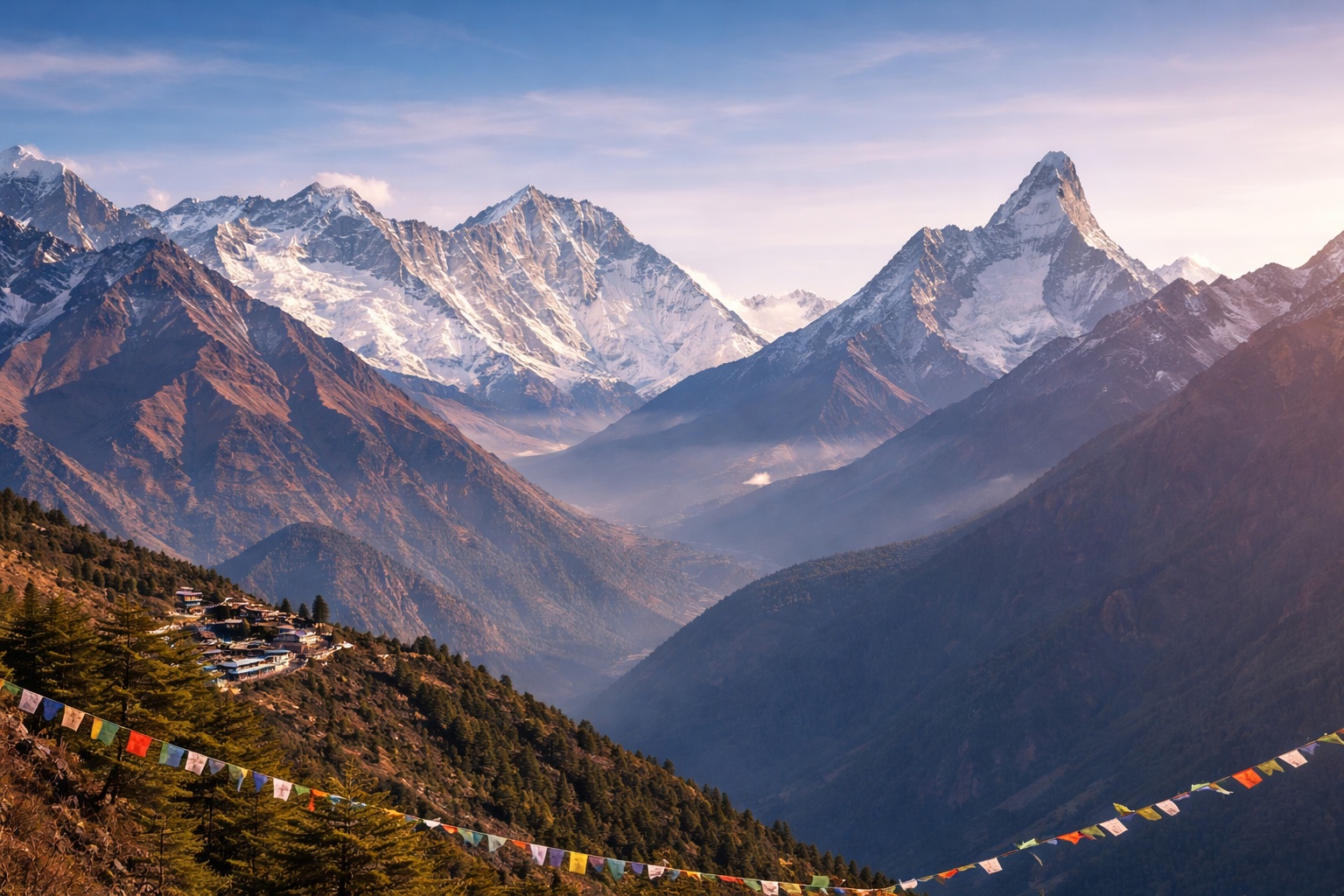
Overview of Khare
Khare (5,050 m) is the base camp settlement for Mera Peak (6,476 m) - Nepal's highest trekking peak - a small cluster of stone teahouses and expedition lodges in the upper Hinku valley of Solukhumbu District. At 5,050 m, Khare itself sits higher than Kala Patthar (5,545 m) is above EBC - making it one of the highest permanently inhabited tea-stop settlements in Nepal. The settlement exists entirely to service Mera Peak climbers: there is no through-traffic, no local agriculture at this altitude, and no reason to visit unless Mera Peak is the objective.
The Hinku valley approach to Khare is one of Nepal's most remote major trekking routes - 5 - 6 days from Lukla through wilderness terrain with few villages, dense rhododendron forests at lower altitude, and increasingly desolate high-altitude moraine above 4,000 m. This remoteness is part of Mera Peak's appeal: unlike the EBC or Annapurna circuits, the Hinku valley sees fewer than 2,000 trekkers per year despite containing Nepal's highest permitted trekking peak.
Gateway to Mera Peak
Mera Peak (6,476 m) is classified as a "trekking peak" by the Nepal Mountaineering Association - a designation that means it is climbed via non-technical snow and glacier routes and does not require full expedition logistics, though a licensed climbing guide is mandatory. At 6,476 m, Mera Peak is 487 m higher than Kilimanjaro and requires crampons, ice axe, rope, and glacier travel skills. The summit provides one of Nepal's finest high-altitude panoramas - five of the world's 14 eight-thousanders (Everest, Lhotse, Cho Oyu, Makalu, Kangchenjunga) simultaneously visible on a clear day.
Khare is the final night before the High Camp push and the summit assault. The standard schedule from Khare is: Khare rest day for acclimatisation → High Camp (5,780 m, 4 - 5 hours) → summit day (6,476 m, 4 - 5 hours from high camp) → return to Khare same day. The summit success rate on Mera Peak is high for well-acclimatised trekkers with basic mountaineering skills: approximately 70 - 80% of parties reaching Khare in good weather go on to summit.
Route to Khare from Lukla
The standard approach to Khare from Lukla takes 5 - 6 days:
- Day 1 - Lukla (2,860 m) → Chutanga (3,000 m): 4 - 5 hours via the Zatrwa La pass approach; exits the Khumbu trail system immediately south of Lukla
- Day 2 - Chutanga → Kothe (3,580 m): Cross the Zatrwa La (4,600 m) - a significant pass that acts as the first acclimatisation test; 6 - 7 hours total
- Day 3 - Kothe → Thangnak (4,358 m): Up the Hinku valley through increasingly sparse vegetation; 5 - 6 hours
- Day 4 - Thangnak (rest/acclimatisation): Essential acclimatisation day; hike to Dig Kharka (4,770 m) for altitude adjustment
- Day 5 - Thangnak → Khare (5,050 m): 4 - 5 hours on moraine and rocky trail above the Hinku Glacier
Alternative approach: via Salleri or Phaplu in the Solu region (adding 2 - 3 days), or a direct helicopter transfer to Khare (USD 350 - 500 per person from Lukla) - used by commercial expeditions wanting to maximise summit weather windows.
Acclimatisation Schedule at Khare
Most commercial Mera Peak expeditions schedule 1 - 2 rest days at Khare (5,050 m) before the High Camp push. The standard protocol:
- Day 1 at Khare: Rest; hydration; short walk up the moraine above camp (to 5,200 - 5,300 m) and return - "climb high, sleep low" principle within the Khare altitude band
- Day 2 at Khare (if second acclimatisation night): High Camp carry or training day - some guides take clients to 5,500 m and back for glacier practice and crampon familiarisation
- Acclimatisation assessment: Guides check for AMS symptoms (headache, nausea, sleep disturbance) before authorising High Camp departure. Climbers showing significant AMS at Khare are typically descend to Thangnak rather than continuing upward.
Facilities at Khare: 3 - 5 stone teahouses with basic twin rooms (NPR 600 - 1,000/night), communal dining, limited charging (solar), no hot showers. Food quality is adequate but limited - hot noodles, dhal bhat, rice, and packaged goods. Stock up on snacks before Thangnak; Khare shops are minimal.
High Camp and Summit Day
From Khare (5,050 m), the Mera Peak High Camp (5,780 m) is a 4 - 5 hour climb up the Mera Glacier - a straightforward but crevassed glacier requiring rope teams and crampon skills. The High Camp is a collection of tents on a snow platform; no permanent teahouse. The summit day from High Camp (3 - 4 hours one way) follows the glacier to the summit plateau at 6,476 m - a broad snow dome rather than a technical peak. Return to Khare on summit day is possible, making it an 8 - 10 hour summit day.
NMA permit fee: USD 250 per person (Oct - Nov season). A licensed high-altitude guide is mandatory under NMA permit regulations - independent ascents are not permitted.
Practical Information
- Altitude: 5,050 m (16,568 ft)
- Coordinates: 27.7833°N, 86.9000°E
- District: Solukhumbu, Koshi Province
- Mera Peak NMA permit: USD 250/person (spring and autumn seasons)
- Licensed guide: Mandatory for summit
- Days from Lukla: 5 - 6 days one way
- Best season: October - November (most stable); May (spring)
- Temperature at Khare (October): -5°C to 5°C day; -15°C to -20°C night
- Equipment required: Crampons, ice axe, harness, warm layers rated to -25°C
Recent Posts