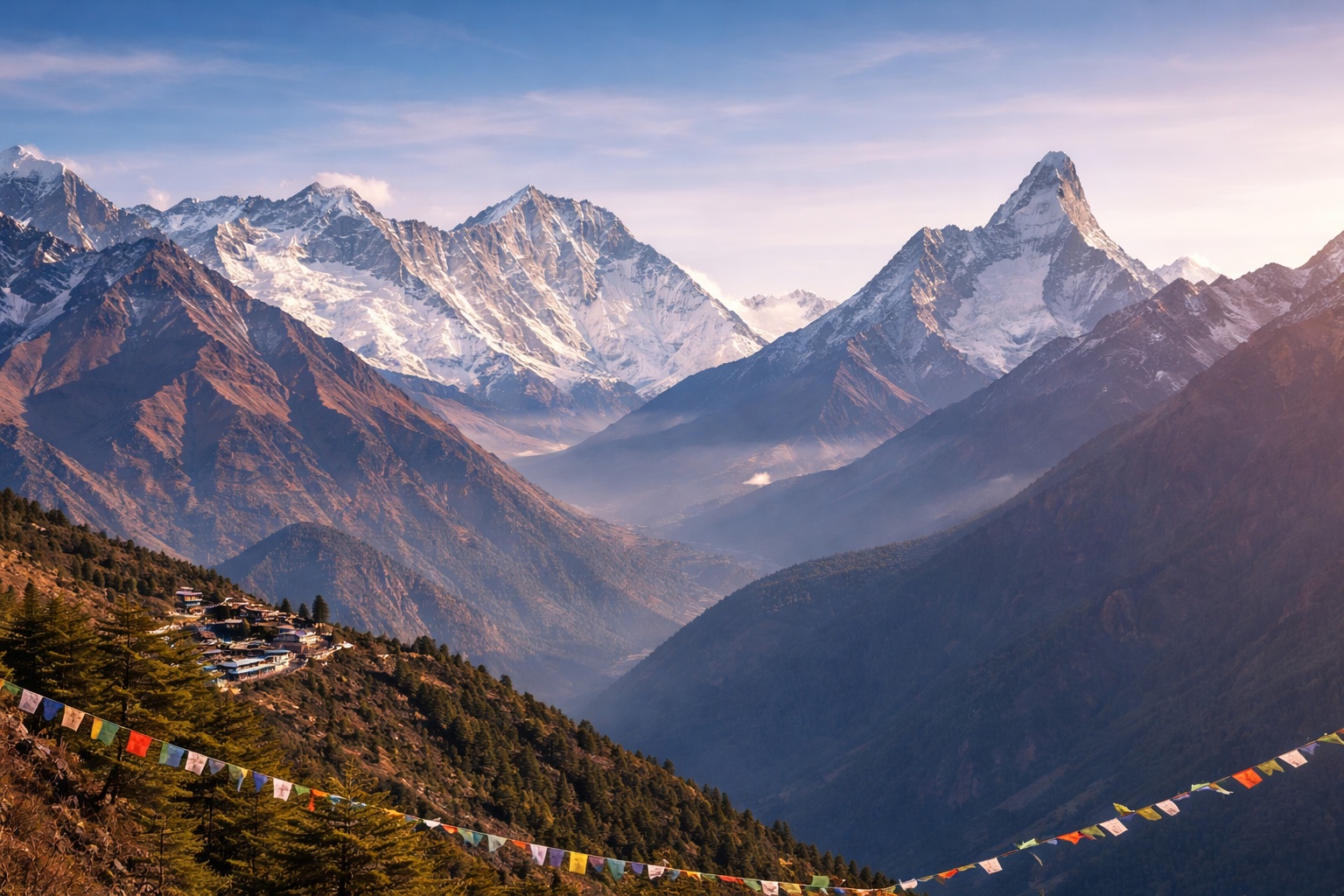
Why Island Peak?
Island Peak (official name: Imja Tse, 6,189 m) is the most climbed peak in Nepal - approximately 2,000 - 2,500 trekking mountaineers attempt it each year, making it the benchmark "trekking peak" against which all others are measured. The name comes from the appearance of the peak from Dingboche village (4,410 m), where Imja Tse's summit snowfield is framed between surrounding ridges and appears to float like an island above the Chhukung valley.
The mountain deserves its reputation. It provides a genuine 6,000 m mountaineering experience - glacier travel, crampon use, fixed rope ascents - accessible to fit and properly prepared non-technical mountaineers who are willing to invest in the training and guiding necessary to do it safely. The summit view encompasses Everest (8,849 m), Lhotse (8,516 m), Makalu (8,485 m), Baruntse (7,129 m), Ama Dablam (6,812 m), and the full breadth of the Khumbu from a position that makes the participant feel they have genuinely entered the ranks of the world's high mountaineers.
The Climbing Route
The standard approach to Island Peak combines the EBC trekking route to Dingboche (4,410 m) with a deviation east through the Chhukung valley to Island Peak Base Camp (5,100 m). The full itinerary from Kathmandu requires approximately 18 - 21 days including acclimatisation.
Approach to Base Camp
From Dingboche, the route to Chhukung (4,730 m) takes 2 hours through the stunning upper Imja Khola valley beneath the south face of Lhotse. Island Peak Base Camp (5,100 m) is 3 - 4 hours above Chhukung on the lower moraine of the Imja Glacier. Many climbers acclimatise with a day hike to Chhukung Ri (5,550 m) before proceeding to Base Camp - the views from Chhukung Ri are spectacular and the altitude prepares the body for the summit push.
High Camp to Summit
High Camp (5,600 m) is approximately 2 - 3 hours above Base Camp on the lower glacier. The final summit day begins at 02:00 - 03:00 from High Camp - headlamps on, crampons fitted, harness on, roped to guide. The route ascends a snow ramp (40 - 50° gradient), traverses the summit snowfield, and tackles a final headwall of approximately 60 - 70° where fixed ropes are in place throughout the season. Summit elevation gain from High Camp: 590 m. Summit time from High Camp: 3 - 5 hours depending on conditions and party fitness.
Summit Day: Hour by Hour
| Time | Stage | Notes |
|---|---|---|
| 02:00 | Wake at High Camp (5,600 m) | Hot tea, light breakfast, final gear check |
| 03:00 | Depart High Camp | Crampons on; roped; headlamps essential |
| 04:30 - 05:30 | Snow ramp ascent (40 - 50°) | Fixed ropes; physically the hardest section |
| 05:30 - 06:30 | Summit ridge traverse | Narrow crest; exposure both sides; spectacular dawn begins |
| 06:30 - 07:30 | Final headwall (60 - 70°) | Fixed ropes required; technical crux; most climbers find this slow |
| 07:00 - 08:30 | Summit (6,189 m) | Four 8,000+ m peaks visible; photograph; 15 - 30 minutes |
| 08:30 - 12:00 | Descent to Base Camp | Rappel headwall; careful on snow ramp; all technical sections reversed |
Technical Difficulty and Requirements
Island Peak is classified as a trekking peak (NMA nomenclature) rather than a technical mountain, but this classification understates what it requires. The summit day involves:
- Glacier travel with crampon use (moderate knowledge required)
- Fixed rope ascent with Jumar (mechanical ascender) on the 40 - 50° snow ramp
- Fixed rope rappel descent on the headwall
- Sustained exposure at altitude (5,600 - 6,189 m) for 8 - 10 hours
First-time mountaineers without prior crampon and glacier experience can climb Island Peak safely with comprehensive guide support and prior technical training. However, attempting it without any prior high-altitude glacier experience is not advisable - the consequences of a misstep on the headwall at 6,000 m are severe. Most reputable guiding operations require or strongly recommend a pre-climb training day at Island Peak Base Camp to practice crampon use, rope management, and Jumar technique.
Summit success rate varies significantly: fit, well-acclimatised trekkers with good guide support have 70 - 80% summit success rates. Poorly acclimatised, undertrained, or weather-unlucky parties have much lower rates. The most common reason for failure is insufficient acclimatisation - attempting Island Peak after insufficient days in the Khumbu.
Training and Preparation
Fitness Training (3 - 6 Months Before)
- Cardiovascular base: 4 - 5 days/week of sustained aerobic exercise. Running, cycling, or swimming. Build to 60 - 90 minutes per session.
- Hill training: Weighted hikes with a 15 - 20 kg pack. Stair climbing with a loaded pack. The goal is specificity to what summit day demands.
- Strength training: Leg strength (squats, lunges, step-ups) and core stability. Upper body strength for fixed rope ascents.
- Altitude simulation: If possible, any prior altitude experience above 4,000 m. A Kilimanjaro, Colorado 14er, or European Alps 4,000 m peak before Island Peak provides relevant acclimatisation context.
Technical Skills
If you have no prior experience with crampons, ice axe, or rope systems, a one-day indoor or outdoor climbing course before your Nepal trip is strongly recommended. Basic crampon walking technique on an angled surface, Jumar use on a fixed rope, and rappelling fundamentals can all be learned in a day. Your Island Peak guide will provide specific technical instruction at Base Camp but arriving with zero prior experience means that Base Camp training day is under more pressure.
Technical Climbing Gear for Island Peak
- Mountaineering boots: Plastic double boots or stiff synthetic single boots rated to -30°C. Rental available in Kathmandu and Namche (USD 5 - 10/day).
- Crampons: 12-point technical crampons compatible with your boots. Rental available (USD 3 - 5/day).
- Harness: Climbing harness for glacier and fixed rope use. Rental available.
- Ascender (Jumar): Mechanical rope ascender for fixed rope sections. Rental available.
- Ice axe: Standard mountaineering ice axe for the snow ramp sections. Rental available.
- Helmet: Mandatory for all Island Peak climbing. Rental available.
- Headlamp: Summit day begins at 03:00; headlamp is non-negotiable. Bring spare batteries.
- Down suit or heavy down jacket + insulated trousers: Temperature at 6,000 m at 03:00 - 06:00 ranges from -15°C to -25°C with wind chill.
- Gaiters: Waterproof gaiters over mountaineering boots for glacier travel.
Permits and Costs
- Island Peak climbing permit (NMA): USD 250 per person (spring: March - May); USD 125 per person (autumn: September - November); USD 70 (winter: December - February)
- Sagarmatha National Park permit: NPR 3,000 per person
- TIMS card: USD 10 through agency
- Guide (mandatory for summit): USD 35 - 50/day; approximately USD 500 - 700 for the climbing section
- Porter and logistics: USD 200 - 300 additional
- Total estimated cost (excluding EBC approach trek): USD 1,500 - 2,500 per person for the Island Peak component
Best Season for Island Peak
- Spring (March - May): The technical climbing season. Better summit conditions (less ice, more manageable temperatures). Everest expedition season adds energy to the Khumbu. March and April are optimal; May is hot lower down.
- Autumn (October - November): The post-monsoon clarity season. October is the busiest period. Good summit conditions; the trail is at its most crowded. November is quieter with colder temperatures at high camp.
- Winter (December - February): Cold, fewer climbers, lower permit fees. Summit conditions are challenging (cold, possible heavy snow). For experienced mountaineers only.
Combining Island Peak with the EBC Trek
Island Peak and Everest Base Camp are natural expedition partners - both access the upper Khumbu via the same approach route through Namche and Dingboche. The standard combined itinerary: Kathmandu → Lukla → Namche → Tengboche → Dingboche (acclimatisation) → Lobuche → EBC → Kala Patthar → descent to Dingboche → Chhukung → Island Peak Base Camp → Island Peak summit → Chhukung → Namche → Lukla → Kathmandu. Total duration: 21 - 24 days. This is Nepal's premium trekking + climbing experience and is achievable for well-prepared, motivated non-technical mountaineers.
Recent Posts