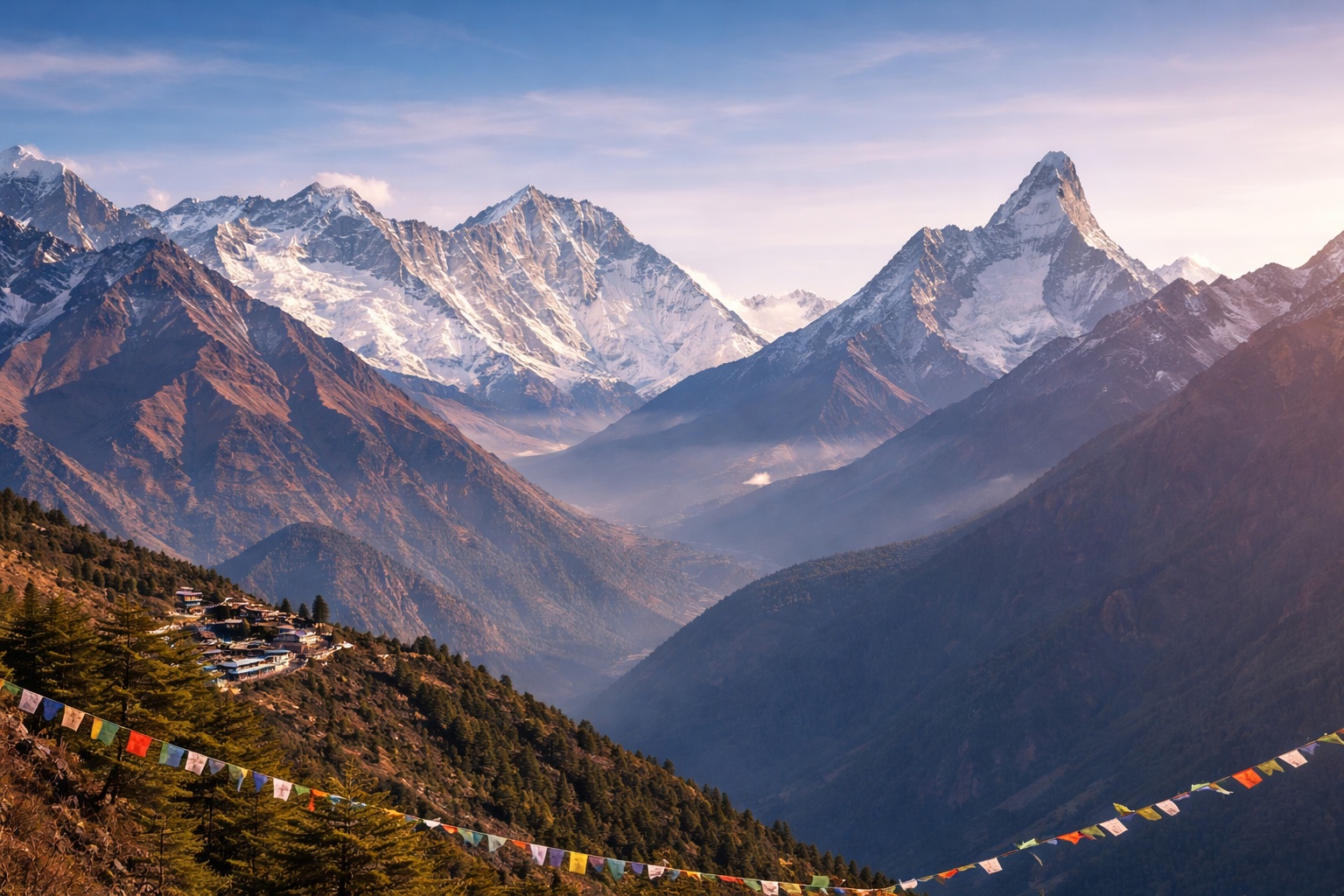
Seasonal Overview
There is no universally "wrong" time to trek Everest Base Camp - people complete it successfully in every month of the year. But there is a very clear difference between trekking in optimal conditions and trekking in challenging ones. The Khumbu Valley at 5,364 m does not forgive poor timing the way a lower-altitude trail might: bad weather at high altitude means more than wet boots and a grey view. It means avalanche risk on the high passes, impassable trails, and the kind of cold that drains even experienced trekkers.
Two seasons dominate the EBC calendar: autumn (October - November) and spring (March - May). Both are excellent, but they offer distinctly different experiences. Understanding which suits your schedule, budget, and tolerance for crowds is the most important pre-trip decision you'll make.
Autumn Season: October and November
October and November are the most popular months for the Everest Base Camp trek, and for good reason. The monsoon clears Kathmandu and the Khumbu typically by late September, leaving the air washed clean and the sky a shade of blue that photographers spend careers chasing. The views of Everest (8,848 m), Lhotse (8,516 m), and Ama Dablam (6,812 m) are at their sharpest and most photogenic. The trail conditions are dry, the suspension bridges are clear of ice, and the temperatures at Base Camp are cold but manageable.
October: The Peak Month
October is the single best month for EBC in terms of the combination of clear skies, stable weather, and bearable temperatures. Expect daytime highs of 8 - 12°C at Namche Bazaar (3,440 m) and -5 to 0°C at Base Camp (5,364 m). Night temperatures at Gorak Shep (5,140 m) drop to -15°C in the second half of October, so a proper -20°C sleeping bag is essential. The Khumbu icefall above Base Camp can be seen in detail from the camp itself on clear October mornings.
The downside: October is peak season. The trails from Lukla to Namche see hundreds of trekkers daily. Teahouses fill up and advance booking (2 - 3 months out) is strongly recommended. Lukla flights sell out weeks in advance.
November: Quieter and Colder
November drops the temperature significantly while reducing the crowds. Trekkers who prefer a quieter trail than October generally find November rewarding: the first week is still warm enough for comfortable camping, the second week starts to see significant cold, and the third week onward can be genuinely frigid at altitude (-20°C or colder at Base Camp on November nights). The views remain excellent through mid-November; late November can see early winter snow on the high passes. November is a good choice for experienced cold-weather trekkers who value solitude over comfort.
Spring Season: March to May
Spring is the second major EBC season and the preferred window for mountaineers attempting Everest - the same weather patterns that make the summit pushes possible in May create good trekking conditions from March through mid-May. Spring brings warmer lower-altitude temperatures, dramatic cloud formations building from the south, and the extraordinary spectacle of rhododendron forests at full bloom between 2,500 and 3,500 m on the approach from Lukla.
March and April: The Sweet Spot
March and April are the spring equivalents of October - excellent visibility, manageable temperatures (daytime 5 - 10°C at Namche, -5 to 5°C at Base Camp in the afternoon), and a different visual character from autumn. The rhododendron bloom on the lower Khumbu approach is spectacular. The energy of the summit season (dozens of expedition teams are visible at Base Camp in April and May) adds a charged atmosphere that autumn trekkers don't experience. Expect similar crowd levels to October.
May: Summit Season Drama
May is the month when the main Everest summits happen (the jet stream lifts off the summit pyramid for brief windows, typically around the 15th - 25th). If you time your Base Camp visit for mid-May, you may witness or hear about live summit pushes on the mountain above you. The upper mountain above Base Camp will have more traffic than any other month. Weather is more variable than April - afternoon cloud and occasional snow above 4,500 m. Complete the trek before late May when the monsoon arrives.
Winter Trekking: December to February
Winter trekking to Everest Base Camp is possible and done by experienced trekkers every year, but it is a significantly more demanding undertaking than the main seasons. December is marginal: the first two weeks are often still reasonable, but cold intensifies rapidly. January and February are the coldest months, with temperatures at Base Camp routinely hitting -25°C to -30°C at night. The trails above Namche can be icy and dangerous without microspikes or crampons. Some high-altitude teahouses close. The Khumbu icefall freezes into its most stable state, making the view from Base Camp distinctive.
The reward: near-complete solitude. Winter trekkers report having the trail virtually to themselves from Namche upward, with teahouse owners offering their full attention and significantly reduced prices. If you are a cold-weather specialist seeking the most peaceful Khumbu experience, winter is unmatched.
Monsoon Season: June to September
The monsoon (June - September) makes the EBC trek difficult but not impossible. Daily rain (and snow above 4,000 m) is the norm from June through August. Trails become muddy and leech-infested at lower altitudes. Landslides can close the Lukla road. Views of the mountains are obscured by cloud for most of the day, though early mornings sometimes clear. High-altitude sections are wet and the risk of altitude complications increases with poor visibility and unpredictable weather.
However: the Khumbu is drier than most of Nepal during the monsoon due to the rain shadow effect of the Himalayan chain. The upper Khumbu above 4,000 m receives less rain than the middle hills. Some experienced trekkers specifically choose the monsoon for the green, lush lower landscape and the complete absence of crowds. It requires full waterproof gear, flexibility, and genuine comfort with uncertainty.
Season Comparison Table
| Factor | Autumn (Oct - Nov) | Spring (Mar - May) | Winter (Dec - Feb) | Monsoon (Jun - Sep) |
|---|---|---|---|---|
| Mountain Views | ★★★★★ | ★★★★☆ | ★★★☆☆ | ★★☆☆☆ |
| Trail Conditions | ★★★★★ | ★★★★☆ | ★★★☆☆ | ★★☆☆☆ |
| Temperature | ★★★★☆ | ★★★★★ | ★★☆☆☆ | ★★★☆☆ |
| Crowds | ★★★☆☆ (busy) | ★★★☆☆ (busy) | ★★★★★ (quiet) | ★★★★★ (quiet) |
| Cost | High | High | Low | Low |
| Overall Rating | ★★★★★ | ★★★★☆ | ★★★☆☆ | ★★☆☆☆ |
Month-by-Month Breakdown
- January: Cold, quiet, challenging above 4,500 m. Not recommended for first-timers.
- February: Similar to January; some signs of warming late in the month. Losar (Tibetan New Year) festival adds cultural interest.
- March: Spring begins. Rhododendrons bloom from 2,500 m. Excellent conditions returning.
- April: Peak spring month. Warm, clear, moderately crowded. Best for photography in spring.
- May: Monsoon approaches. Summit season. Variable weather; complete trek by mid-May.
- June - September: Monsoon. Possible for experienced trekkers; not ideal for a first EBC experience.
- October: Best overall month. Peak season; book everything well in advance.
- November: Excellent first half; cold in the second half. Good for experienced trekkers.
- December: Early December is marginal; second half is cold with some teahouse closures.
Timing Tips for the Best Experience
- Book Lukla flights 6 - 8 weeks in advance for October. This is the single most commonly underestimated logistics challenge. Seats sell out completely weeks before peak dates.
- Avoid the first two weeks of October if you hate crowds. The volume of trekkers on the Namche-bound trail peaks around 8 - 18 October every year. Late October delivers near-identical weather with noticeably fewer people.
- The week before and after Dashain (major Hindu festival, October): Kathmandu is chaotic and domestic flights are packed. Plan your Lukla departure either before or after the Dashain travel rush.
- Spring trekkers: build in summit-season flexibility. Base Camp is significantly more crowded in late April and May due to expedition teams. If you want the Base Camp to yourselves, visit in March or early April.
- For Kala Patthar specifically: the sunrise view from 5,545 m is most dramatic in October when the air is clearest. The October view of Everest illuminated at dawn from Kala Patthar is the quintessential EBC image.
Whatever month you choose, the Everest Base Camp trek delivers an experience that changes most people who complete it. The timing shapes the experience - but no timing makes it ordinary.
Recent Posts