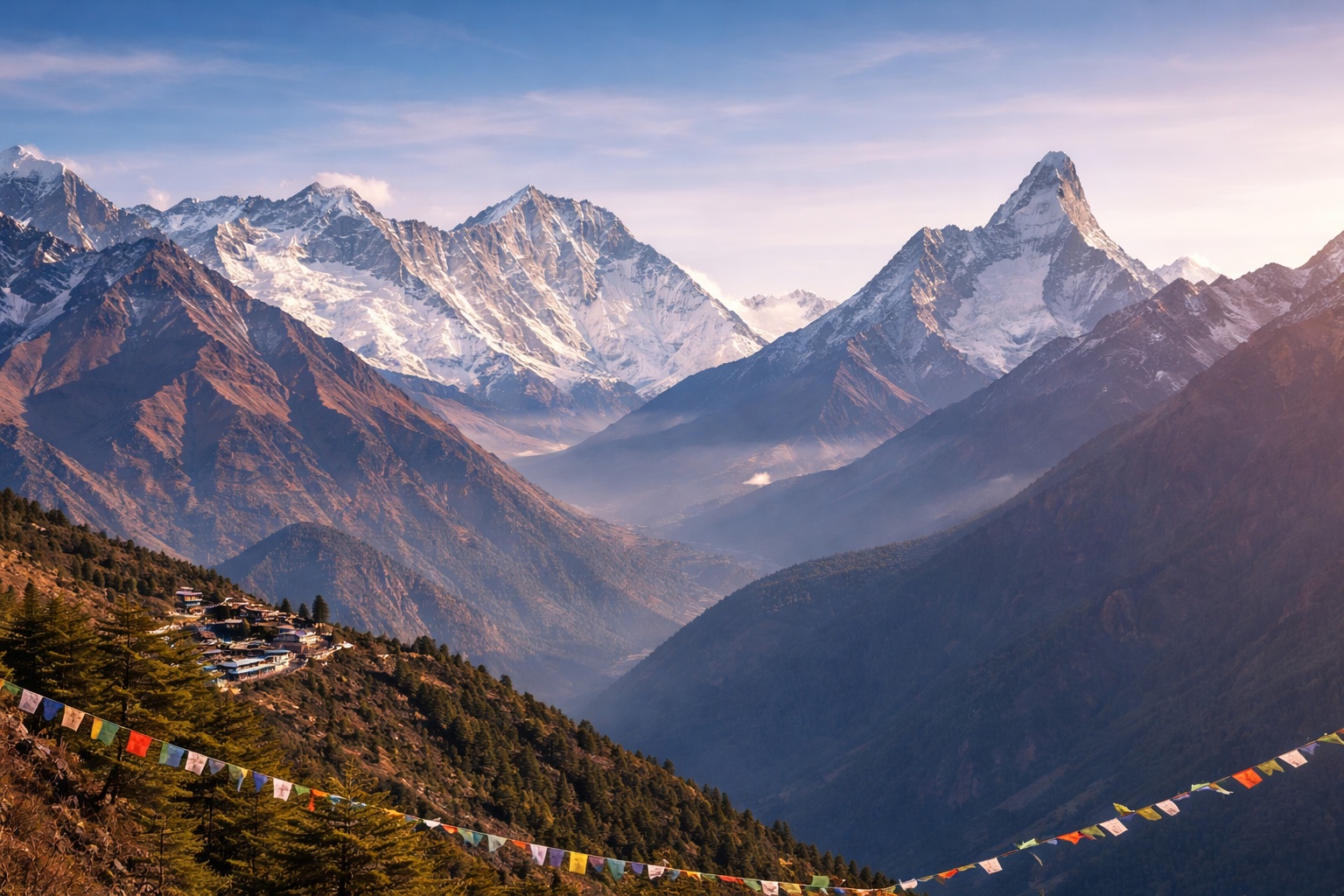
What Is Altitude Sickness?
Altitude sickness - medically termed Acute Mountain Sickness (AMS) - occurs when the body cannot adapt quickly enough to the reduced oxygen partial pressure at high altitude. At sea level, every breath delivers a standard concentration of oxygen your body is calibrated for. At 5,364 m (Everest Base Camp), that oxygen concentration is approximately 50% of what you'd breathe at sea level. Your body compensates - breathing faster, producing more red blood cells, increasing heart rate - but adaptation takes time. When you ascend faster than your body can adapt, AMS results.
AMS is not weakness. It is not poor fitness. World-class athletes have been incapacitated at altitude while out-of-shape trekkers have strolled to Base Camp comfortably. Individual susceptibility to altitude sickness has no reliable predictors - age, fitness, gender, and prior experience at altitude are all poor indicators. The only reliable prevention is controlled, gradual ascent.
AMS, HACE, and HAPE Explained
Acute Mountain Sickness (AMS) - Common, Usually Manageable
AMS is the mildest and most common form of altitude illness. Virtually every trekker who goes above 3,000 m rapidly will experience some form of it. The symptoms are unpleasant - headache, nausea, fatigue, loss of appetite, disturbed sleep - but in mild form they are not dangerous. The correct response to mild AMS is to stop ascending until symptoms resolve, then continue slowly. Do not ascend with symptoms of AMS. This is the single most important rule in altitude medicine.
High-Altitude Cerebral Edema (HACE) - Serious, Requires Descent
HACE is the severe neurological form of altitude illness, occurring when fluid accumulates in the brain. It represents a progression of unresolved AMS and is life-threatening if untreated. HACE is characterised by confusion, disorientation, loss of coordination (ataxia - the ability to walk a straight line is the standard field test), and eventually unconsciousness. HACE requires immediate descent of at least 300 - 500 m and dexamethasone injection if available. A Gamow bag (portable hyperbaric chamber) can buy time if descent is impossible. Do not wait to see if HACE improves without descent.
High-Altitude Pulmonary Edema (HAPE) - The Deadliest Form
HAPE is more common than HACE and more deadly - it is the leading cause of altitude-related death in trekkers. HAPE occurs when fluid accumulates in the lungs, reducing oxygen transfer with each breath - a vicious cycle that accelerates deterioration. Key symptoms: unusual shortness of breath even at rest, a gurgling or crackling sound when breathing, pink or frothy cough, cyanosis (blue lips or fingernails), and extreme fatigue. HAPE often develops overnight when breathing rate drops during sleep. Any trekker showing these symptoms must descend immediately regardless of time of day or weather conditions. Nifedipine (if available) and oxygen can assist while descending.
Recognising Symptoms: The Lake Louise Score
The Lake Louise AMS Score is used by high-altitude medical professionals to assess severity. Rate each on a 0 - 3 scale (0 = none, 3 = severe):
- Headache
- Gastrointestinal symptoms (nausea, vomiting, reduced appetite)
- Fatigue or weakness
- Dizziness or lightheadedness
- Difficulty sleeping
A score of 3 or more (with headache being mandatory for diagnosis) indicates AMS. A score of 5 or more indicates severe AMS requiring serious consideration of descent. Any symptoms of HACE or HAPE - regardless of overall score - require immediate descent and medical attention.
Prevention Strategies
The Golden Rule: Climb High, Sleep Low
The most effective altitude acclimatisation principle is simple: you can go higher during the day, but always sleep at an altitude no more than 300 - 500 m higher than the previous night. Day hikes to higher elevations from a lower camp accelerate adaptation without the risk of sleeping at altitude before you're ready. This is why the EBC itinerary includes a rest day at Namche Bazaar (3,440 m) with a day hike to 3,880 m.
Ascent Rate
The standard guideline above 3,000 m is to gain no more than 300 - 500 m of sleeping altitude per day. For reference:
- From Namche (3,440 m) to Dingboche (4,410 m) in a well-designed EBC itinerary takes 3 days including an acclimatisation hike - a net gain of 970 m over 3 days, averaging 323 m per day.
- Direct ascent from Namche to Gorak Shep (5,140 m) in 2 days is a recipe for serious AMS for most trekkers.
Hydration
Drink 3 - 4 litres of water per day above 3,000 m regardless of thirst. Dehydration worsens AMS significantly and is easily preventable. Avoid alcohol, which suppresses breathing and worsens altitude adaptation, especially in the first 3 nights at a new altitude. Caffeine (tea, coffee) is not proven harmful at altitude and is fine in moderation.
Listen to Your Body
Do not push through significant symptoms to "stick to the schedule." No summit, no view, no personal target is worth the risk of HACE or HAPE. The mountains are permanent; this trek can be rescheduled. The most dangerous behaviour at altitude is denial - convincing yourself or your companions that serious symptoms will "clear up" with rest at the same altitude. AMS does not reliably self-resolve at the altitude where it developed; it needs you to descend.
Diamox (Acetazolamide): How and When to Use It
Diamox (acetazolamide) is a carbonic anhydrase inhibitor that accelerates acclimatisation by stimulating the kidneys to excrete bicarbonate, making the blood slightly more acidic, which in turn stimulates breathing. It is the only medication with robust evidence for AMS prevention and treatment.
Standard Prophylactic Dosage
125 mg twice daily (morning and evening), beginning 1 - 2 days before ascending to 3,000 m and continuing until the highest altitude has been reached and adaptation confirmed. Some protocols use 250 mg twice daily; consult your doctor for the appropriate dose given your medical history.
Side Effects
Diamox causes increased urination (drink more water to compensate), a tingling sensation in the hands, feet, and face (harmless and normal), and makes carbonated drinks taste flat. Diamox is a sulfonamide drug - people with sulfa drug allergy should not take it. Consult your doctor.
Is Diamox Mandatory?
No - many trekkers complete EBC and higher without Diamox, relying on proper acclimatisation schedules. Diamox is most valuable for trekkers on tight schedules who cannot take the time for full acclimatisation, for those with a history of AMS, and for high-altitude peaks above 5,500 m where acclimatisation time is compressed. Having it in your kit regardless of whether you use it is sensible - it can be started mid-trek if symptoms develop.
Acclimatisation Schedules by Trek
| Trek | Max Altitude | Key Acclimatisation Days |
|---|---|---|
| Everest Base Camp (16 days) | 5,545 m | Namche Day 3; Dingboche Day 6 |
| Annapurna Circuit | 5,416 m | Manang Day 6; Thorong Phedi Day 9 |
| Manaslu Circuit | 5,106 m | Sama Gaon Day 7 - 8 |
| Upper Dolpo | 5,017 m | Dunai Day 1 - 2; Phoksundo Lake Day 6 - 7 |
| Gosaikunda Trek | 4,381 m | Sing Gompa Day 3 |
Emergency Treatment in the Field
- Stop ascending immediately - do not go higher until all symptoms resolve
- Descend 300 - 500 m at the first sign of HACE or HAPE symptoms - even at night, even in poor weather
- Oxygen - if available at teahouses (many carry cylinders above Namche); 2 - 4 litres/minute relieves symptoms temporarily but is not a substitute for descent
- Gamow bag - inflatable hyperbaric chamber pressurises to simulate lower altitude; buys 1 - 2 hours for evacuation preparation; carried by some guided expeditions
- Dexamethasone 8 mg loading dose - for HACE; then 4 mg every 6 hours during descent
- Nifedipine 30 mg slow-release - for HAPE; reduces pulmonary arterial pressure
- Call for helicopter evacuation - if symptoms are severe and immediate descent is not possible
Helicopter Evacuation in Nepal
Helicopter evacuation from the high Khumbu is well-organised and relatively fast in clear weather - from Gorak Shep (5,140 m) to Kathmandu hospitals typically takes under 45 minutes once the helicopter is airborne. The challenge is that helicopters cannot fly in cloud, high wind, or heavy snowfall. A medical emergency in bad weather at Base Camp can mean a 12 - 24+ hour wait for evacuation.
Evacuation costs are substantial - USD 3,000 - 8,000 is typical. Comprehensive travel insurance with helicopter rescue and medical evacuation cover is non-negotiable for any trek above 4,000 m. Ensure your policy explicitly states the altitude coverage (some budget policies exclude above 4,000 m or 5,000 m). Keep your insurance policy document and emergency phone number in your daypack, not your porter's duffel.
Common Altitude Myths Debunked
- Myth: "Fit people don't get altitude sickness." False. Fitness has no protective effect on AMS susceptibility. Elite athletes suffer AMS at the same rates as untrained individuals. The adaptation required is physiological, not cardiovascular.
- Myth: "If I've been to 4,000 m before without problems, I'll be fine this time." Partly true - past performance at altitude is the best predictor we have, but it is not a guarantee. Susceptibility can change between trips for reasons that are not yet fully understood.
- Myth: "Alcohol in moderation is fine at altitude." False above 3,500 m. Alcohol suppresses the breathing increase that is your body's primary altitude adaptation mechanism. Even moderate alcohol consumption at high altitude significantly worsens night-time oxygen saturation.
- Myth: "Taking Diamox is cheating." There is no ethical framework in which preventing a medical condition constitutes cheating. Altitude sickness is a physiological process, not a test of character. Use the tools available.
Recent Posts