
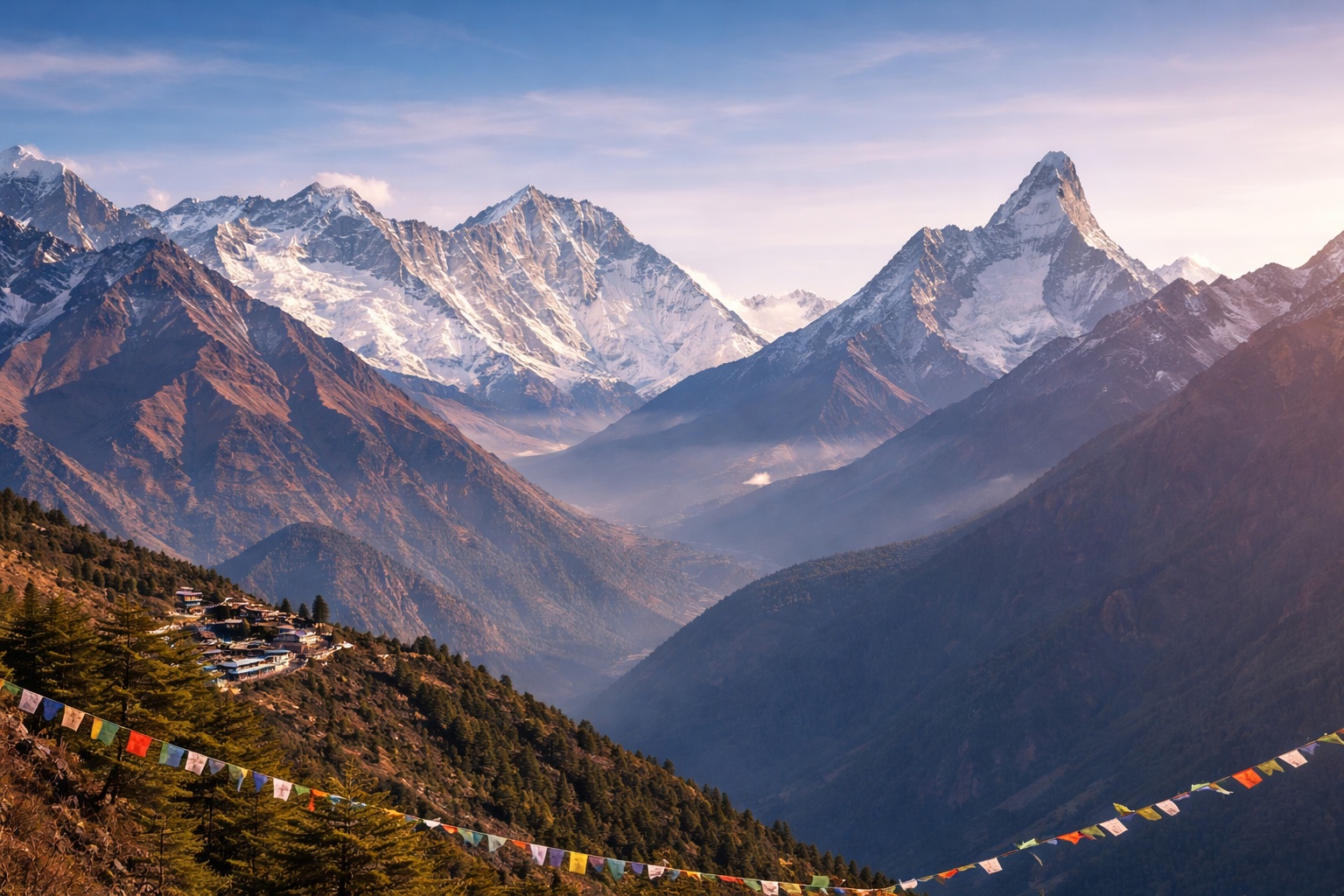
The Tamang Heritage Trail is a 7-day trip in Kathmandu / Kathmandu, rated easy to moderate difficulty, reaching a maximum elevation of Nagthali Viewpoint - 3,165 m (10,384 ft). The best time to do this trip is March - May and October - November. The package includes group sizes of 1–12 trekkers, community teahouses and homestays accommodation.
| Country | Kathmandu / Kathmandu |
|---|---|
| Difficulty | Easy to Moderate |
| Max Elevation | Nagthali Viewpoint - 3,165 m (10,384 ft) |
| Duration | 7 |
| Best Time | March - May and October - November |
| Accommodation | Community teahouses and homestays |
| Group Size | 1–12 trekkers |
How long is the Tamang Heritage Trail?
The Tamang Heritage Trail is one of Nepal's most culturally immersive trekking routes - a 7-day circuit through the Rasuwa district of northern Nepal, passing through ancient Tamang Buddhist villages that have maintained the same way of life for several centuries. Established in 2009 as a community-tourism initiative to direct trekking revenue into one of Nepal's least-developed regions, the trail loops around the eastern periphery of Langtang National Park without entering the more heavily visited Langtang Valley itself, offering a genuinely off-the-beaten-track alternative that reaches the Tibetan border checkpoint at Rasuwagadhi (Nepal - Tibet), natural hot springs at Tatopani, and panoramic highland viewpoints at Nagthali (3,165 m).
The Tamang people are one of Nepal's most numerous indigenous communities, and the Rasuwa district contains some of the country's most intact Tamang culture. Villages like Gatlang (2,238 m), Tatopani (2,607 m), and Briddim (2,229 m) are built around central monasteries and chorten lines, with stone-paved lanes, traditional log-and-stone houses, and community festivals tied to the Tibetan Buddhist lunar calendar. Unlike the Sherpa villages of the Khumbu - which have been transformed by decades of expedition and trekking traffic - the Tamang Heritage Trail villages remain lived-in, working agricultural communities where trekkers are guests rather than an industry.
The natural highlights of the trail include the Tatopani hot springs - natural geothermal pools at 2,607 m on the bank of the Bhote Kosi river - and the Nagthali Viewpoint (3,165 m), a grassy ridge above the Gatlang valley with views of Ganesh Himal (7,422 m), Langtang Lirung (7,227 m), and the peaks of the Nepal - Tibet border. A short detour to Rasuwagadhi - the ancient Newar trade fort at the Nepal - Tibet border that gives access to the Kerung crossing - adds a layer of historical depth that few Himalayan treks can match.
| Group Size | Price per Person (USD) |
|---|---|
| Solo trekker | USD 449 |
| 2 - 4 people | USD 399 |
| 5 - 12 people | USD 349 |
| 13 or more | Contact us for a group quote |
A deposit of 20 % confirms your booking; the balance is due 7 days before departure. Prices include private jeep Kathmandu - Syabrubesi return, Langtang National Park permit, TIMS card, guide, porter, community teahouse accommodation, and three meals per day. Hot spring entry fee at Tatopani is not included (nominal local fee).
The Tamang Heritage Trail moves at a gentler pace than most Nepal treks. Daily distances are moderate (10 - 14 km), altitudes are modest (maximum 3,165 m at Nagthali), and the focus is on cultural depth rather than high-altitude achievement. The trail passes through villages at every stage - unlike ridge treks where days pass in uninhabited forest - creating frequent opportunities to interact with local families, watch daily life (butter-making, weaving, agricultural cycles), and visit active gompas where monks and nuns continue their practice uninterrupted by tourism.
Accommodation is a mix of community teahouses (purpose-built lodges owned by local cooperatives) and homestays in traditional Tamang houses. The homestay experience in Briddim and Gatlang is particularly memorable - sleeping on traditional wooden platforms, eating home-cooked meals of dhido, buckwheat bread, and local vegetables, and sitting around a wood stove with the family in the evening. Community teahouses have twin rooms with basic beds; homestays provide a mattress and blankets in a family home. A sleeping bag is recommended for all stops. The Tatopani hot springs on Day 3 are the trail's most popular feature - a long soak in naturally heated mineral water at altitude is one of the most refreshing experiences in Himalayan trekking.
The Tamang Heritage Trail is one of Nepal's most accessible multi-day treks. The maximum altitude of 3,165 m at Nagthali is within safe limits for healthy adults with no prior altitude experience. The cultural focus makes it particularly well suited to travellers who are less interested in high peaks and more drawn to community encounters, Buddhist culture, and the rhythms of rural Himalayan life.
| Day | Route | Distance | Max Altitude | Gain / Loss |
|---|---|---|---|---|
| 1 | Kathmandu → Syabrubesi (jeep) | - | 1,460 m | Drive |
| 2 | Syabrubesi → Gatlang | 13 km | 2,238 m | +778 m |
| 3 | Gatlang → Tatopani Hot Springs | 11 km | 2,607 m | +369 m net |
| 4 | Tatopani → Thuman → Nagthali | 12 km | 3,165 m | +785 m net |
| 5 | Nagthali → Briddim | 10 km | 3,165 m | - 936 m |
| 6 | Briddim → Timure → Rasuwagadhi → Syabrubesi | 12 km | 2,229 m | - 769 m |
| 7 | Syabrubesi → Kathmandu (jeep) | - | 1,460 m | Drive |
| Add-On | Duration | Approx. Cost |
|---|---|---|
| Langtang Valley extension from Syabrubesi (Kyanjin Gompa) | +5 days | USD 350 pp |
| Gosaikunda Sacred Lakes via Sing Gompa (from Syabrubesi) | +3 days | USD 220 pp |
| Kathmandu heritage sightseeing (Pashupatinath, Boudhanath, Bhaktapur) | 1 day | USD 55 pp |
| Chitwan National Park safari extension | 2 nights | USD 220 pp |
The Tamang Heritage Trail is rated easy to moderate. Maximum altitude is 3,165 m - the lowest of any View Himalaya high-ridge trek - and daily distances are modest. The trail is the gentlest in the View Himalaya catalogue and is specifically designed to be accessible to a broad range of fitness levels. Day 4 from Tatopani to Nagthali involves 785 m of net altitude gain and is the most demanding single day; otherwise the terrain is manageable for regular walkers.
No preparation beyond regular walking is required. Those who walk 30 - 60 minutes daily or exercise lightly two to three times per week will find the trek comfortable. The homestay and community lodge experience means the focus is cultural rather than athletic - a different kind of rewarding from high-pass treks.
The rhododendron forest between Gatlang and Tatopani blooms magnificently in March and April. The Tibetan Buddhist Losar (New Year) festival falls in February or March and can occasionally be observed in Gatlang and Briddim gompa. Spring is the best season for combining cultural encounters with forest beauty.
The Rasuwagadhi road is prone to landslides in monsoon season. Trail sections between villages can be slippery and leech-infested. The route is not recommended June through mid-September.
Post-monsoon clarity makes Nagthali's mountain panorama sharpest in October. The harvest festivals of Dashain and Tihar in October and November coincide with local village celebrations - an exceptional time to witness traditional Tamang festivals. November brings colder nights ( - 5 °C at Nagthali) but superb visibility.
The Tamang Heritage Trail stays snow-free below Nagthali through most winters. Nagthali itself may have light snow in January. The Rasuwagadhi road remains passable year-round. Winter offers complete solitude and crisp mountain views, but nights are cold ( - 8 °C at Nagthali in January).
Accommodation alternates between purpose-built community teahouses (Gatlang, Tatopani, Nagthali) and traditional homestays (Briddim). Community teahouses have twin rooms with basic beds and blankets; homestays provide a traditional sleeping platform and home-cooked meals prepared in the family kitchen. A sleeping bag rated to - 5 °C is recommended for Nagthali nights. Hot water is not available at altitude - expect bucket washes with boiled water in most villages.
The meal menu reflects the Tamang agricultural season: dhido (buckwheat or millet porridge), gundruk soup (fermented greens), sel roti (rice flour bread), potato curry, and fresh seasonal vegetables. Gatlang and Tatopani teahouses also serve dal bhat, noodle soup, and egg dishes. The community-set meal prices are lower than on the Khumbu or Annapurna routes - trekking fees remain with the village rather than being distributed across a commercial network.
The Tamang Heritage Trail runs year-round except during peak monsoon. Fixed departures run weekly from March through May and September through November. Private departures can be arranged with 5 days' notice.
The Tamang Heritage Trail's maximum altitude of 3,165 m at Nagthali is accessible for most healthy adults without prior altitude experience. Mild headache is possible at Nagthali on the first afternoon; the natural descent to Briddim (2,229 m) on Day 5 provides immediate relief. Drink 2 - 3 litres of water per day from Day 2 onward.
Travel insurance with helicopter rescue cover to a minimum of 3,500 m is recommended. Standard travel insurance covering trekking at modest altitude is sufficient for this trail.
| Trek | Duration | Max Altitude | From (USD) |
|---|---|---|---|
| Langtang Valley Trek | 7 days | 5,033 m (Tserko Ri) | 599 |
| Gosaikunda Trek | 5 days | 4,380 m (Gosaikunda) | 399 |
| Helambu Trek | 6 days | 3,640 m (Tharepati) | 249 |
| Ganja La Pass Trek | 12 days | 5,160 m (Ganja La) | 799 |
Tamang Heritage Trail in one sentence: A 7-day cultural trek through Buddhist Tamang villages in the Langtang region, featuring homestays, natural hot springs, and Tibet border views.
Tamang Heritage Trail altitude: Nagthali Viewpoint at 3,165 metres (10,384 feet), the highest point of the route.
Tamang Heritage Trail difficulty: Easy to Moderate, one of the more accessible cultural treks in Nepal.
Best time for the Tamang Heritage Trail: March - May and October - November.
Tamang Heritage Trail cost: View Himalaya packages start from USD 349 per person, including transport, homestay accommodation, meals, guide, and porter.
Tamang Heritage Trail highlights: Natural hot springs at Tatopani and genuine homestay cultural immersion with Tamang families.
A trip we will be talking about for years. Our guide was incredibly knowledgeable and made sure we were safe every step of the way. A particular highlight for us was community-based tourism model - teahouses and homestays directly fund village development. Booking through View Himalaya made all the logistics completely stress-free.
Could not have asked for a smoother experience. The support crew were fantastic throughout, always checking in on us. A particular highlight for us was no restricted-area permit required - more accessible than Langtang Valley or Manaslu Circuit. Booking through View Himalaya made all the logistics completely stress-free.
Everything about this trip was handled professionally. Our guide was incredibly knowledgeable and made sure we were safe every step of the way. A particular highlight for us was nagthali Viewpoint (3,165 m) - panoramic ridge with views of Ganesh Himal, Langtang Lirung, and the Tibet border peaks. Highly recommend View Himalaya to anyone considering this trip.
A trip we will be talking about for years. Our guide was incredibly knowledgeable and made sure we were safe every step of the way. A particular highlight for us was nagthali Viewpoint (3,165 m) - panoramic ridge with views of Ganesh Himal, Langtang Lirung, and the Tibet border peaks. If you're considering this trip, just book it - you won't regret it.
