
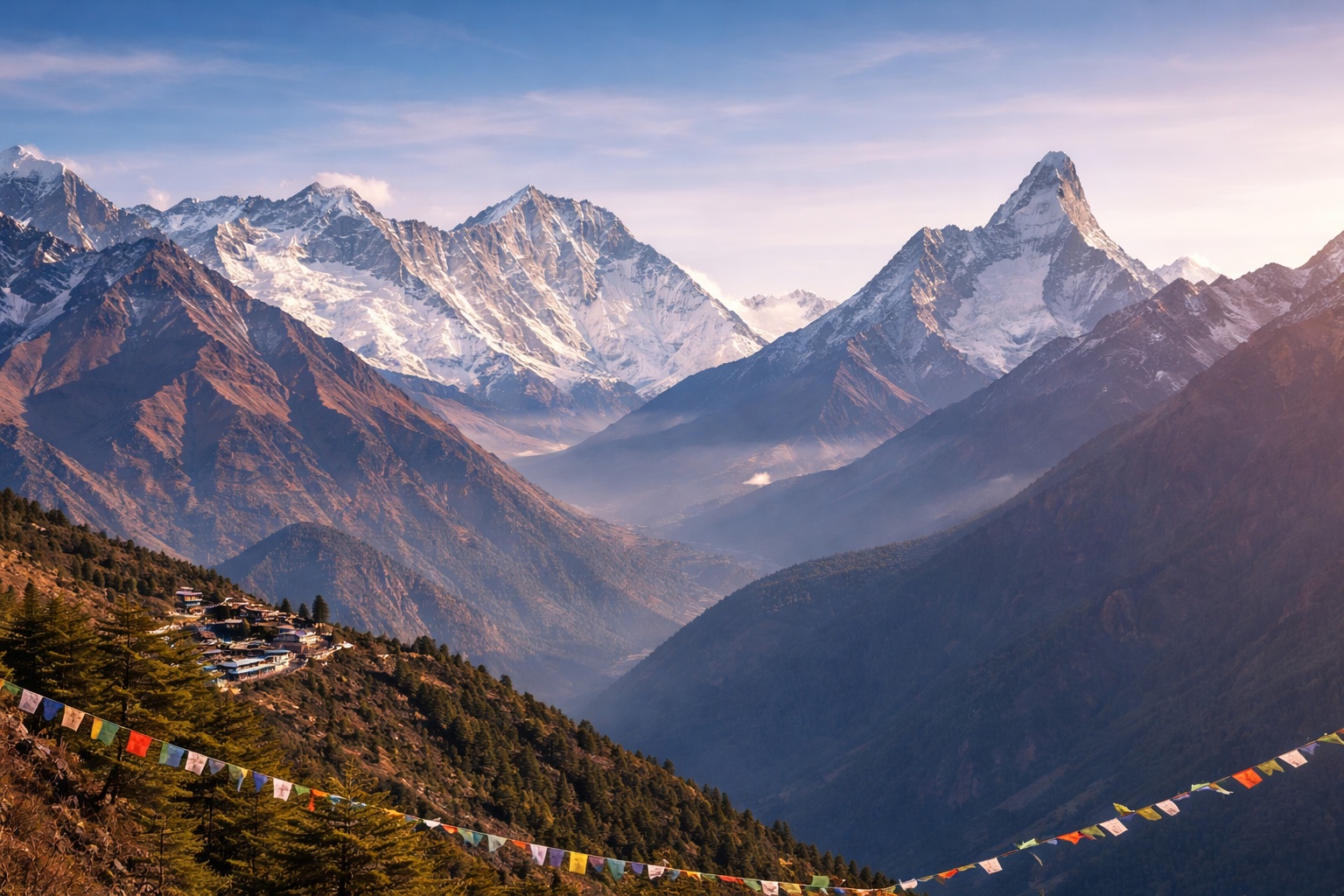
Tikhedhunga is a village on the Ghorepani Poon Hill trekking route in the Annapurna region, typically the first overnight stop for trekkers beginning this popular short trek from Nayapul near Pokhara. Sitting at a moderate elevation amid terraced hillsides and forest, Tikhedhunga offers a gentle introduction to trekking in this region before the trail climbs more steeply toward Ulleri and eventually Ghorepani further ahead.
The village's position along a river crossing marks the beginning of what is often considered the most physically demanding single stretch of the Poon Hill trek, a long, steep stone staircase climbing toward Ulleri that tests the fitness of trekkers early in their journey. Basic to comfortable teahouse accommodation in Tikhedhunga serves the substantial number of trekkers using this well-established and popular short trekking route, one of the most accessible in the entire Annapurna region.
For trekkers undertaking the Ghorepani Poon Hill trek, often completed in just four or five days given its proximity to Pokhara, Tikhedhunga represents an important early stage that sets the tone for the demanding but rewarding climb ahead toward the celebrated sunrise viewpoint at Poon Hill. The relative accessibility of this trek, achievable without a domestic flight and within a short overall timeframe, has made it one of the most popular introductory Himalayan trekking experiences available in Nepal, and Tikhedhunga plays an essential role as its starting point.
Facilities along this stretch of trail remain simple, and trekkers should carry sufficient cash, since cards are not accepted and ATMs do not exist beyond the larger towns.
Mobile signal in the area is patchy at best, and travellers should not rely on constant connectivity once they are this far into the trail network.
Weather at this elevation can change quickly, and a flexible itinerary with a buffer day or two is generally recommended for anyone travelling through this part of the route.
Local guides with specific knowledge of this stretch of trail add real value, both for navigation and for the cultural context they can offer along the way.