
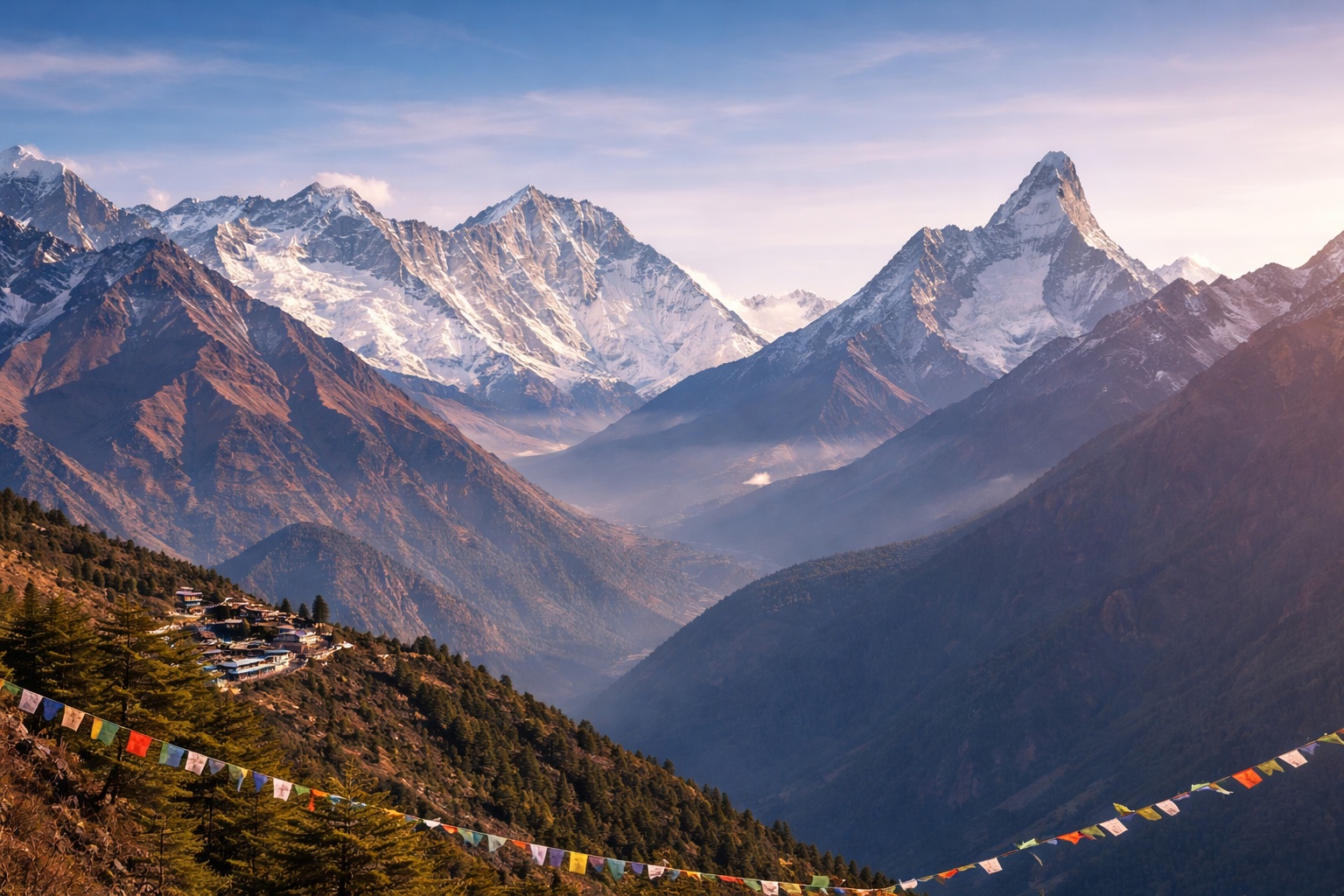
Tumlingtar is a lowland town in eastern Nepal with a small airstrip serving as the air gateway to treks toward Makalu Base Camp and the wider Arun valley region, offering an alternative entry point to eastern Nepal's more remote trekking areas. Sitting at a comparatively low elevation along a broad river terrace, Tumlingtar has a distinctly different character from the mountain villages further along the trekking routes it serves, reflecting the warmer, more agricultural landscape typical of Nepal's middle hills at lower altitude.
For trekkers heading toward Makalu, the world's fifth-highest mountain, Tumlingtar serves as the practical starting point, with flights connecting from Kathmandu significantly reducing the overland travel time otherwise required to reach this remote eastern region. From the airstrip, the trail begins its gradual climb through the Arun valley, passing through a range of ethnic communities including Rai and Chhetri villages before eventually reaching the higher, more Tibetan-influenced terrain surrounding Makalu itself.
The relative obscurity of Tumlingtar as a trekking gateway, compared to the far busier Lukla airstrip serving the Everest region, reflects the generally undeveloped and less-visited character of eastern Nepal's trekking routes as a whole. For trekkers seeking a genuine sense of remoteness and discovery, beginning a journey from Tumlingtar toward Makalu Base Camp offers one of Nepal's most rewarding and still largely unspoiled high-altitude trekking experiences.
Mobile signal in the area is patchy at best, and travellers should not rely on constant connectivity once they are this far into the trail network.
Weather at this elevation can change quickly, and a flexible itinerary with a buffer day or two is generally recommended for anyone travelling through this part of the route.
Local guides with specific knowledge of this stretch of trail add real value, both for navigation and for the cultural context they can offer along the way.
A gradual, well-paced ascent through this section remains the best defence against altitude-related discomfort further along the route.