
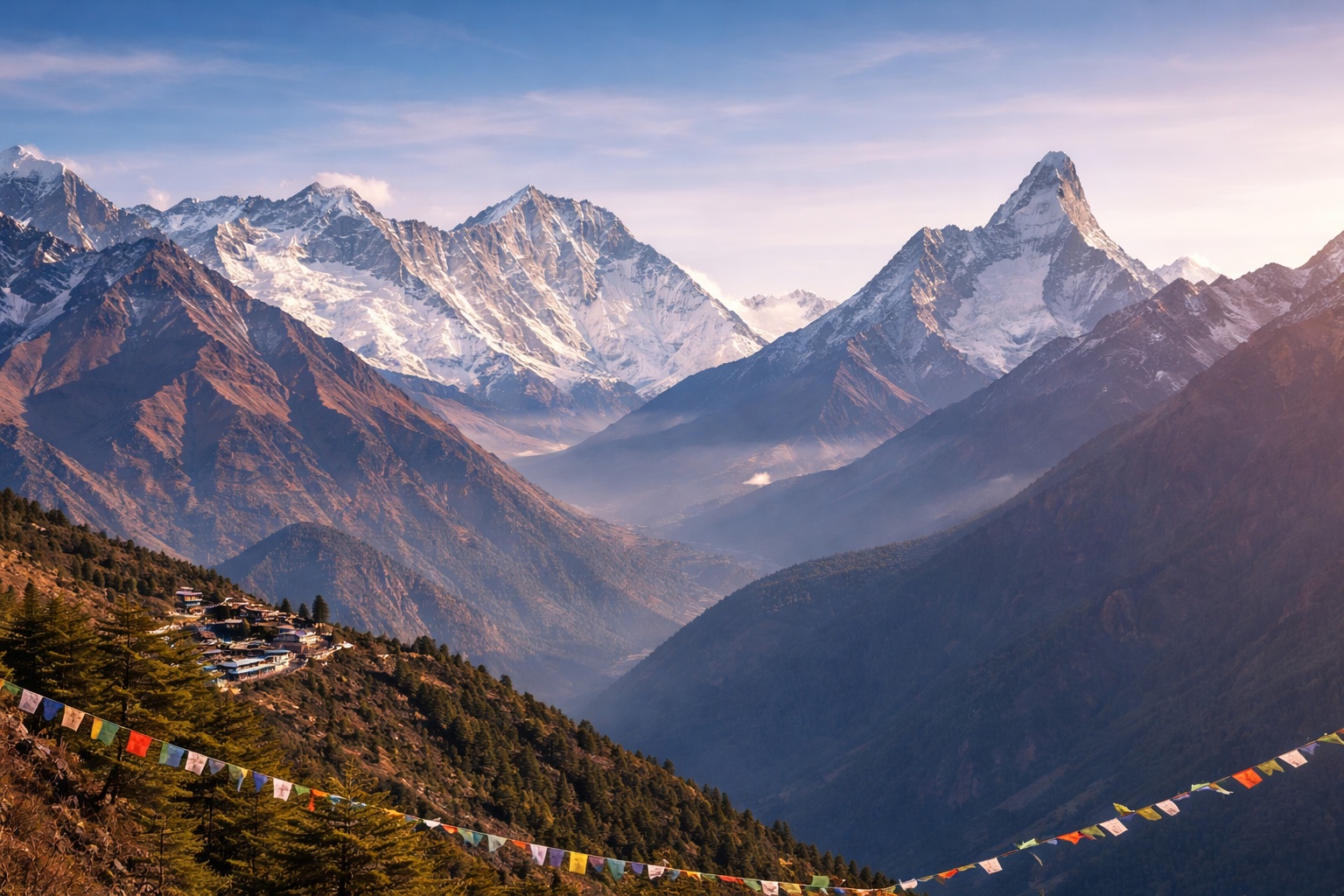
Tashigaon is the last permanent village before the demanding high-altitude crossing toward Makalu Base Camp, set in the lower reaches of the Barun valley in eastern Nepal. As the final settlement offering reliable accommodation before the trail climbs steeply into more remote, high-altitude terrain, Tashigaon serves as an essential preparation and resupply point for trekkers undertaking the journey toward the world's fifth-highest mountain.
The village's Rai community reflects the ethnic diversity found throughout this part of eastern Nepal, distinct in language and religious tradition from the Sherpa and Tamang communities more commonly encountered on Nepal's better-known trekking routes further west. Beyond Tashigaon, the trail climbs steeply through forest and increasingly alpine terrain, a demanding stretch that tests trekkers' fitness before the even greater challenges of the high Barun valley further ahead.
For trekkers heading toward Makalu Base Camp, Tashigaon represents a critical staging point, the last opportunity to rest, resupply, and mentally prepare before entering one of Nepal's most remote and physically demanding trekking regions. The relative lack of development beyond this point, a defining feature of the Makalu region as a whole, is precisely what continues to attract experienced trekkers seeking a genuine wilderness experience considerably more demanding and far less crowded than routes found in the Everest or Annapurna regions.
Basic but adequate teahouse facilities are typically available, offering a hot meal and a simple bed for trekkers passing through.
Facilities along this stretch of trail remain simple, and trekkers should carry sufficient cash, since cards are not accepted and ATMs do not exist beyond the larger towns.
Mobile signal in the area is patchy at best, and travellers should not rely on constant connectivity once they are this far into the trail network.
Weather at this elevation can change quickly, and a flexible itinerary with a buffer day or two is generally recommended for anyone travelling through this part of the route.
Local guides with specific knowledge of this stretch of trail add real value, both for navigation and for the cultural context they can offer along the way.