
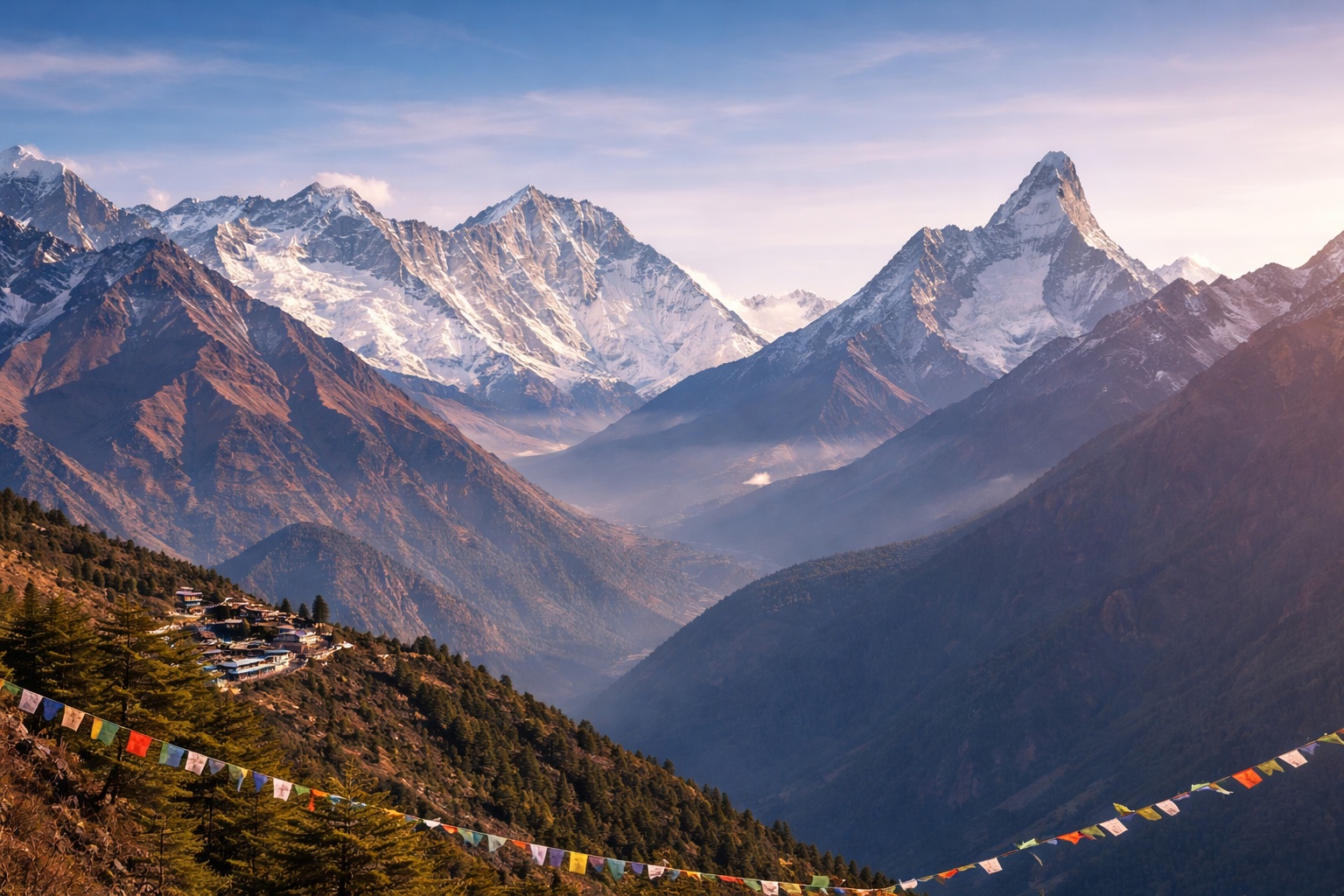
Salleri is the district headquarters of Solukhumbu and an alternative overland gateway to the Everest region, offering trekkers a road-accessible starting point for treks into the Khumbu that avoids the need for a flight to Lukla. Sitting in the lower, greener Solu region well below the higher Khumbu villages more commonly associated with Everest trekking, Salleri reflects a gentler, more settled landscape typical of the middle hills.
Trekkers choosing to start from Salleri, reached by a long but scenic overland drive from Kathmandu, walk through the Solu region's terraced hillsides and traditional Sherpa and Rai villages before eventually joining the main Everest Base Camp trail near Lukla or further up the valley. This route offers a longer, more gradual approach to the Khumbu, allowing for better acclimatisation and a richer sense of the region's cultural and geographic diversity than the standard fly-in, fly-out itinerary.
For trekkers wary of Lukla's notoriously weather-dependent flights, or those simply seeking a more complete overland experience of the Solu-Khumbu region, Salleri offers a practical and rewarding alternative starting point. The additional days spent walking through the lower Solu region before reaching the more famous high Khumbu villages provide valuable extra acclimatisation time, a genuine advantage for trekkers aiming to reduce their risk of altitude sickness later in the trek.
Mobile signal in the area is patchy at best, and travellers should not rely on constant connectivity once they are this far into the trail network.
Weather at this elevation can change quickly, and a flexible itinerary with a buffer day or two is generally recommended for anyone travelling through this part of the route.
Local guides with specific knowledge of this stretch of trail add real value, both for navigation and for the cultural context they can offer along the way.
A gradual, well-paced ascent through this section remains the best defence against altitude-related discomfort further along the route.
Basic but adequate teahouse facilities are typically available, offering a hot meal and a simple bed for trekkers passing through.