
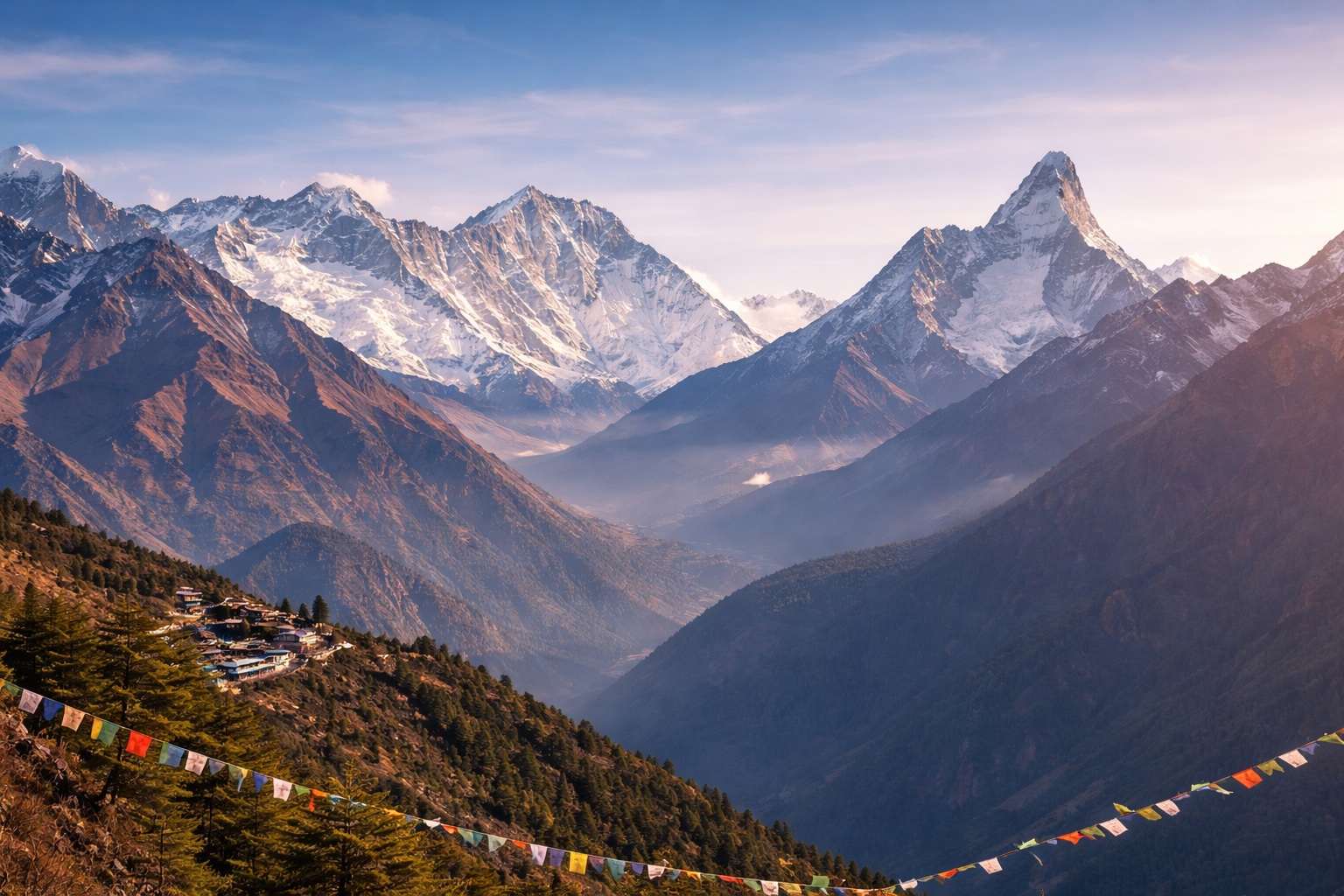
Pina is a small settlement on the Kanchenjunga trekking approach in Nepal's far east, one of the villages along the lower trail before it climbs into the higher, more remote terrain surrounding the world's third-highest mountain. Set within a landscape of terraced hillsides typical of this part of eastern Nepal, Pina reflects the settled agricultural character found throughout the lower Kanchenjunga approach corridor.
The village is home to communities whose Kirat religious traditions and Limbu or Rai heritage distinguish this region culturally from the Sherpa and Tamang areas more commonly encountered on Nepal's better-known trekking routes further west. This cultural distinctiveness is one of the understated rewards of trekking through the Kanchenjunga region, offering visitors a genuine sense of Nepal's ethnic diversity often overlooked by travellers focused solely on the country's higher-profile trekking destinations.
Basic teahouses in Pina serve the relatively modest number of trekkers making the long journey toward Kanchenjunga's base camps each season, a route that remains one of Nepal's least developed major trekking corridors given its restricted area status and considerable distance from Kathmandu. For trekkers seeking a genuine sense of discovery away from Nepal's busiest trails, the villages of the lower Kanchenjunga approach, including Pina, offer a rewarding and still largely undiscovered introduction to this remote corner of the country.
Facilities along this stretch of trail remain simple, and trekkers should carry sufficient cash, since cards are not accepted and ATMs do not exist beyond the larger towns.
Mobile signal in the area is patchy at best, and travellers should not rely on constant connectivity once they are this far into the trail network.
Weather at this elevation can change quickly, and a flexible itinerary with a buffer day or two is generally recommended for anyone travelling through this part of the route.
Local guides with specific knowledge of this stretch of trail add real value, both for navigation and for the cultural context they can offer along the way.