
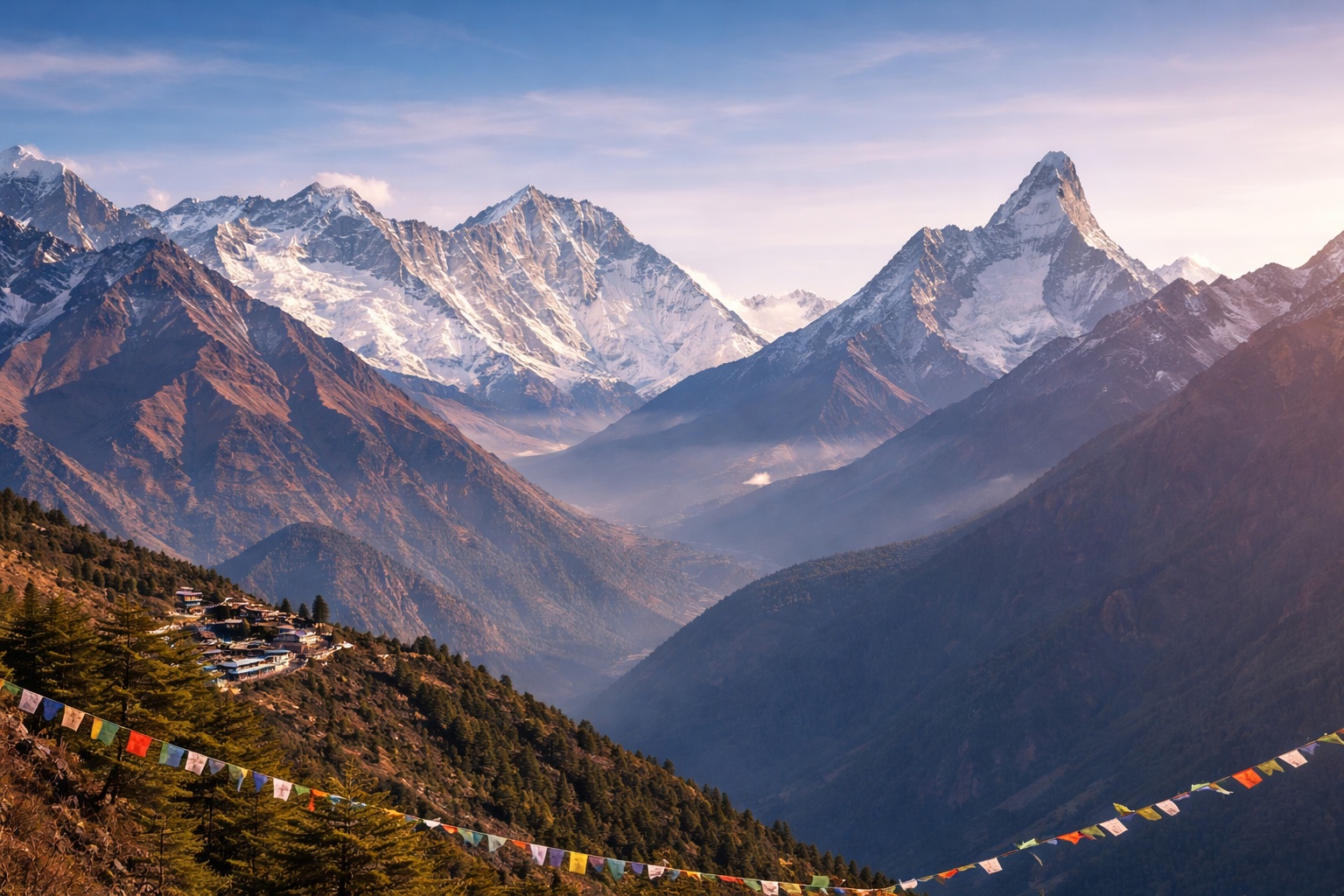
Pangpema is Kanchenjunga's North Base Camp, the culminating destination of the northern approach route through the Ghunsa valley, offering an extraordinarily close and dramatic view of the world's third-highest mountain from its northern flank. Set in stark, glaciated high-altitude terrain beyond the last permanent settlement at Lhonak, Pangpema represents one of the most remote and rewarding base camp destinations found anywhere in the Nepal Himalaya.
The approach to Pangpema requires well over a week of trekking through increasingly remote terrain, starting from the lower, forested Limbu and Rai villages of the Tamor valley and gradually rising through Tibetan-influenced settlements before reaching the barren, glaciated landscape surrounding base camp itself. This gradual transition through such varied terrain and culture is one of the defining features of the Kanchenjunga Circuit, considered among the most complete wilderness trekking experiences remaining in Nepal.
From Pangpema, the sheer scale of Kanchenjunga's northern face dominates the skyline, alongside views of neighbouring peaks that few trekkers ever have the opportunity to see given the region's restricted status and demanding logistics. For those who make the considerable commitment required to reach it, Pangpema offers a genuinely rare, largely unspoiled Himalayan base camp experience, a fitting reward for one of Nepal's longest and most remote trekking journeys.
Facilities along this stretch of trail remain simple, and trekkers should carry sufficient cash, since cards are not accepted and ATMs do not exist beyond the larger towns.
Mobile signal in the area is patchy at best, and travellers should not rely on constant connectivity once they are this far into the trail network.
Weather at this elevation can change quickly, and a flexible itinerary with a buffer day or two is generally recommended for anyone travelling through this part of the route.
Local guides with specific knowledge of this stretch of trail add real value, both for navigation and for the cultural context they can offer along the way.
A gradual, well-paced ascent through this section remains the best defence against altitude-related discomfort further along the route.