
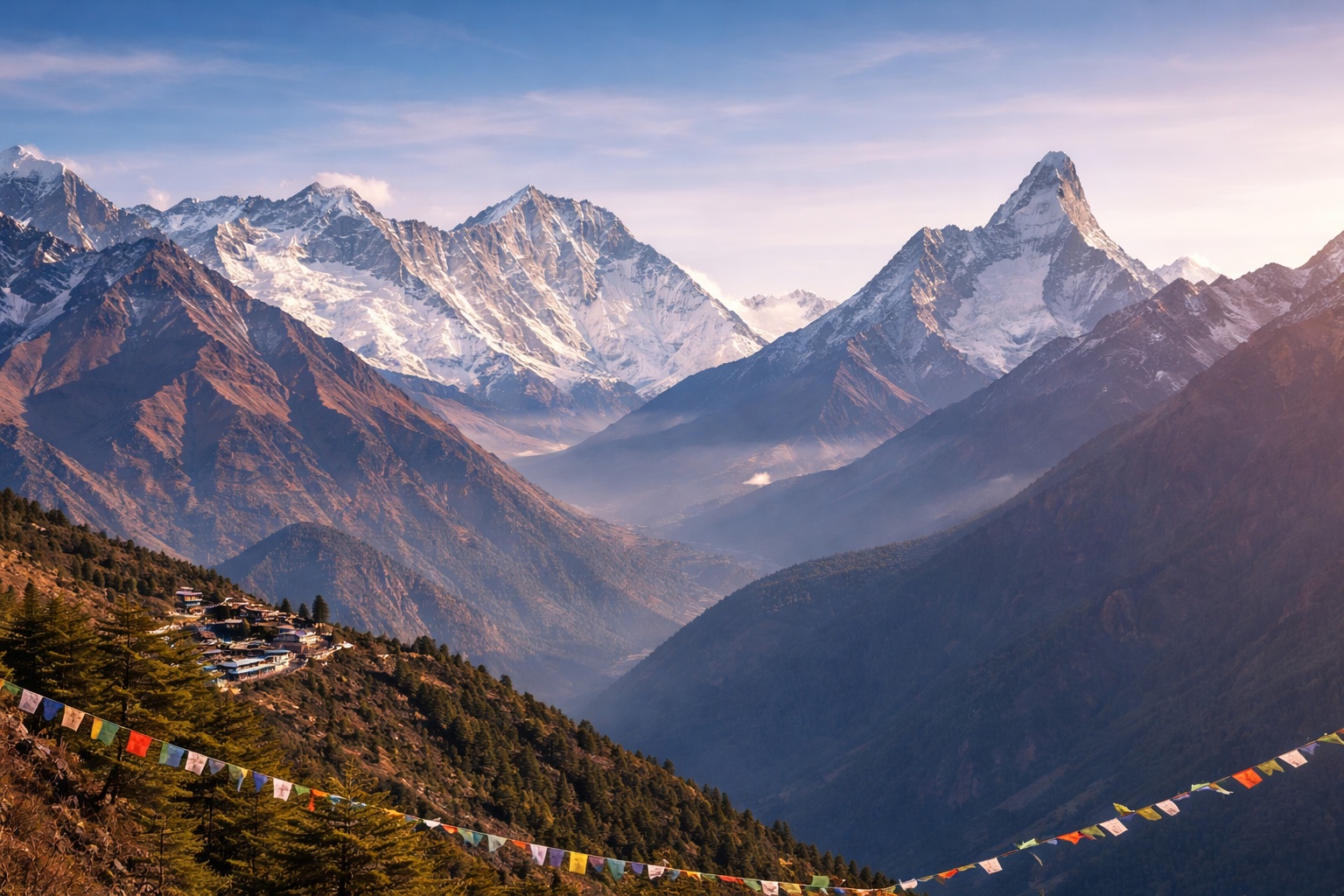
Oktang is the viewpoint and effective South Base Camp for Kanchenjunga, reached via the southern approach route through the Yalung valley, offering one of the most dramatic close-range views available of the world's third-highest mountain and its surrounding glaciated peaks. The day hike to Oktang from the nearest camp typically forms the culminating point of the Kanchenjunga South Base Camp trek, a reward for the many days of demanding, remote walking required to reach this far corner of eastern Nepal.
From Oktang, trekkers are treated to a sweeping panorama that includes Kanchenjunga's south face alongside neighbouring peaks such as Rathong and Kabru, a view considered by many experienced trekkers to rival anything found in the more famous Everest or Annapurna base camp treks, despite receiving only a fraction of the visitors. The return hike back to camp the same day completes the round trip, and most itineraries build in the time and acclimatisation needed to enjoy this viewpoint properly before beginning the multi-day journey back out of the region.
The Yalung valley approach to Oktang is generally considered slightly less demanding logistically than the northern route to Pangpema, though both require the same restricted-area permits and significant time commitment given Kanchenjunga's extreme remoteness. For trekkers seeking one of Nepal's most genuinely wild and visually rewarding base camp experiences, the day hike to Oktang stands as one of the finest, least-visited viewpoints available anywhere in the Nepal Himalaya.
Mobile signal in the area is patchy at best, and travellers should not rely on constant connectivity once they are this far into the trail network.
Weather at this elevation can change quickly, and a flexible itinerary with a buffer day or two is generally recommended for anyone travelling through this part of the route.
Local guides with specific knowledge of this stretch of trail add real value, both for navigation and for the cultural context they can offer along the way.
A gradual, well-paced ascent through this section remains the best defence against altitude-related discomfort further along the route.