
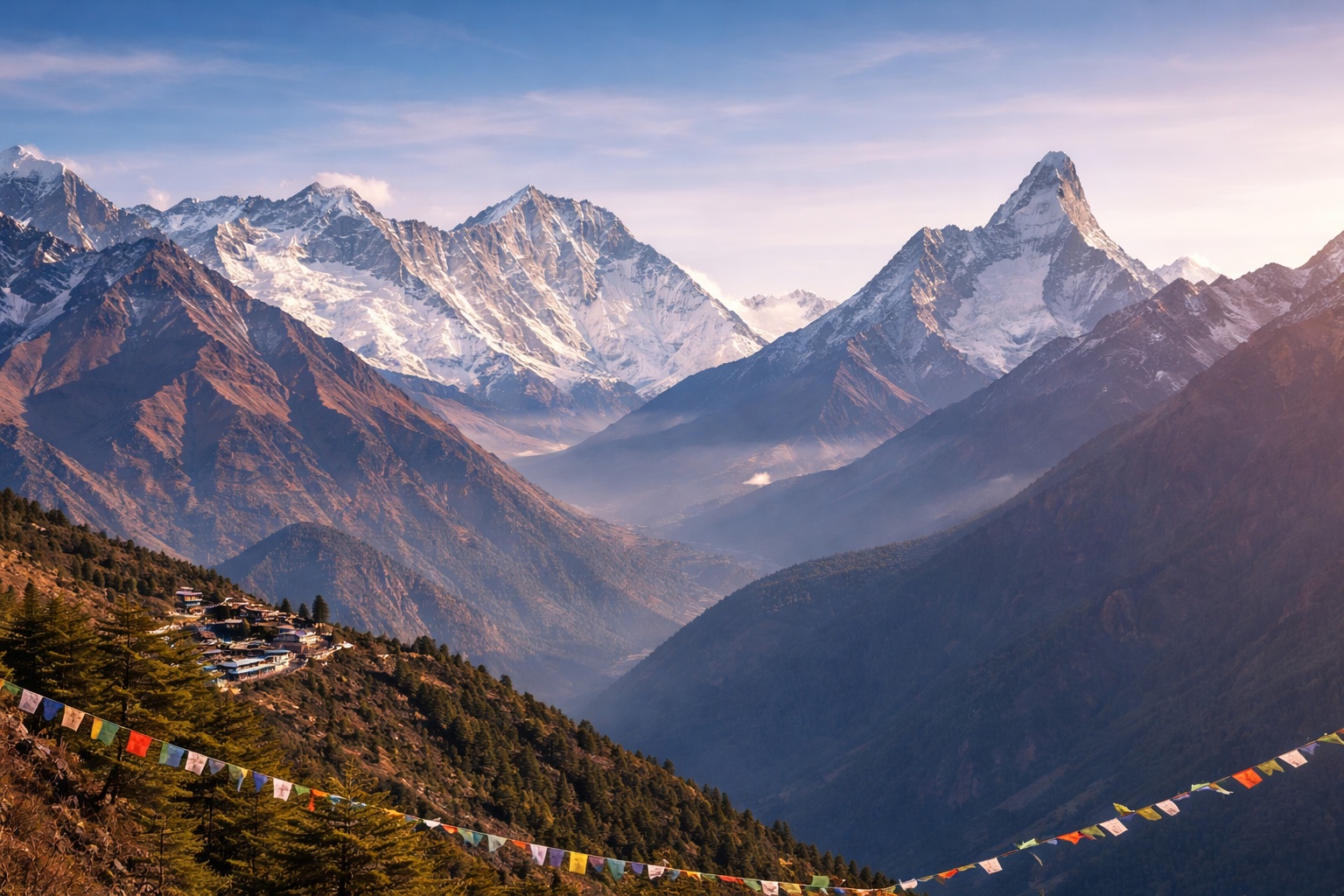
Num is a village on the Kanchenjunga trekking approach and also a stop on some Makalu Base Camp itineraries, set on a ridge above the Arun valley in eastern Nepal. Sitting at a significant elevation with commanding views across the surrounding hills, Num serves as an important waypoint for trekkers heading into either of these remote eastern trekking regions, both considerably less visited than Nepal's more famous Everest and Annapurna circuits.
The steep descent from Num into the Arun valley and subsequent climb back out the other side is often cited by trekkers as one of the more physically demanding single days found on these eastern routes, a reflection of the dramatic, deeply cut valley topography typical of this part of Nepal. Basic teahouses in Num provide accommodation for the relatively modest number of trekkers making the journey toward Kanchenjunga or Makalu each season.
For trekkers, Num represents an early test of the fitness and stamina required for the demanding weeks ahead, whether heading toward Kanchenjunga's remote base camps or the equally isolated approach to Makalu, the world's fifth-highest mountain. The relative lack of infrastructure and low visitor numbers found throughout this region, including at stops like Num, remain among its most valued qualities for trekkers seeking a genuine sense of wilderness and discovery increasingly hard to find on Nepal's more established trekking routes.
Weather at this elevation can change quickly, and a flexible itinerary with a buffer day or two is generally recommended for anyone travelling through this part of the route.
Local guides with specific knowledge of this stretch of trail add real value, both for navigation and for the cultural context they can offer along the way.
A gradual, well-paced ascent through this section remains the best defence against altitude-related discomfort further along the route.
Basic but adequate teahouse facilities are typically available, offering a hot meal and a simple bed for trekkers passing through.
Facilities along this stretch of trail remain simple, and trekkers should carry sufficient cash, since cards are not accepted and ATMs do not exist beyond the larger towns.