
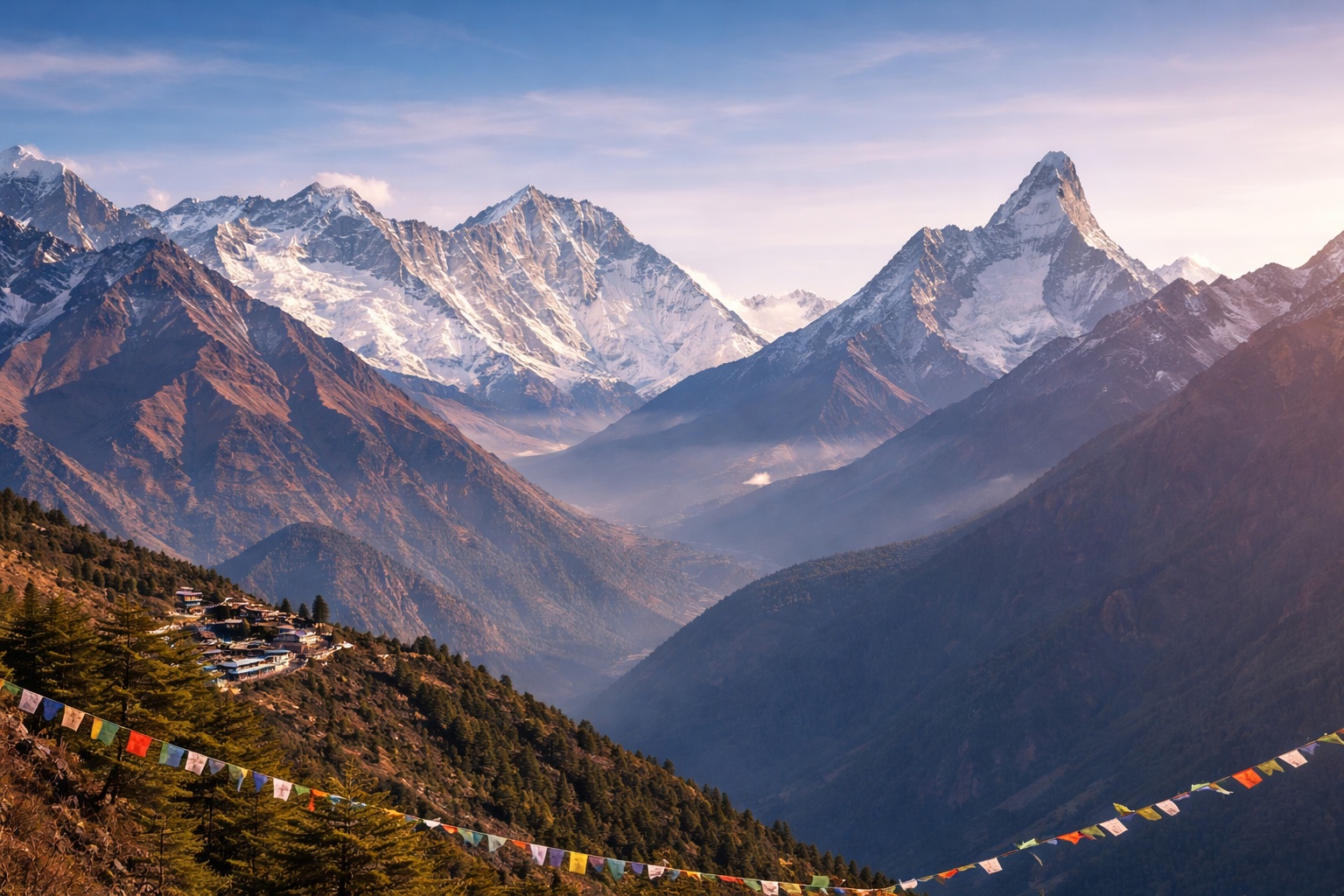
Nile is a village in Upper Dolpo near Shey Gompa, one of the settlements within this remote, restricted trekking region known for its stark high-altitude landscape and deep Tibetan Buddhist and Bon religious heritage. Sitting in a valley shaped by centuries of trans-Himalayan trade and monastic tradition, Nile reflects the same isolated, largely unchanged way of life found throughout Upper Dolpo, one of Nepal's least visited and most culturally distinct trekking areas.
The village's proximity to Shey Gompa, the Crystal Monastery immortalised in Peter Matthiessen's famous account of the region, places Nile within one of Upper Dolpo's most spiritually significant areas, a landscape closely tied to Tibetan Buddhist pilgrimage traditions surrounding the sacred nearby peak of Crystal Mountain. Basic facilities in Nile reflect the general remoteness of Upper Dolpo, a region that requires special restricted-area permits and a considerable trekking commitment to reach at all.
For trekkers who make the journey to Upper Dolpo, Nile serves as an important waypoint within a region still largely defined by its isolation from modern development, offering a genuine, unfiltered glimpse of traditional Tibetan-influenced Himalayan life. The stark, arid landscape surrounding Nile, closer in character to the Tibetan plateau than to lowland Nepal, adds to the profound sense of remoteness that makes Upper Dolpo one of the most rewarding destinations for trekkers seeking genuine cultural and geographic discovery.
Basic but adequate teahouse facilities are typically available, offering a hot meal and a simple bed for trekkers passing through.
Facilities along this stretch of trail remain simple, and trekkers should carry sufficient cash, since cards are not accepted and ATMs do not exist beyond the larger towns.
Mobile signal in the area is patchy at best, and travellers should not rely on constant connectivity once they are this far into the trail network.
Weather at this elevation can change quickly, and a flexible itinerary with a buffer day or two is generally recommended for anyone travelling through this part of the route.