
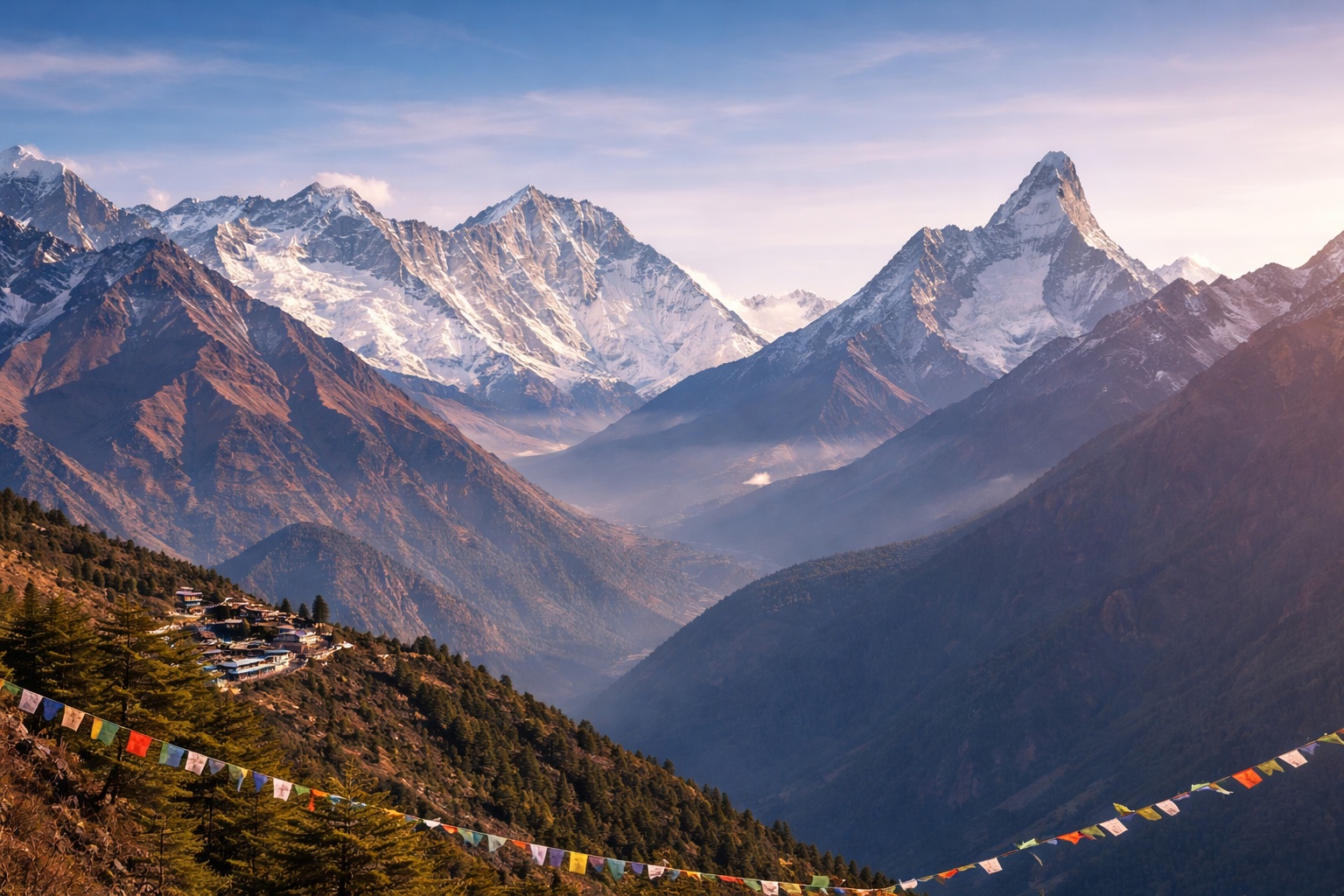
Namrung is a village on the Manaslu Circuit marking the boundary between the lower, Gurung and Tibetan-influenced middle section of the trek and the higher, more strongly Tibetan Buddhist upper valley leading toward Samagaon and Manaslu itself. Set on a dramatic hillside above the Budhi Gandaki river, Namrung often serves as an important checkpoint where restricted-area permits are verified before trekkers continue further into the more sensitive upper Manaslu region.
The village's position marks a visible shift in the trek's character, with architecture, dress, and religious practice becoming increasingly Tibetan in style beyond this point, a transition that mirrors the changing landscape as the trail climbs from forested lower slopes toward the stark, high-altitude terrain surrounding Manaslu. Basic but comfortable teahouses in Namrung serve the steady flow of trekkers undertaking one of Nepal's most rewarding and still comparatively undiscovered long circuits.
For trekkers, Namrung represents both a practical waypoint and a genuine marker of transition within the Manaslu Circuit, the point where the trek's character shifts decisively from its warmer, more populated lower stages toward the higher, more dramatic and culturally distinct upper valley. The views and atmosphere found beyond Namrung, leading toward Lho, Shyala, and eventually Samagaon, are widely considered among the finest sections of the entire circuit.
Mobile signal in the area is patchy at best, and travellers should not rely on constant connectivity once they are this far into the trail network.
Weather at this elevation can change quickly, and a flexible itinerary with a buffer day or two is generally recommended for anyone travelling through this part of the route.
Local guides with specific knowledge of this stretch of trail add real value, both for navigation and for the cultural context they can offer along the way.
A gradual, well-paced ascent through this section remains the best defence against altitude-related discomfort further along the route.
Basic but adequate teahouse facilities are typically available, offering a hot meal and a simple bed for trekkers passing through.