
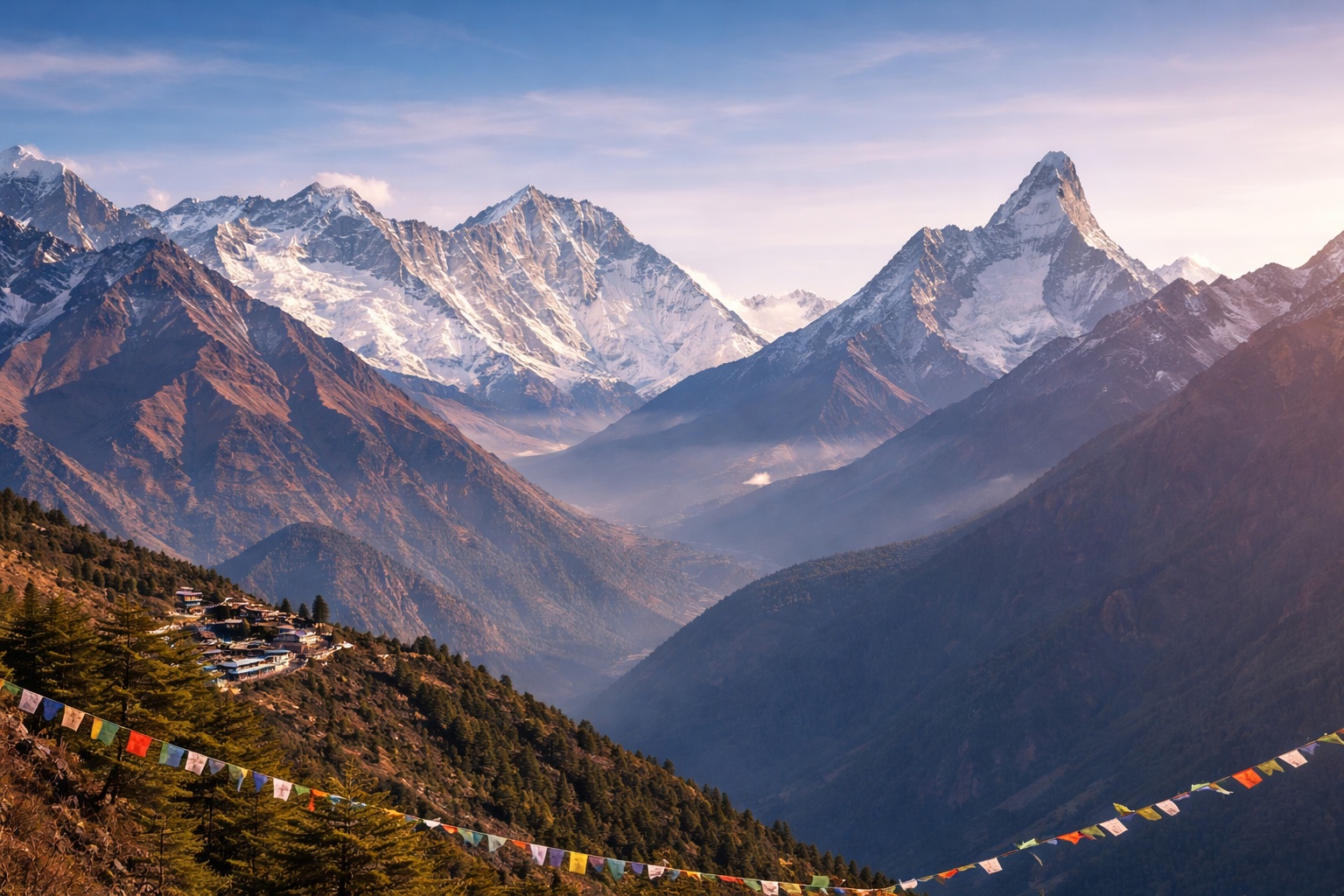
Mu Gompa is the oldest and highest monastery in the Dolpo region, set above the village of Ringmo near Phoksundo Lake at the far edge of the remote Upper Dolpo trekking area. Perched at high altitude in a stark, arid landscape, the monastery has served as a centre of Bon and Tibetan Buddhist practice for centuries, reflecting the deep and largely unbroken religious heritage that defines this isolated corner of Nepal.
The gompa's remote position, reached only after a demanding multi-day trek from the nearest roadhead, has helped preserve traditions and a way of life that has changed comparatively little over generations, a rare quality even within Nepal's wider trekking landscape. Resident monks and the surrounding community maintain religious practices that draw as much from the older Bon tradition as from mainstream Tibetan Buddhism, giving Mu Gompa a distinctive spiritual character.
For trekkers who make the considerable effort required to reach Upper Dolpo, one of Nepal's most restricted and least visited regions, Mu Gompa represents one of the trip's most significant cultural destinations, a genuinely rare opportunity to witness a living monastic tradition in one of the most remote inhabited corners of the entire Himalaya. The surrounding stark, high-altitude scenery, dominated by barren ridgelines and a landscape closer in character to the Tibetan plateau than to lowland Nepal, only adds to the profound sense of isolation and spiritual depth found here.
Facilities along this stretch of trail remain simple, and trekkers should carry sufficient cash, since cards are not accepted and ATMs do not exist beyond the larger towns.
Mobile signal in the area is patchy at best, and travellers should not rely on constant connectivity once they are this far into the trail network.
Weather at this elevation can change quickly, and a flexible itinerary with a buffer day or two is generally recommended for anyone travelling through this part of the route.
Local guides with specific knowledge of this stretch of trail add real value, both for navigation and for the cultural context they can offer along the way.