
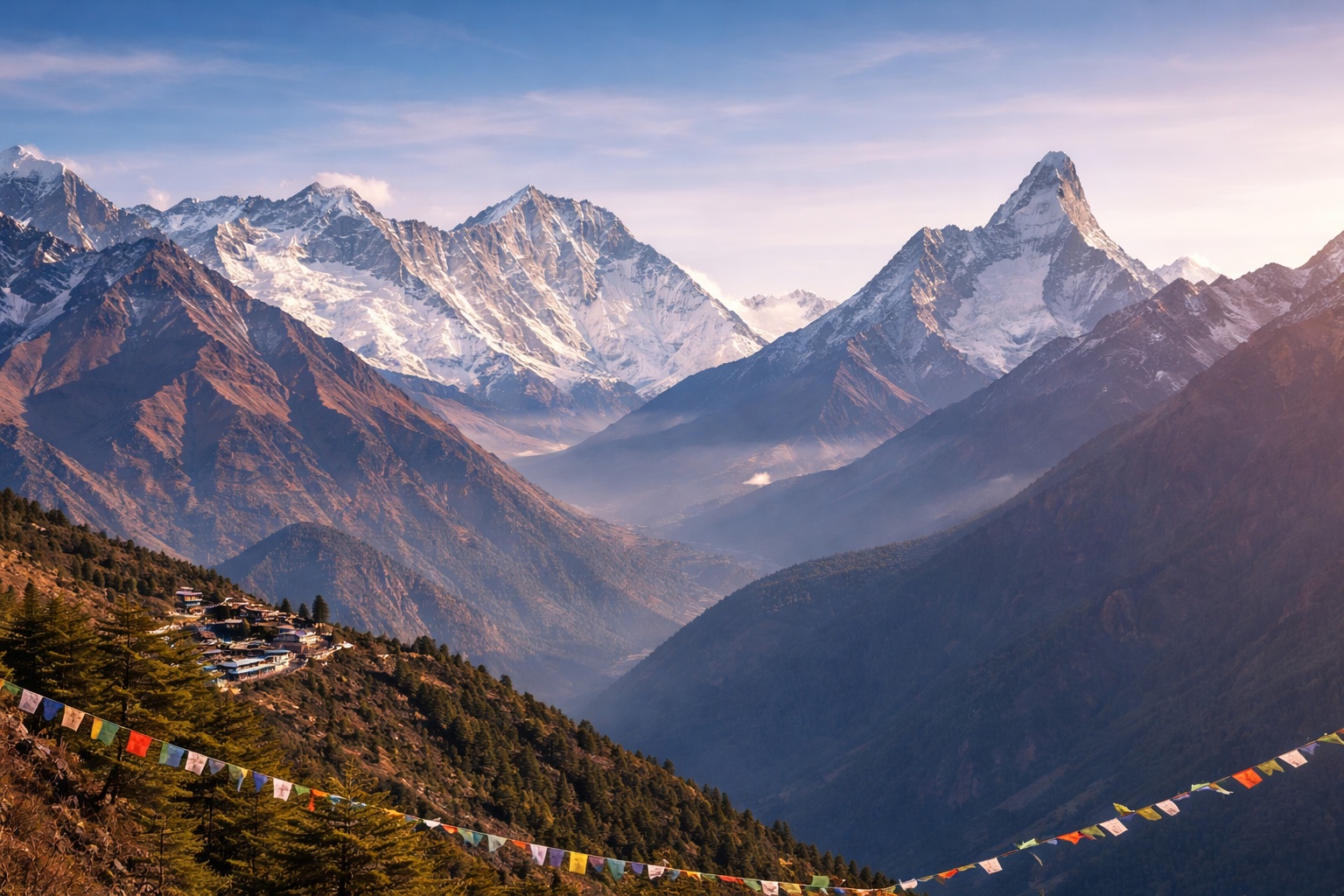
Mera Base Camp, positioned just below the Mera La pass, is the final staging point before the summit push on Mera Peak, Nepal's highest trekking peak at 6,476 metres, offering some of the most expansive high-altitude panoramas available on any trekking summit in the country. From this base, climbers can see five of the world's six highest peaks, including Everest, Kanchenjunga, Lhotse, Makalu, and Cho Oyu, an almost unmatched concentration of 8,000 metre giants visible from a single vantage point.
The route to base camp crosses Mera La itself, a broad, glaciated pass that marks the transition from the Hinku valley into the Hongu valley side of the mountain, and the terrain throughout this section is stark, icy, and demanding, requiring proper mountaineering equipment and rope-team travel across the glacier. Climbers typically spend an acclimatisation day at or near base camp before the final push to high camp and the summit itself.
Despite being classified as a trekking peak, Mera Peak's extreme altitude and glacier travel make it a serious undertaking requiring good fitness, prior high-altitude experience, and careful acclimatisation throughout the approach from Lukla. For climbers who reach the summit, the reward is widely considered one of the finest panoramic views obtainable anywhere in the Nepal Himalaya, a fitting payoff for the physical and logistical commitment required to get there.
Local guides with specific knowledge of this stretch of trail add real value, both for navigation and for the cultural context they can offer along the way.
A gradual, well-paced ascent through this section remains the best defence against altitude-related discomfort further along the route.
Basic but adequate teahouse facilities are typically available, offering a hot meal and a simple bed for trekkers passing through.
Facilities along this stretch of trail remain simple, and trekkers should carry sufficient cash, since cards are not accepted and ATMs do not exist beyond the larger towns.
Mobile signal in the area is patchy at best, and travellers should not rely on constant connectivity once they are this far into the trail network.