
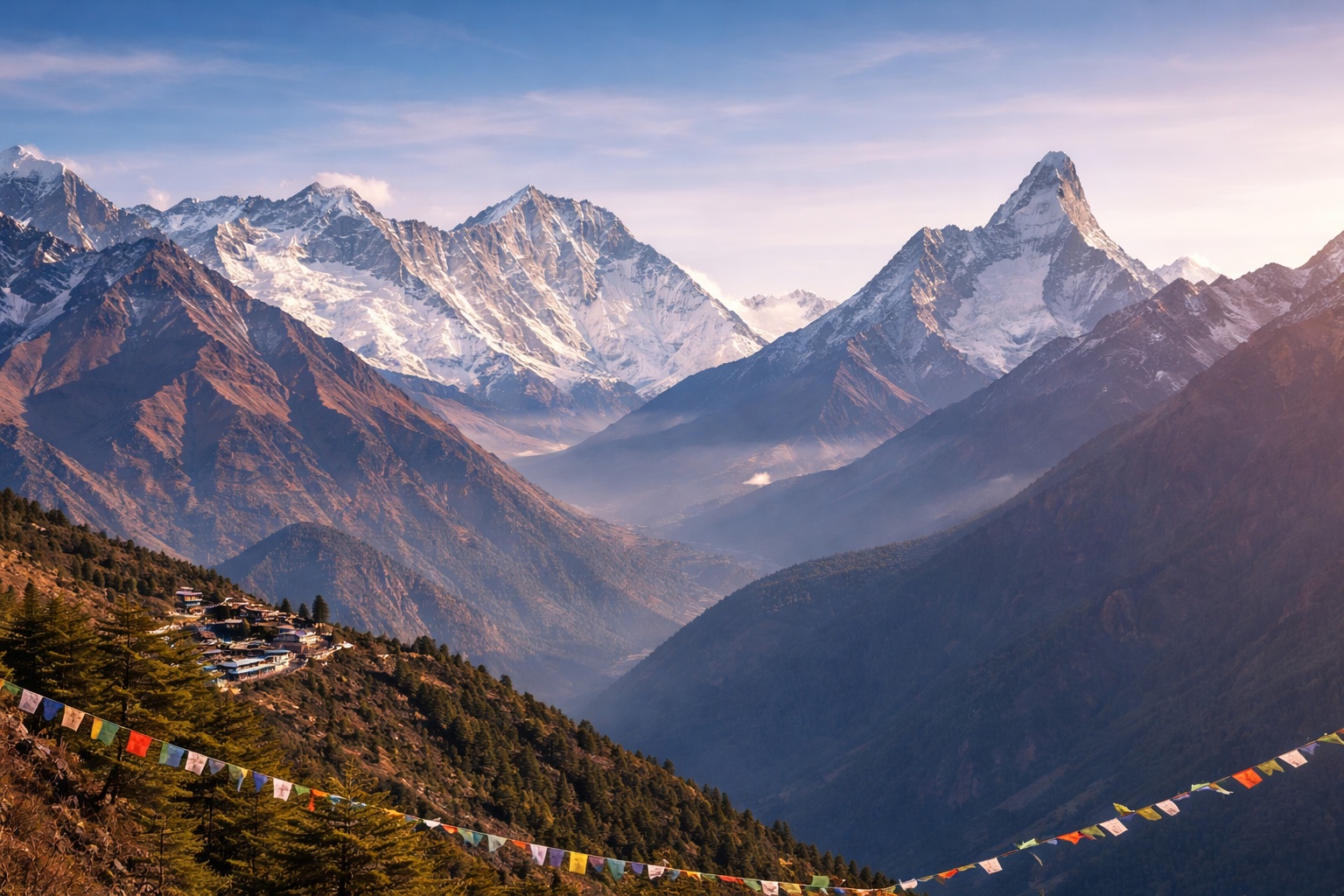
Lho is a Tibetan-influenced village on the Manaslu Circuit with a monastery offering close views of Manaslu itself, one of the most scenic overnight stops in the upper section of the trek before reaching Samagaon. Perched on a hillside with the eighth-highest mountain in the world dominating the skyline directly ahead, Lho is frequently cited by trekkers as offering one of the most dramatic mountain views found anywhere along the entire Manaslu Circuit.
The village's monastery, prominently positioned above the settlement, provides an even more elevated vantage point for photographing Manaslu, and its Tibetan Buddhist architecture and religious practice reflect the deepening cultural shift visible as the trail climbs higher into the restricted Manaslu region. Traditional stone houses, prayer flags, and mani walls line the approach into Lho, giving the village a genuinely atmospheric, spiritually significant character.
For trekkers, Lho represents an important staging point before the larger village of Samagaon, the main acclimatisation base for the upper Manaslu valley, and many itineraries build in time here specifically to enjoy the exceptional Manaslu views before continuing higher. The gradual acclimatisation gained through stops like Lho is an essential part of safely reaching Samagaon and eventually crossing the demanding Larkya La pass further along this celebrated but physically serious circuit.
Facilities along this stretch of trail remain simple, and trekkers should carry sufficient cash, since cards are not accepted and ATMs do not exist beyond the larger towns.
Mobile signal in the area is patchy at best, and travellers should not rely on constant connectivity once they are this far into the trail network.
Weather at this elevation can change quickly, and a flexible itinerary with a buffer day or two is generally recommended for anyone travelling through this part of the route.
Local guides with specific knowledge of this stretch of trail add real value, both for navigation and for the cultural context they can offer along the way.
A gradual, well-paced ascent through this section remains the best defence against altitude-related discomfort further along the route.