
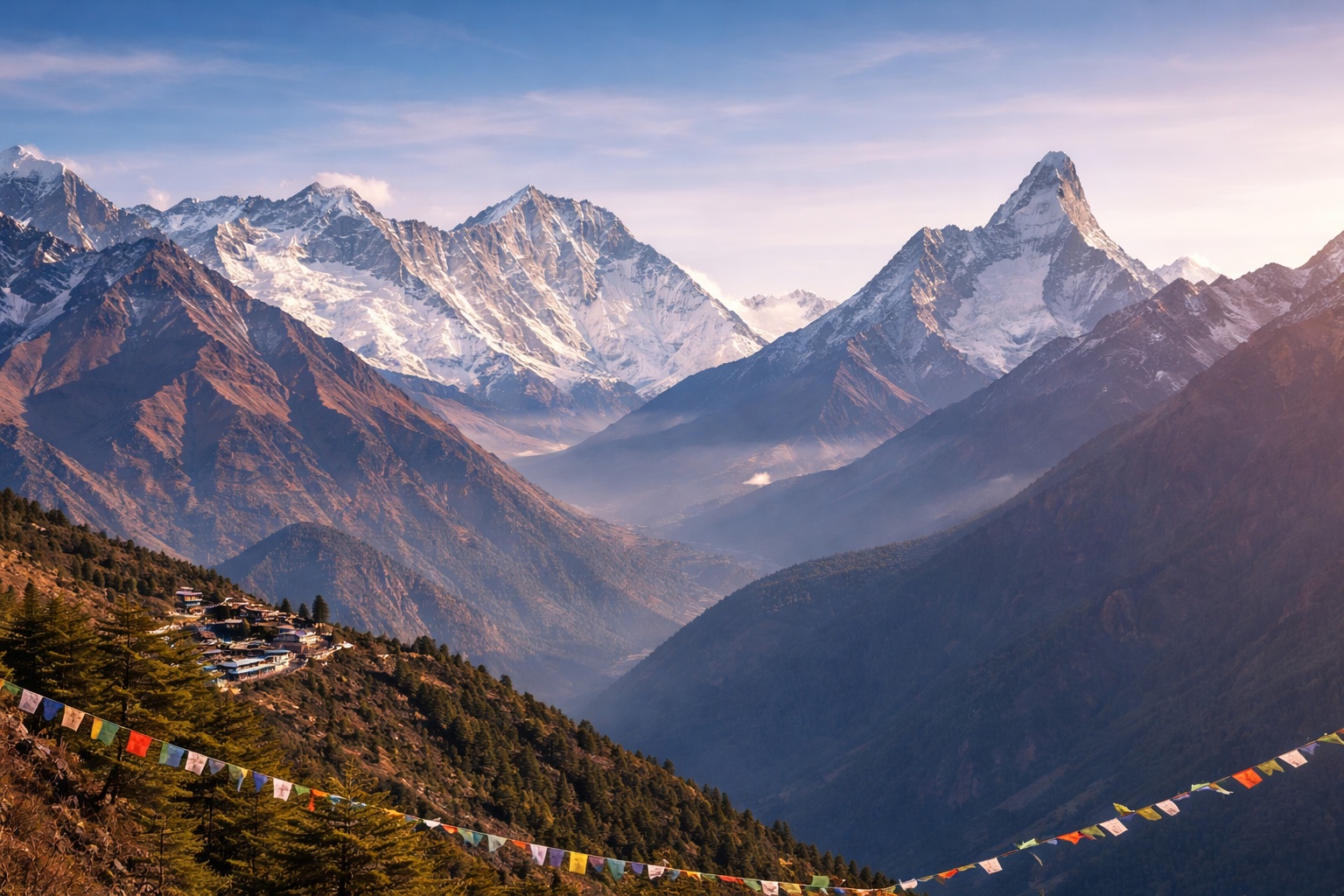
Kothey is a small settlement on the approach to Mera Peak, set in the Hinku valley, one of the overnight stops on the quieter trekking route toward Nepal's highest trekking summit at 6,476 metres. Sitting among forested terrain at a moderate altitude, Kothey offers a gentler stage of the trek compared to the demanding high camps and technical glacier travel that await further along the route toward the peak itself.
The village reflects the generally undeveloped character of the Hinku valley approach, a corridor that sees a fraction of the trekkers found on the busier Everest Base Camp trail nearby, despite offering comparably dramatic Himalayan scenery. Basic teahouses provide simple accommodation, and the surrounding forest supports a good variety of birdlife, adding a further layer of interest to what is already a scenic and rewarding stretch of trail.
For trekkers heading toward Mera Peak, Kothey represents an important acclimatisation stop within the early stages of the itinerary, allowing a gradual, sensible ascent before the terrain becomes progressively more demanding further up the valley. The relative solitude of this route, compared to the well-trodden main Khumbu trekking corridor, is one of its most valued qualities among experienced trekkers seeking both a genuine summit challenge and a quieter overall trekking experience.
Basic but adequate teahouse facilities are typically available, offering a hot meal and a simple bed for trekkers passing through.
Facilities along this stretch of trail remain simple, and trekkers should carry sufficient cash, since cards are not accepted and ATMs do not exist beyond the larger towns.
Mobile signal in the area is patchy at best, and travellers should not rely on constant connectivity once they are this far into the trail network.
Weather at this elevation can change quickly, and a flexible itinerary with a buffer day or two is generally recommended for anyone travelling through this part of the route.
Local guides with specific knowledge of this stretch of trail add real value, both for navigation and for the cultural context they can offer along the way.