
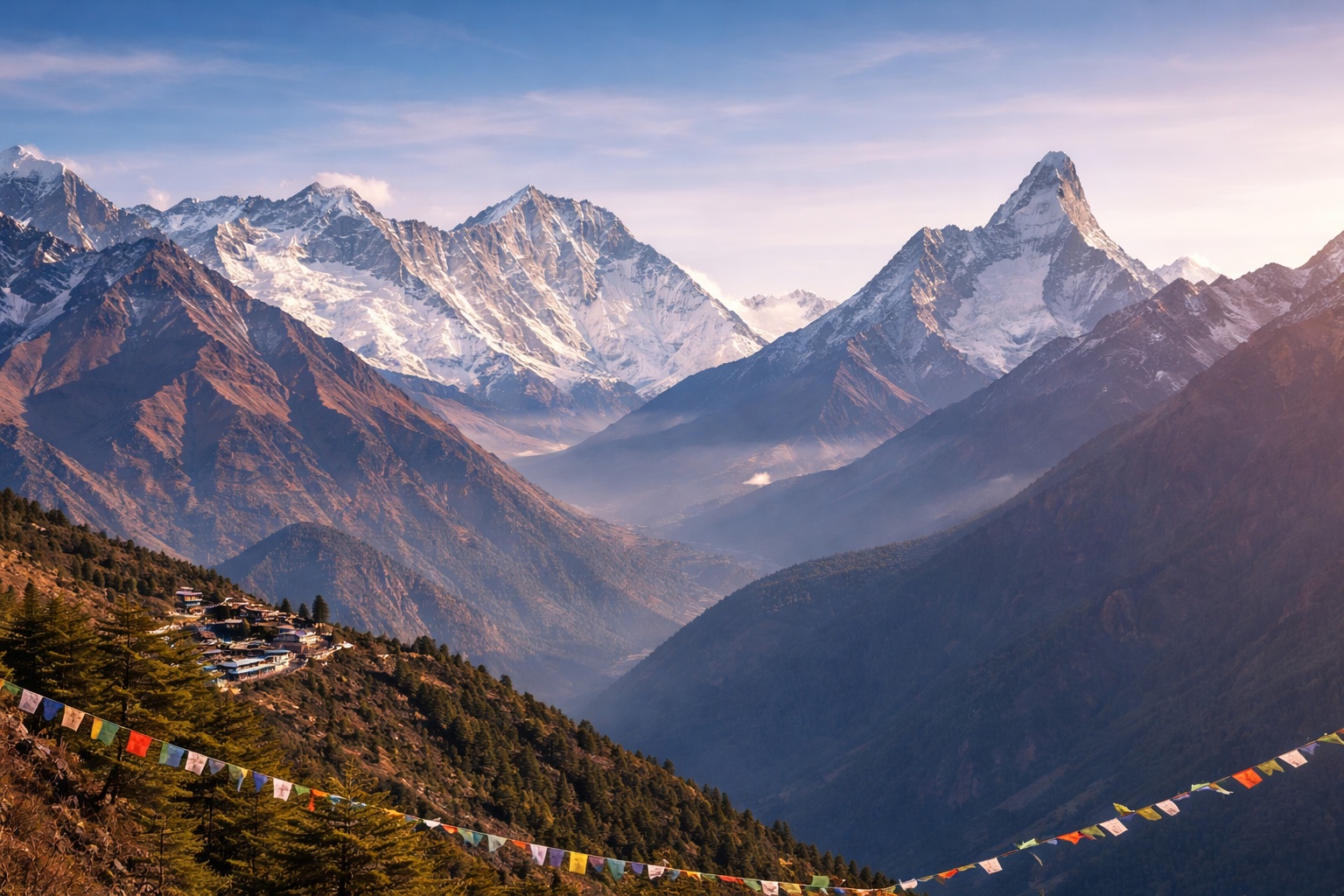
Junbesi is a picturesque Sherpa village in the Solu region, set along the classic overland approach to Everest used before the Lukla airstrip existed, and a highlight of both the Pikey Peak trek and longer traditional itineraries starting from Jiri. Surrounded by terraced fields, pine forest, and a wide, gentle valley setting, Junbesi is often cited by trekkers as one of the most attractive villages encountered on the approach routes to the Everest region, its unhurried pace a striking contrast to the busier trail through Namche Bazaar further ahead.
The village is home to a monastery affiliated with the Thubten Choling community, and the Sherpa population here maintains strong Tibetan Buddhist traditions, expressed in the prayer flags, mani walls, and chortens that line the approach into the settlement. Junbesi is also close to Chiwong Monastery, perched on a hillside above the valley, a worthwhile side trip for trekkers with time to spare during their stay.
Because it lies on the quieter, lower-altitude approach routes rather than the main Everest Base Camp corridor accessed via Lukla, Junbesi sees a fraction of the foot traffic found on Nepal's busiest trekking trail, offering a genuinely peaceful alternative for travellers who value unhurried village life alongside their mountain scenery. Basic teahouses and guesthouses provide comfortable accommodation, and the surrounding countryside, with its patchwork of fields and forest, gives Junbesi a settled, cultivated beauty distinct from the starker high-altitude terrain found deeper into the Khumbu.
Mobile signal in the area is patchy at best, and travellers should not rely on constant connectivity once they are this far into the trail network.
Weather at this elevation can change quickly, and a flexible itinerary with a buffer day or two is generally recommended for anyone travelling through this part of the route.
Local guides with specific knowledge of this stretch of trail add real value, both for navigation and for the cultural context they can offer along the way.