
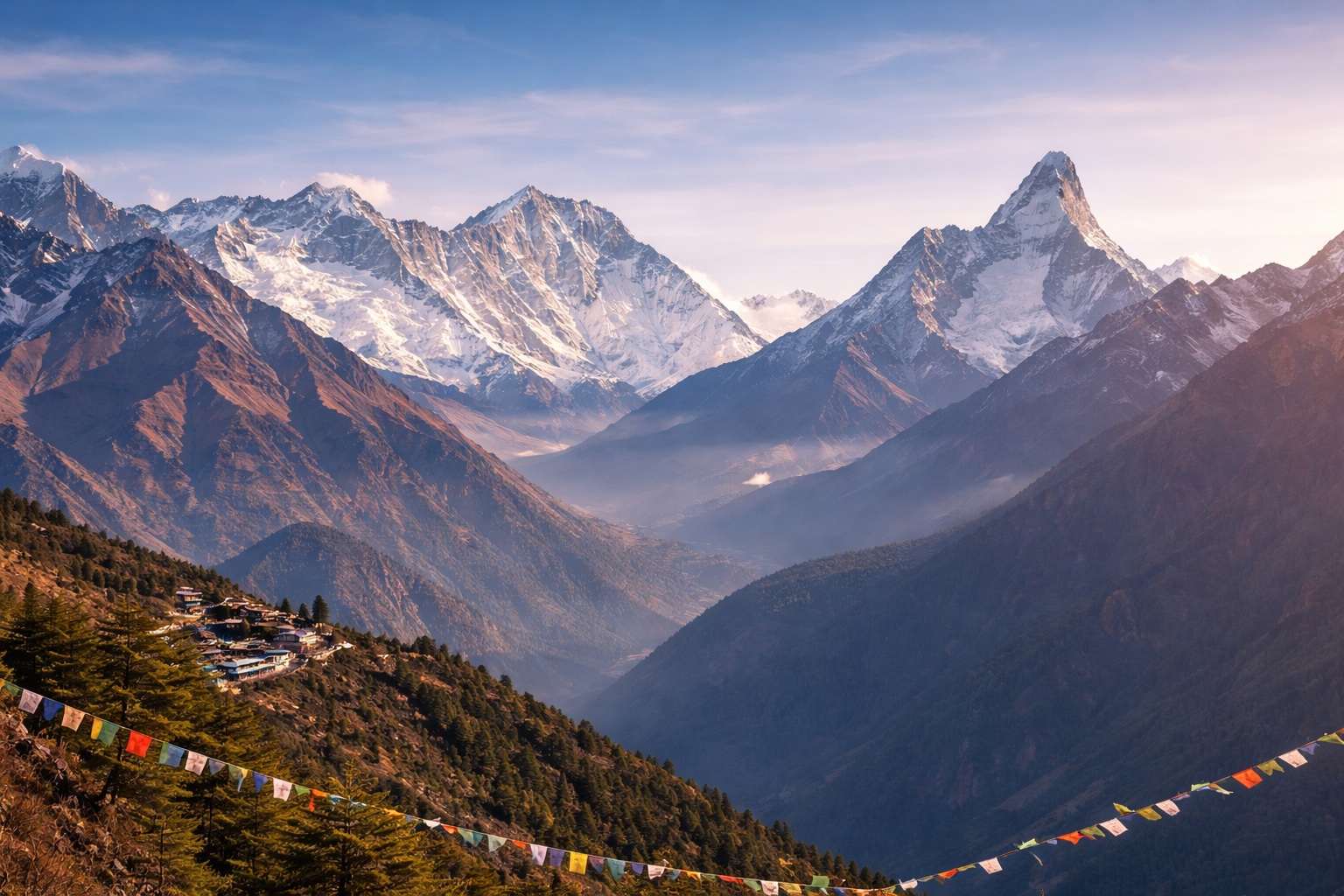
Jagat is a stone-paved village on the Manaslu Circuit where the Restricted Area Permit is checked, marking the formal entry into the more tightly controlled section of this demanding trek around the world's eighth-highest mountain. Sitting within the dramatic Budhi Gandaki gorge, one of the trail's more visually striking narrow sections, Jagat's traditional stone architecture and paved paths reflect the building style found throughout much of the lower Manaslu region.
The permit checkpoint here is a practical necessity given Manaslu's restricted area status, which requires a special permit, a minimum of two trekkers travelling together, and a licensed guide for the entire circuit, rules significantly more stringent than those found on Nepal's more established trekking routes like Everest or Annapurna. Trekkers should expect a short administrative stop here as documents are checked before the trail continues deeper into the gorge.
Beyond its checkpoint function, Jagat is a genuinely attractive village in its own right, its stone-paved streets and traditional houses offering a glimpse of the settled, agricultural character of the lower Manaslu valley before the trail begins climbing toward the more Tibetan-influenced upper villages further north. The Budhi Gandaki continues to define the landscape through this section, its steep, forested gorge walls rising dramatically on both sides of the narrow trail as it winds deeper into one of Nepal's most rewarding and still comparatively undiscovered trekking regions.
Mobile signal in the area is patchy at best, and travellers should not rely on constant connectivity once they are this far into the trail network.
Weather at this elevation can change quickly, and a flexible itinerary with a buffer day or two is generally recommended for anyone travelling through this part of the route.
Local guides with specific knowledge of this stretch of trail add real value, both for navigation and for the cultural context they can offer along the way.
A gradual, well-paced ascent through this section remains the best defence against altitude-related discomfort further along the route.