
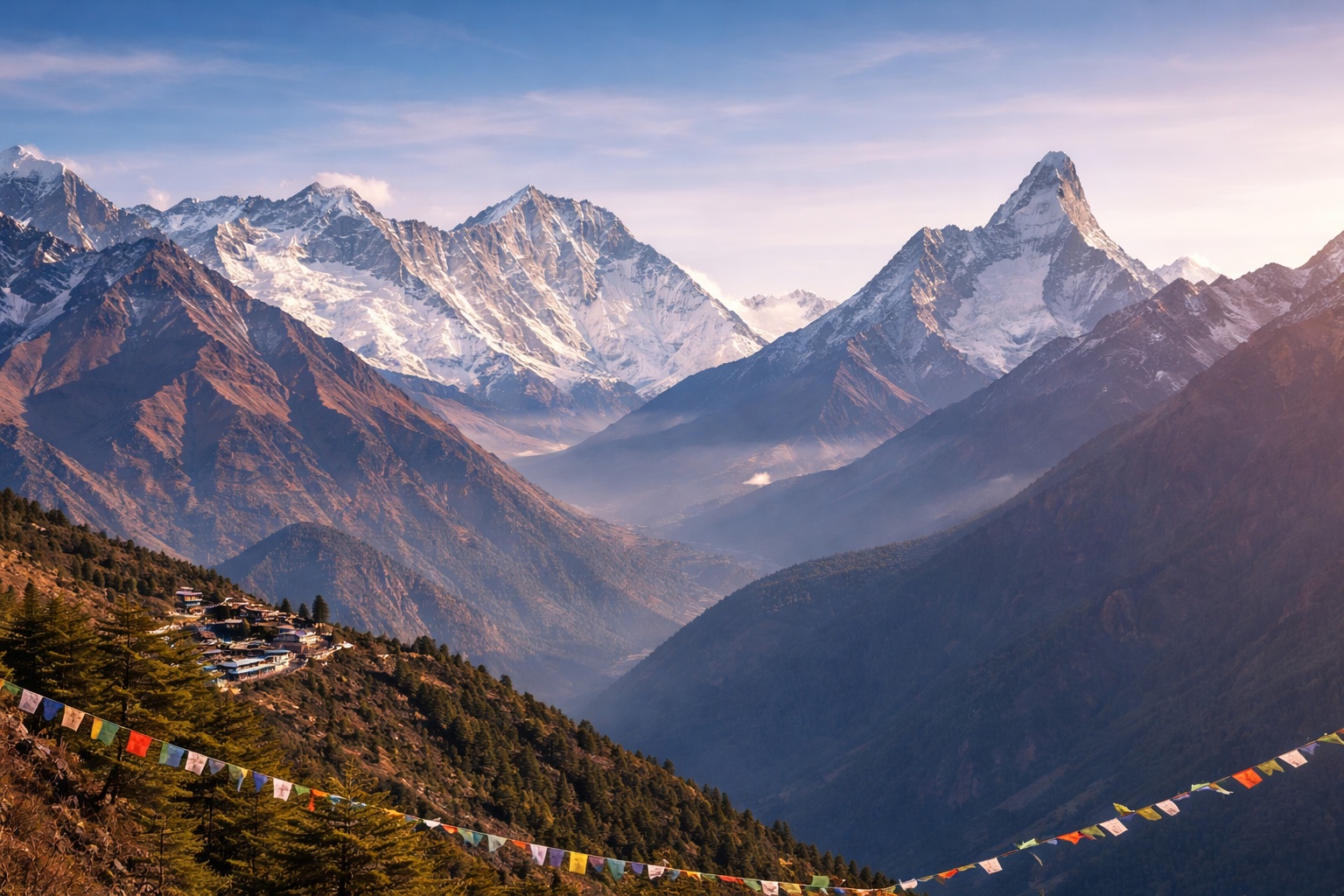
Gokyo is a small settlement beside the turquoise waters of Dudh Pokhari, the largest of the Gokyo Lakes, and the main base for exploring this alternative approach to the Everest region, considered by many experienced trekkers to rival or even surpass the standard Everest Base Camp route in scenic reward. Sitting at a substantial altitude in a landscape dominated by glaciers and high peaks, Gokyo serves as the launch point for the climb to Gokyo Ri, one of the finest viewpoints anywhere in the Khumbu.
The village itself consists of a cluster of teahouses built along the lake shore, with the vast Ngozumpa Glacier, the longest in the Himalaya, visible just beyond the ridge to the east. The six lakes of the Gokyo valley, sacred in both Hindu and Buddhist tradition, are among the highest freshwater lake systems in the world, and their striking blue-green colour against the surrounding grey moraine and white peaks makes this one of the most photographed locations in the entire Everest region.
Most trekkers spend at least one full day based in Gokyo, using the extra time to climb Gokyo Ri for its sunrise or sunset panorama of four 8,000 metre peaks simultaneously, Everest, Lhotse, Makalu, and Cho Oyu, a view widely considered among the best available anywhere in the Himalaya. The relative quiet of the Gokyo valley compared to the main Everest Base Camp trail is one of its most valued qualities, offering comparable or superior mountain scenery with noticeably fewer trekkers sharing the trail.
Facilities along this stretch of trail remain simple, and trekkers should carry sufficient cash, since cards are not accepted and ATMs do not exist beyond the larger towns.
Mobile signal in the area is patchy at best, and travellers should not rely on constant connectivity once they are this far into the trail network.
Weather at this elevation can change quickly, and a flexible itinerary with a buffer day or two is generally recommended for anyone travelling through this part of the route.