
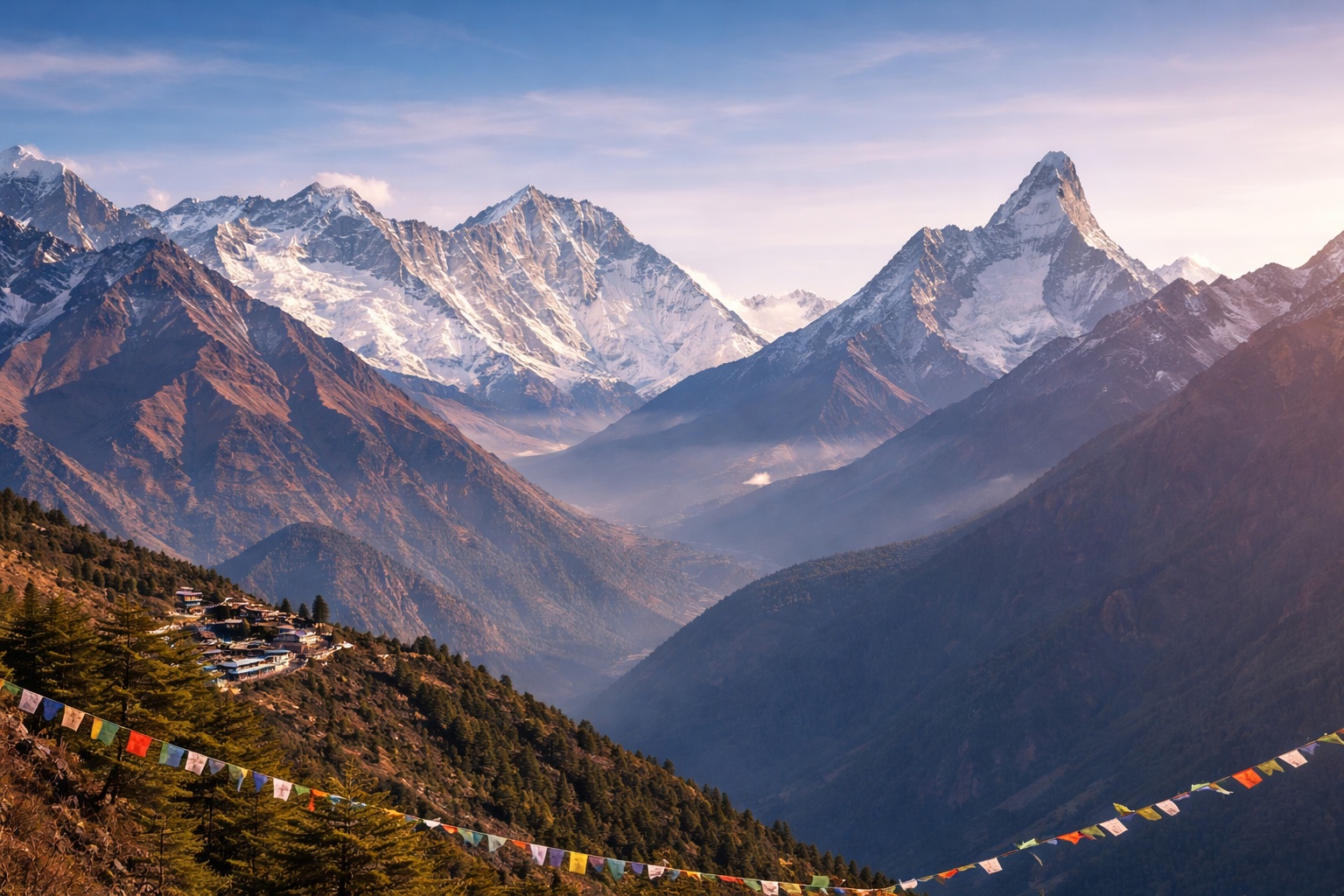
Gamgadhi is the district headquarters of Mugu in Nepal's remote far west, serving as an important administrative and logistical hub for treks into the Rara National Park area and toward Rara Lake, the country's largest lake. Reached by domestic flight from Nepalgunj or overland from Jumla, Gamgadhi sits in one of Nepal's least developed and least visited regions, a world away from the well-trodden trails of the Everest and Annapurna regions in both infrastructure and visitor numbers.
As a district capital, Gamgadhi has a basic but functional level of services, government offices, simple shops, and modest guesthouse accommodation, that make it an important staging point for trekkers heading further into the surrounding hills toward Rara Lake itself. The town's remote position reflects the broader character of trekking in Nepal's far west, where infrastructure investment has historically lagged well behind the central and eastern regions more commonly associated with international trekking tourism.
Local communities around Gamgadhi rely heavily on subsistence farming and livestock, and the surrounding landscape of pine forest and terraced hillsides offers a quieter, more rural counterpoint to Nepal's busier mountain trekking corridors. For travellers who make the considerable effort required to reach this part of the country, Gamgadhi represents both a practical necessity and a genuine window into a side of Nepal that receives only a small fraction of the visitors seen in the country's more famous trekking regions.
A gradual, well-paced ascent through this section remains the best defence against altitude-related discomfort further along the route.
Basic but adequate teahouse facilities are typically available, offering a hot meal and a simple bed for trekkers passing through.
Facilities along this stretch of trail remain simple, and trekkers should carry sufficient cash, since cards are not accepted and ATMs do not exist beyond the larger towns.
A gradual, well-paced ascent through this section remains the best defence against altitude-related discomfort further along the route.
Basic but adequate teahouse facilities are typically available, offering a hot meal and a simple bed for trekkers passing through.