
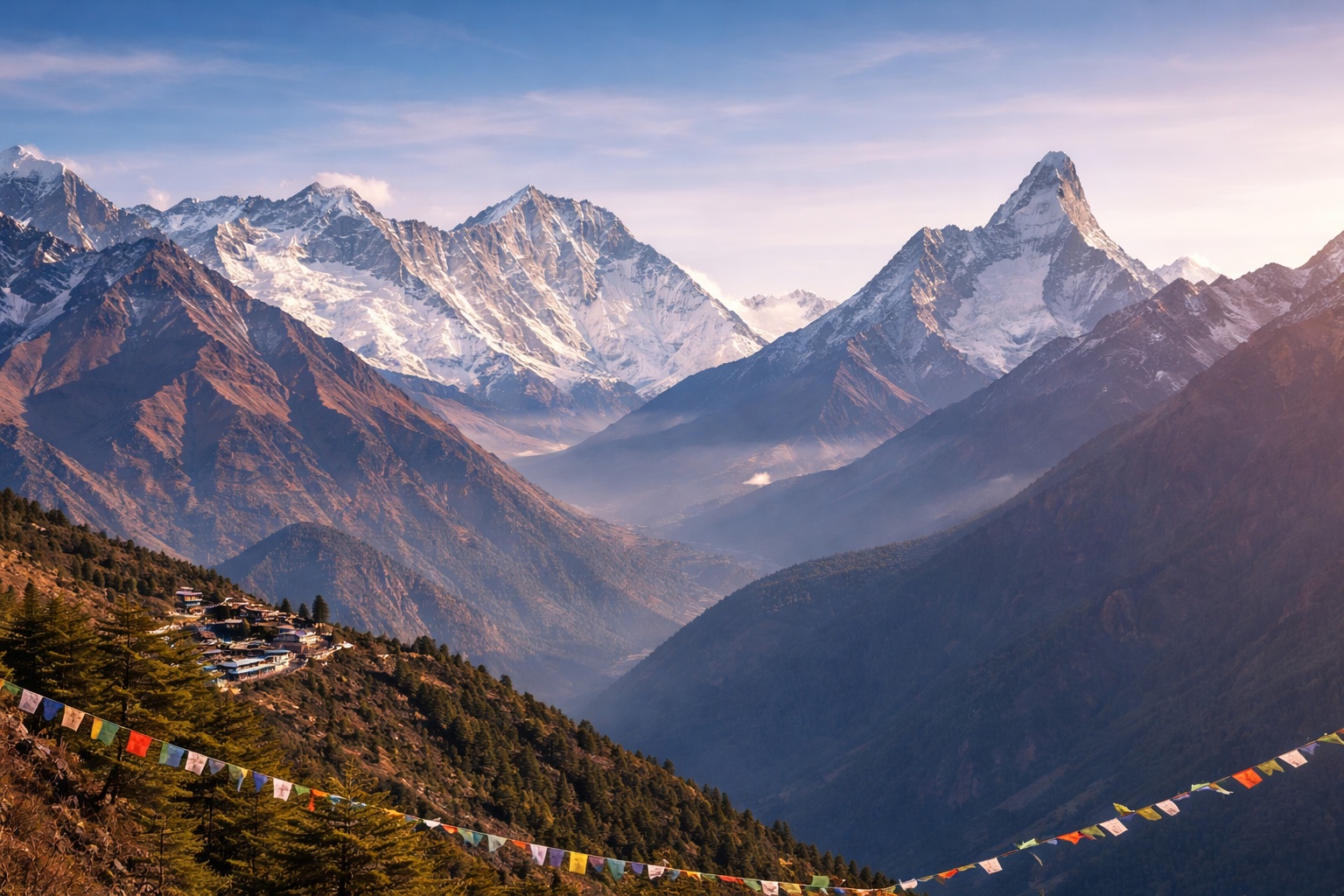
Dhunche is the district headquarters for the Langtang region, reached by a scenic if occasionally rough road journey from Kathmandu, and one of the two principal access points, alongside Syabrubesi, for treks into the Langtang Valley and toward the sacred lakes of Gosaikunda. As a district administrative centre, Dhunche has a level of infrastructure well beyond the smaller villages further along the trekking routes, including government offices, shops, and a general small-town bustle that provides a useful staging point before heading into the mountains.
Set on a hillside with views across the surrounding valley, Dhunche serves as the entry checkpoint for Langtang National Park, and permits are checked here before trekkers continue onward toward either the Langtang Valley itself or the Gosaikunda lakes trek, both of which begin from this general area. The town's position at a moderate altitude gives it a cooler climate than Kathmandu, with pine forest and terraced hillsides surrounding the settlement.
For trekkers arriving by road, Dhunche often serves as the first overnight stop of the trip, allowing time to organise final logistics, arrange guides or porters if not already booked, and begin acclimatising gently before the trail climbs more seriously in the days ahead. The town's dual role, serving both the Langtang Valley and Gosaikunda routes, makes it a genuinely useful hub for trekkers with flexible plans who may decide which of the two classic itineraries to prioritise only after arriving and assessing conditions and time available.
Mobile signal in the area is patchy at best, and travellers should not rely on constant connectivity once they are this far into the trail network.
Weather at this elevation can change quickly, and a flexible itinerary with a buffer day or two is generally recommended for anyone travelling through this part of the route.
Local guides with specific knowledge of this stretch of trail add real value, both for navigation and for the cultural context they can offer along the way.