
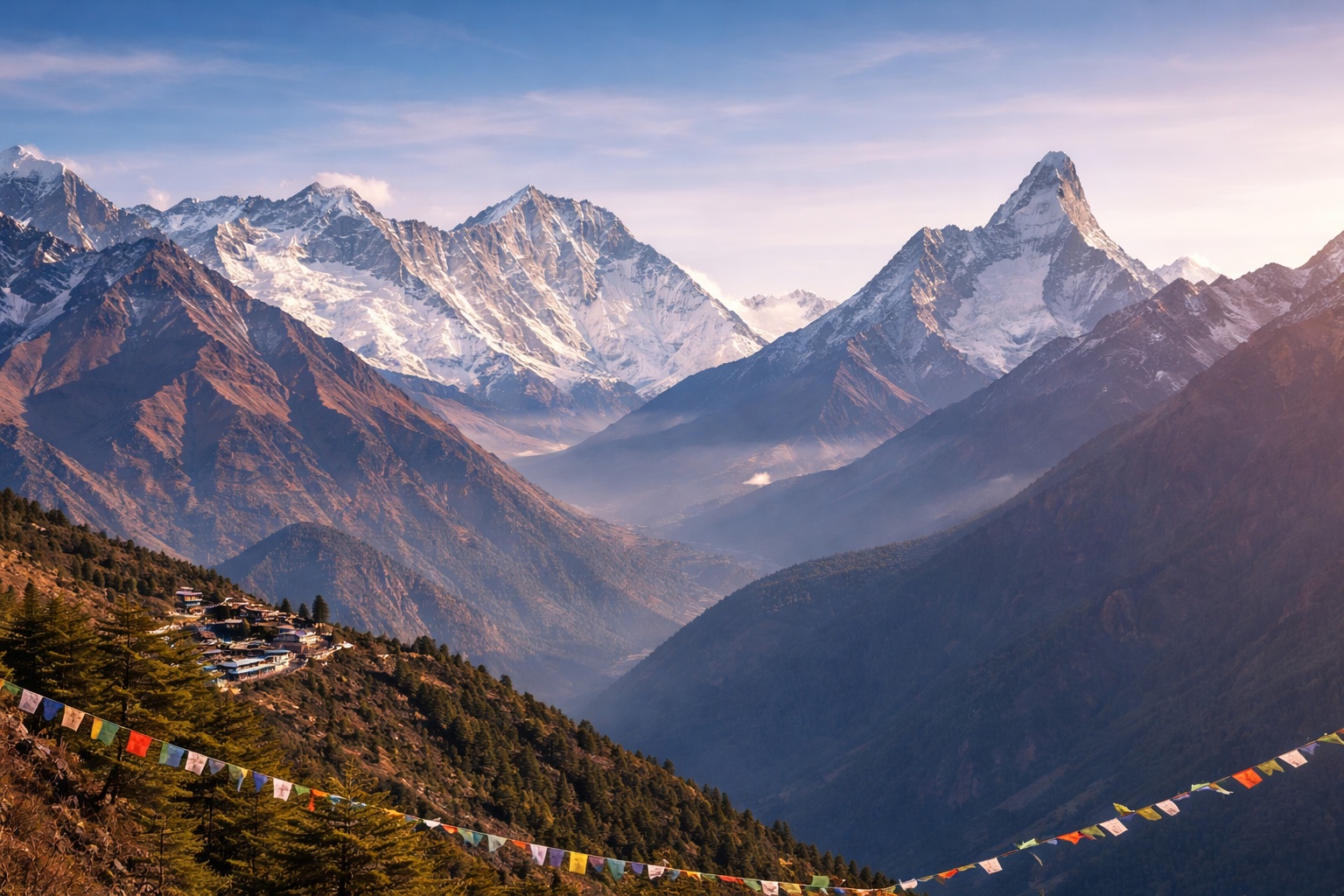
Dharapani is the village where the Manaslu Circuit trail rejoins the Annapurna Circuit route, a junction point that makes it an important logistical hub for trekkers completing either circuit. For those finishing the demanding crossing of Larkya La on the Manaslu side, Dharapani represents the point of return to a busier, more developed trekking corridor, while for Annapurna Circuit trekkers it marks one of the stages along the classic route between Besisahar and Manang.
Set in the Marshyangdi valley, Dharapani sits at a comfortable mid-altitude with a mix of Gurung and Tibetan-influenced architecture reflecting its position at the crossroads of two significant trekking cultures. The village has grown in importance as a transit point precisely because of this dual role, and trekkers exiting the Manaslu region often use Dharapani as their first stop back on a route with vehicle access, allowing an easier and faster return to Kathmandu or Pokhara than would be possible from deeper within the Manaslu restricted area.
Facilities in Dharapani are correspondingly more developed than in many of the smaller villages found earlier on both circuits, reflecting the steady flow of trekkers passing through from both directions. The surrounding valley offers pleasant views back toward the peaks both routes have just crossed or are about to approach, and the atmosphere here often carries a distinct sense of achievement for Manaslu trekkers, many of whom regard reaching Dharapani as the effective conclusion of the most demanding stages of their journey, even if a few more days of walking or a road journey out still remain.
Weather at this elevation can change quickly, and a flexible itinerary with a buffer day or two is generally recommended for anyone travelling through this part of the route.
Local guides with specific knowledge of this stretch of trail add real value, both for navigation and for the cultural context they can offer along the way.
A gradual, well-paced ascent through this section remains the best defence against altitude-related discomfort further along the route.