
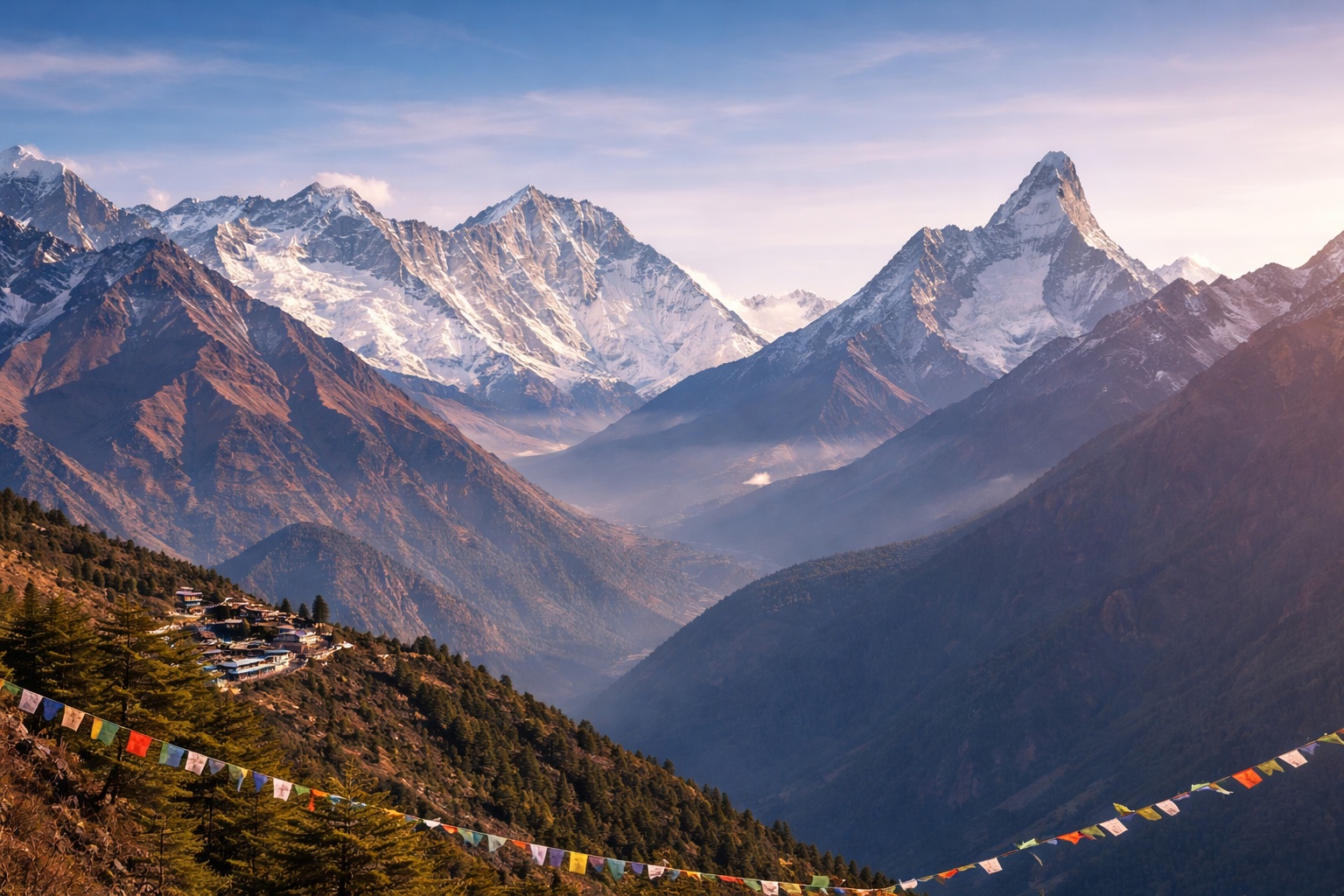
Darbang is a village on the approach to the Dhaulagiri Circuit, one of the last proper settlements trekkers pass through before the trail leaves cultivated hill country behind and climbs into the increasingly remote, high-altitude terrain surrounding the Dhaulagiri massif, the world's seventh-highest mountain. Set among terraced fields in the foothills below Dhaulagiri and the wider Annapurna region, Darbang retains a rural, agricultural character typical of Nepal's middle hills, a marked contrast to the barren, glaciated landscape the same trek reaches within a matter of days.
For trekkers undertaking the Dhaulagiri Circuit, one of Nepal's more demanding and less-travelled long routes, Darbang represents a final point of relative comfort and easy resupply before the trek's character shifts decisively toward genuine wilderness. Beyond this village, teahouse infrastructure becomes increasingly sparse, and most itineraries transition to a greater reliance on camping support as the route climbs toward French Pass and the remote high plateau beneath Dhaulagiri's northern flank.
The village's setting amid the lower Myagdi valley offers pleasant, unhurried walking through farmland and small settlements, a good opportunity for trekkers to settle into the rhythm of a long expedition-style trek before the terrain and demands increase substantially further ahead. Local Magar and Gurung communities inhabit this part of the valley, and the gradual cultural and physical transition from settled hill villages like Darbang to the high-altitude wilderness beyond is one of the defining features of what makes the Dhaulagiri Circuit such a rewarding, if demanding, choice for experienced trekkers.
Mobile signal in the area is patchy at best, and travellers should not rely on constant connectivity once they are this far into the trail network.
Weather at this elevation can change quickly, and a flexible itinerary with a buffer day or two is generally recommended for anyone travelling through this part of the route.
Local guides with specific knowledge of this stretch of trail add real value, both for navigation and for the cultural context they can offer along the way.