
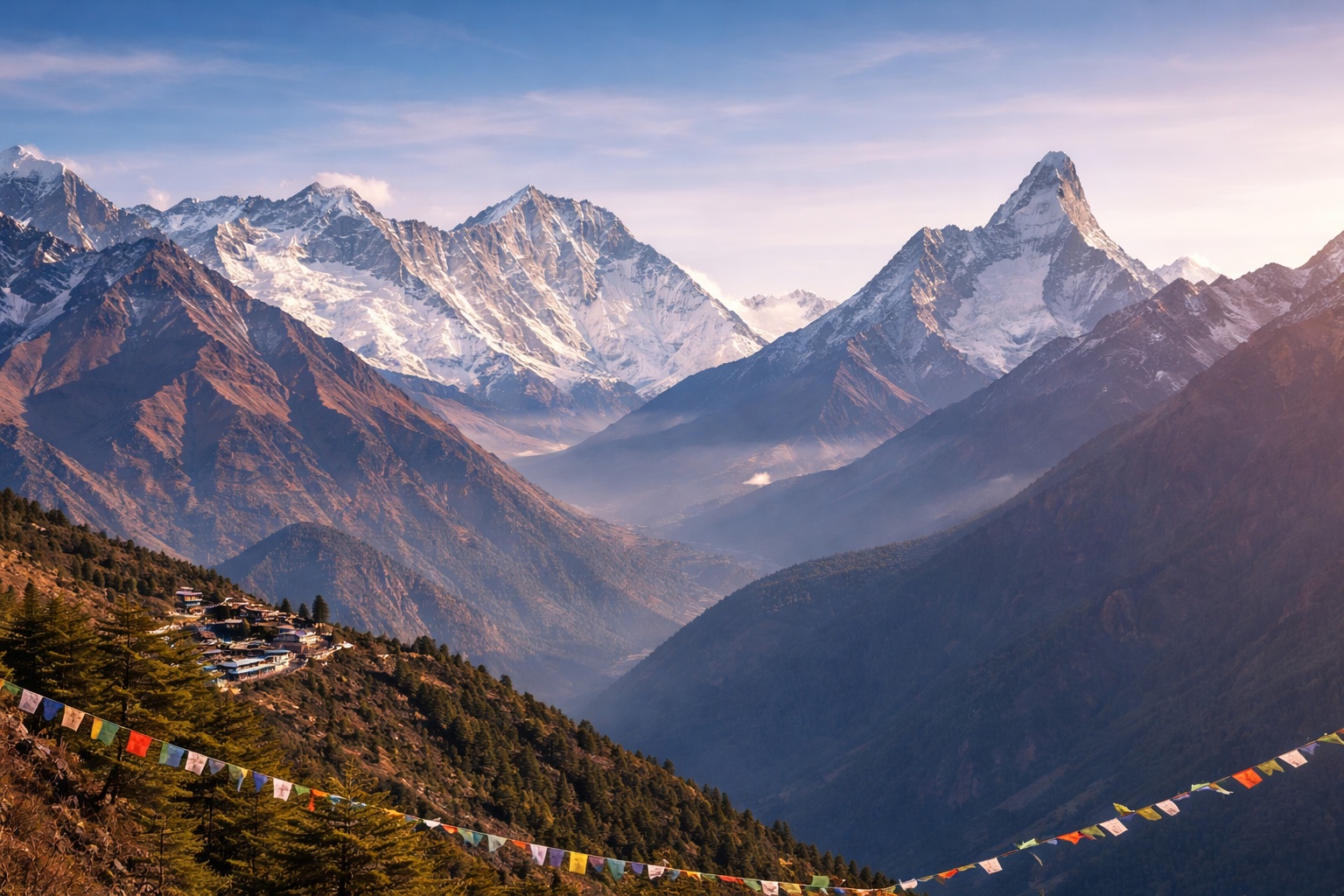
Chhule is a small settlement on the Kanchenjunga trekking circuit in Nepal's remote far east, one of the modest villages connecting the lower approach trail to the higher, more sparsely populated terrain leading toward the base camps of Kanchenjunga itself, the third-highest mountain in the world. Set within the Kanchenjunga Conservation Area, Chhule sits in a landscape of dense forest and terraced hillsides, home to Limbu and Rai communities whose culture and language differ markedly from the Sherpa and Tamang groups more commonly encountered on Nepal's better-known trekking routes.
The village serves primarily as a trail stop for the relatively small number of trekkers who undertake the Kanchenjunga Circuit each season, one of Nepal's most remote and least developed major trekking routes given its restricted area status and the sheer distance and time required to reach it from Kathmandu. Facilities in Chhule remain basic, reflecting the limited tourist infrastructure found throughout this region compared to the well-developed teahouse networks of the Everest and Annapurna trails.
Trekkers passing through Chhule are typically several days into their journey from the roadhead at Taplejung, with the more demanding high-altitude sections of the Kanchenjunga trek, including the approach to the North and South Base Camps, still ahead of them. The relative remoteness of villages like Chhule is precisely what draws experienced trekkers to this region: a genuine sense of wilderness and cultural distance from Nepal's more commercialised trekking corridors, at the cost of the comforts and conveniences found on busier routes elsewhere in the country.
Simple guesthouse meals, typically dal bhat or noodle soup, are the standard fare available here, consistent with the basic but adequate hospitality found throughout this quieter corner of eastern Nepal.
Onward walking from here continues to climb gradually, preparing trekkers for the more demanding high-altitude stages still to come.