
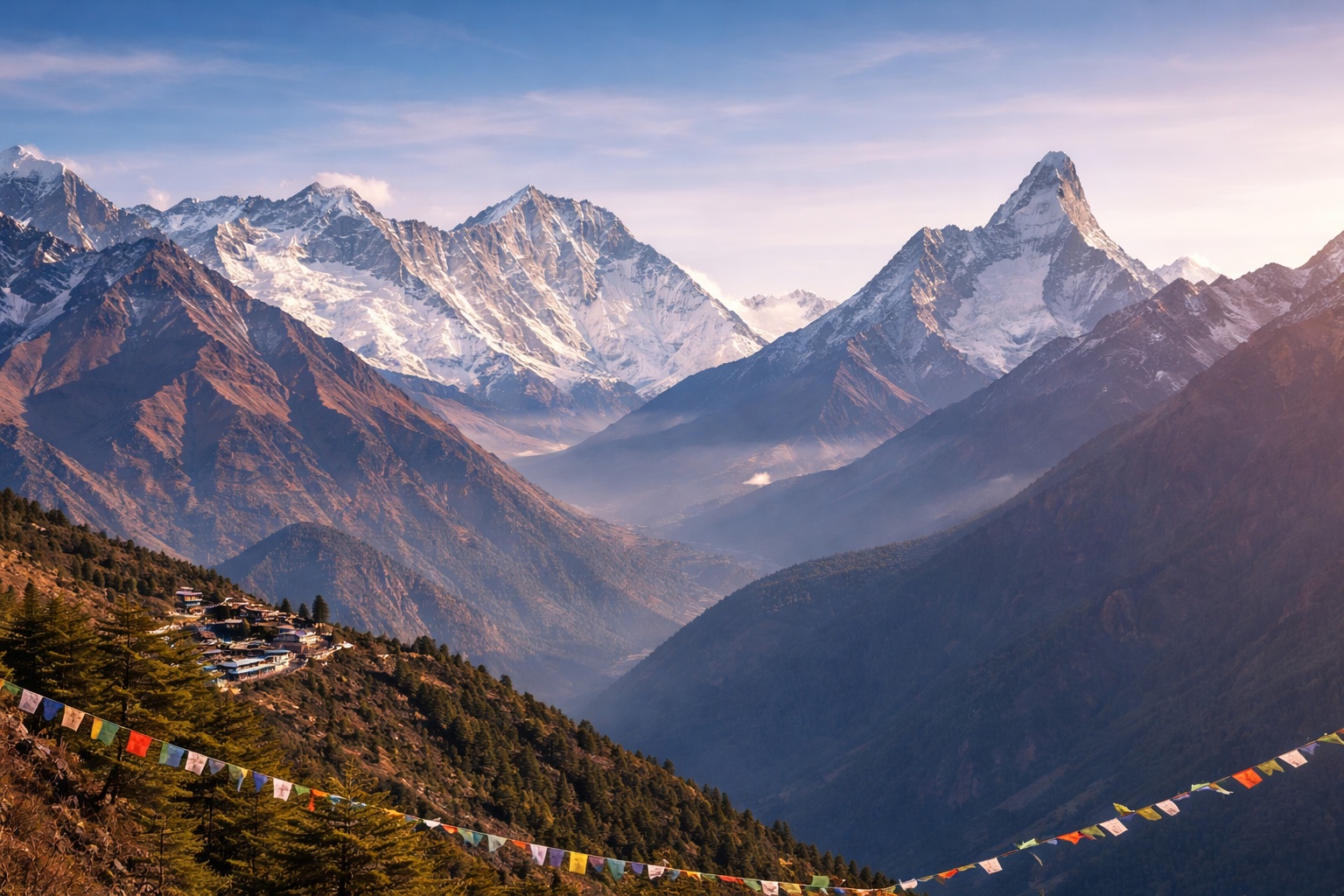
Chhonhbardan Gompa is a monastery near Ringmo village and Phoksundo Lake in Upper Dolpo, one of several religious sites in the area that reflect the region's distinctive blend of Tibetan Buddhist and older Bon traditions, the pre-Buddhist spiritual practice that survives in few other places in the modern Himalaya with the same continuity found here. Set close to the turquoise waters of Phoksundo Lake, Nepal's deepest lake, the monastery occupies one of the most visually striking settings of any religious site encountered on the Dolpo trekking routes.
The presence of active Bon institutions alongside Tibetan Buddhist monasteries in this part of Dolpo is part of what makes the region so significant to scholars of Himalayan religion: Bon, often described as the indigenous spiritual tradition of Tibet predating the arrival of Buddhism, survives here in a living, practised form rather than as a historical curiosity, and Chhonhbardan is one of the sites where this heritage remains visible and active.
Visiting Chhonhbardan typically forms part of a rest or exploration day built around Phoksundo Lake itself, allowing trekkers time to properly absorb both the monastery's religious significance and the surrounding scenery, considered among the most dramatic in all of Nepal. The lake's vivid turquoise colour, a product of mineral content and the particular way light interacts with its glacial waters, provides a striking backdrop to the monastery and the wider Ringmo village, one of the highlights of any Lower or Upper Dolpo itinerary.
Photographers in particular tend to linger around this part of the trek, since the combination of turquoise water, arid cliffs, and traditional monastic architecture rarely comes together so completely in a single frame elsewhere in Nepal.
Visitors are generally expected to observe quiet, respectful conduct near the monastery given its continued use as an active place of worship.
Weather permitting, sunrise and sunset light on the lake are especially prized moments to be near the monastery grounds.