
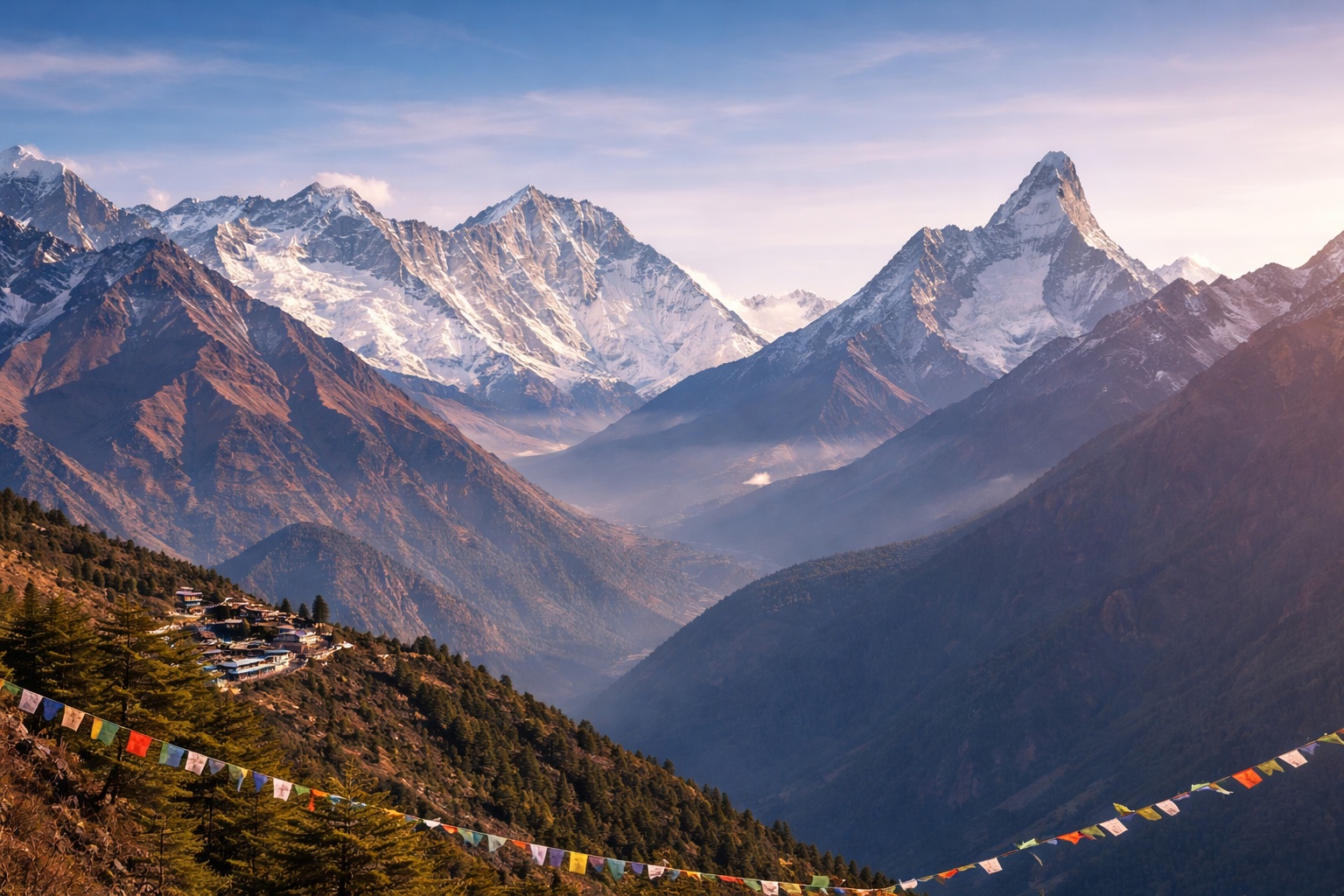
Chhokangparo is one of the principal villages of the sacred Tsum Valley, a restricted, historically isolated valley in the Manaslu region renowned for its deep Tibetan Buddhist heritage and its traditional prohibition on animal slaughter, a rule still widely observed by the valley's residents today. Reached after several days of walking from the trailhead at Soti Khola or Arughat, Chhokangparo sits amid a landscape of ancient monasteries, mani walls, and chortens that mark this valley as one of the most spiritually significant and culturally intact corridors anywhere in the Nepal Himalaya.
The village serves as an important hub for the wider Tsum Valley community, home to several monasteries and a population whose customs, dress, and religious practice closely mirror those of the Tibetan plateau rather than the Gurung and Magar cultures more typical of the lower Manaslu region. Trekkers passing through Chhokangparo will often see monks and nuns moving between the valley's various religious sites, and the sound of prayer wheels and chanting is a common accompaniment to daily life here.
Because Tsum Valley remained closed to outside visitors until relatively recently, opening for trekking only in 2008, Chhokangparo and its surrounding villages have preserved a way of life that has changed comparatively little over the centuries, offering a level of cultural authenticity increasingly hard to find on Nepal's busier trekking routes. From Chhokangparo, the trail continues deeper into the valley toward Nile and the high monastery of Mu Gompa, the spiritual heart of Tsum and the turnaround point for most standard itineraries.
Local guides in the area are often able to arrange visits inside working monasteries for interested trekkers, offering a rare glimpse into the daily rhythms of monastic life that continues largely unchanged in this remote valley.
Locally grown buckwheat and potatoes form the backbone of the simple but filling meals served in the village's guesthouses.