
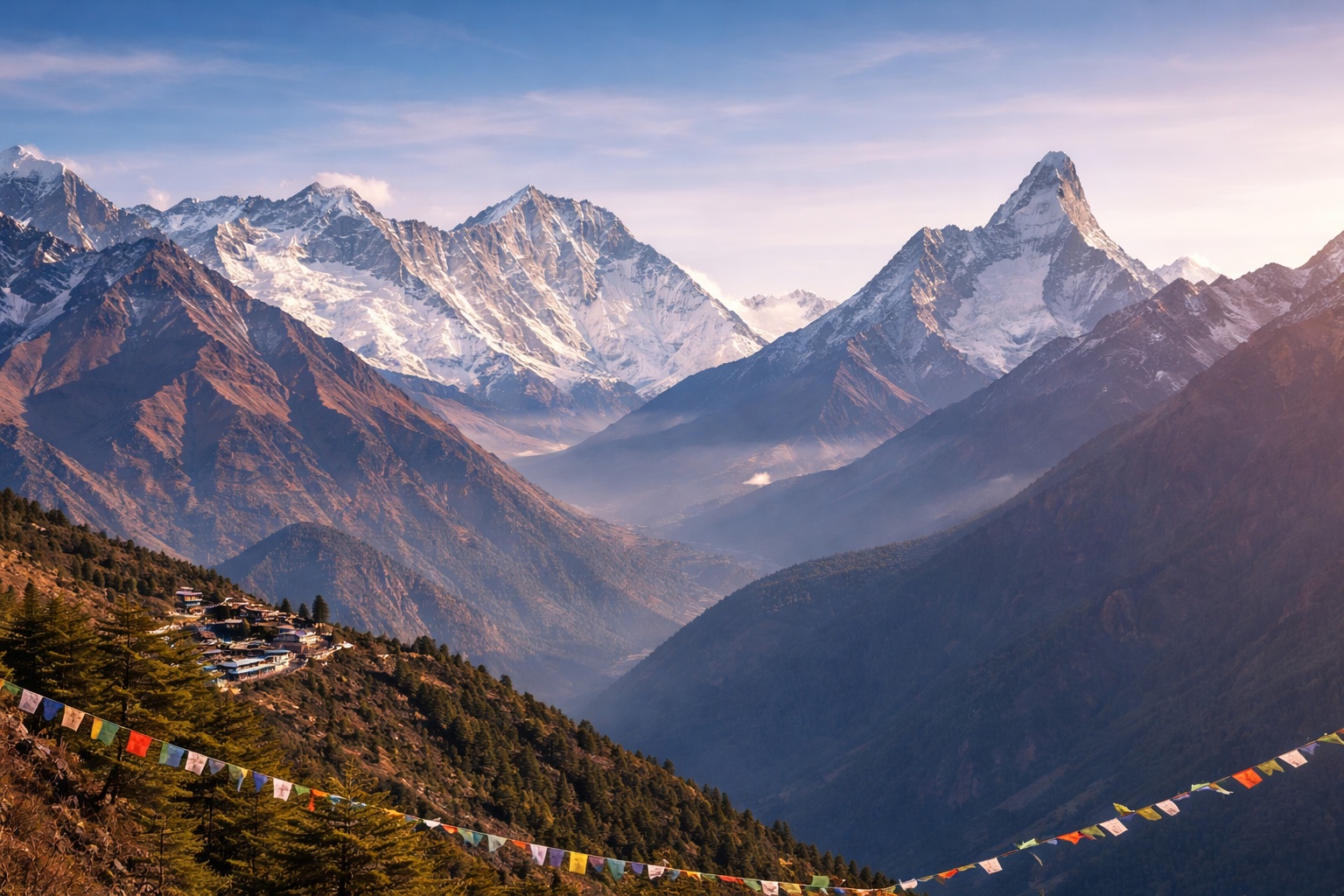
Tibet in one sentence: The high plateau region north of the Himalaya, known as the "Roof of the World," home to Lhasa's Potala Palace, the source of Asia's greatest rivers, and one of the most distinctive Buddhist cultures on earth, administered today as the Tibet Autonomous Region of China.
Overview of Tibet
Tibet occupies the vast high plateau north of the main Himalayan range, averaging over 4,500 metres in elevation and covering an area larger than most European countries combined - a scale and altitude that have shaped a culture, architecture, and way of life found nowhere else on earth. Historically an independent kingdom and later a Buddhist theocracy centred on the institution of the Dalai Lama, Tibet has since 1950 been administered by the People's Republic of China as the Tibet Autonomous Region, with its historical cultural and religious sphere extending into neighbouring Chinese provinces (Qinghai, Sichuan, Yunnan, and Gansu) as well as into the Himalayan borderlands of Nepal, India (Ladakh), and Bhutan. For travellers, "Tibet" most commonly refers to the Tibet Autonomous Region, accessed via Lhasa, though the broader Tibetan cultural plateau is considerably larger.
Lhasa, the capital, sits at approximately 3,650 metres and is dominated by the Potala Palace - the former winter residence of the Dalai Lamas and one of the most architecturally significant buildings in Asia, rising thirteen stories up the face of Marpo Ri hill and visible from across the city. Around it, the old town preserves the Jokhang Temple, Tibetan Buddhism's most sacred shrine, and the Barkhor circuit, a pilgrimage circumambulation route lined with shops and prayer wheels that remains a living centre of devotional practice rather than a museum piece.
Geography: The Roof of the World
Tibet's defining geographic fact is altitude. The plateau itself sits higher than most of the world's mountain summits, and Tibet's southern edge forms the northern wall of the Himalaya, including the Tibetan (northern) approach to Mount Everest, known locally as Chomolangma ("Mother Goddess of the World"). The Rongbuk Monastery and Everest Base Camp on the Tibetan side offer a dramatically different, far less crowded perspective on the mountain than the famous Nepali approach, reached by vehicle rather than multi-day trekking, and visible in full from a much greater distance across the open plateau.
Beyond Everest, Tibet is the source of an extraordinary number of Asia's major rivers - the Yangtze, Yellow River, Mekong, Salween, Brahmaputra, and Indus all rise on the Tibetan plateau, giving it genuine hydrological importance for well over a billion people downstream across South and Southeast Asia. This has led to Tibet sometimes being called Asia's "water tower." The plateau's vast scale also contains high-altitude lakes of striking colour and scale, most famously the turquoise waters of Namtso and Yamdrok Tso, both considered sacred in Tibetan Buddhist tradition and popular stops on any Lhasa-region itinerary.
Culture and Religion
Tibetan Buddhism forms the core of Tibetan cultural identity, distinct from the Theravada Buddhism of Southeast Asia and the Zen traditions of East Asia in its emphasis on Vajrayana (tantric) practice, elaborate monastic scholarship, and a rich tradition of reincarnate lamas, of whom the Dalai Lama is internationally the best known. Major monasteries - Drepung and Sera near Lhasa, Tashilhunpo in Shigatse, and countless smaller institutions across the plateau - historically functioned as centres of education, governance, and spiritual life simultaneously, and many remain active centres of worship and monastic study today, alongside their role as major heritage sites for visitors.
Tibetan culture is also expressed through a distinctive material and performing arts tradition: intricate thangka religious paintings, elaborate butter sculpture displayed at festivals, monastic cham masked dances, and an architectural style - thick-walled, small-windowed, built to withstand plateau winds and cold - found from Lhasa to the smallest herding villages. Tibetan nomadic pastoralism, centred on yak and sheep herding across the high grasslands, remains a living way of life in much of rural Tibet, alongside settled agriculture in the warmer river valleys around Lhasa and Shigatse.
Getting to Tibet and Travel Requirements
Travel to the Tibet Autonomous Region requires a Tibet Travel Permit in addition to a standard Chinese visa, and this permit can only be obtained through a registered Tibetan travel agency - independent, unguided travel is not permitted for foreign visitors. In practice this means every foreign traveller to Tibet must book through a licensed operator, who arranges the permit, a mandatory local guide, and private transport for the duration of the trip. Lhasa is reached either by flight from major Chinese cities (Chengdu, Beijing, Shanghai, Xi'an, and others) or via the dramatic high-altitude Qinghai-Tibet Railway, one of the highest railways in the world, crossing sections above 5,000 metres. Direct overland travel between Nepal and Tibet via the Kathmandu-Kerung (Gyirong) route is also possible for travellers combining both destinations, subject to border conditions and permit arrangements.
Best Time to Visit Tibet
Tibet's high-altitude climate means a shorter comfortable travel season than lower-elevation destinations. Late spring through early autumn (April to October) offers the most reliable weather and road conditions, with June through September generally considered peak season despite coinciding with the wetter months at lower elevations elsewhere in the region - the plateau itself remains relatively dry given its position in the rain shadow of the Himalaya. Winter (November to March) brings extreme cold and can close some higher routes and passes, though Lhasa itself, protected somewhat by its valley location, remains accessible and offers notably fewer visitors and clearer skies.
Health and Altitude Considerations
Because Lhasa itself sits at 3,650 metres and most Tibetan travel involves further ascent from there, altitude acclimatization is a serious and non-negotiable consideration for every visitor, not just trekkers. Travellers arriving by flight, in particular, go from near sea level to nearly 4,000 metres in a matter of hours, and a period of rest and gradual activity on arrival in Lhasa is strongly recommended before any further travel or exertion. Acute mountain sickness can affect travellers regardless of fitness level, and anyone with pre-existing cardiac or respiratory conditions should consult a doctor before planning a Tibet trip.
What Travellers Experience in Tibet
A typical Tibet itinerary centres on Lhasa - the Potala Palace, Jokhang Temple, and Barkhor circuit - before extending outward to Shigatse (Tibet's second city, home to Tashilhunpo Monastery), Gyantse (with its distinctive Kumbum stupa), and, for those with time and the right permits, onward toward Everest Base Camp on the Tibetan side or the sacred lakes of Namtso and Yamdrok Tso. The overall character of travel in Tibet is markedly different from trekking in Nepal: journeys are made largely by private vehicle across vast, open, high-altitude landscapes, with a mandatory guide providing constant cultural and logistical context, rather than the independent teahouse-to-teahouse walking style common on the Nepali side of the Himalaya.
Why Combine Tibet With a Nepal Trip
Because of Tibet's shared Himalayan border with Nepal and the overland Kathmandu-Kerung route, many travellers combine the two destinations into a single trip - experiencing Everest from both the dramatic, walk-in Nepali side and the vast, drive-in Tibetan plateau perspective, and contrasting Kathmandu Valley's dense, artisan-built Newari Buddhist and Hindu architecture with Lhasa's monumental, high-plateau Tibetan Buddhist tradition. For travellers with sufficient time, this combined itinerary offers one of the most complete possible pictures of Himalayan Buddhist culture available anywhere in the world, and View Himalaya can help arrange the logistics, permits, and connections such a combined trip requires.