
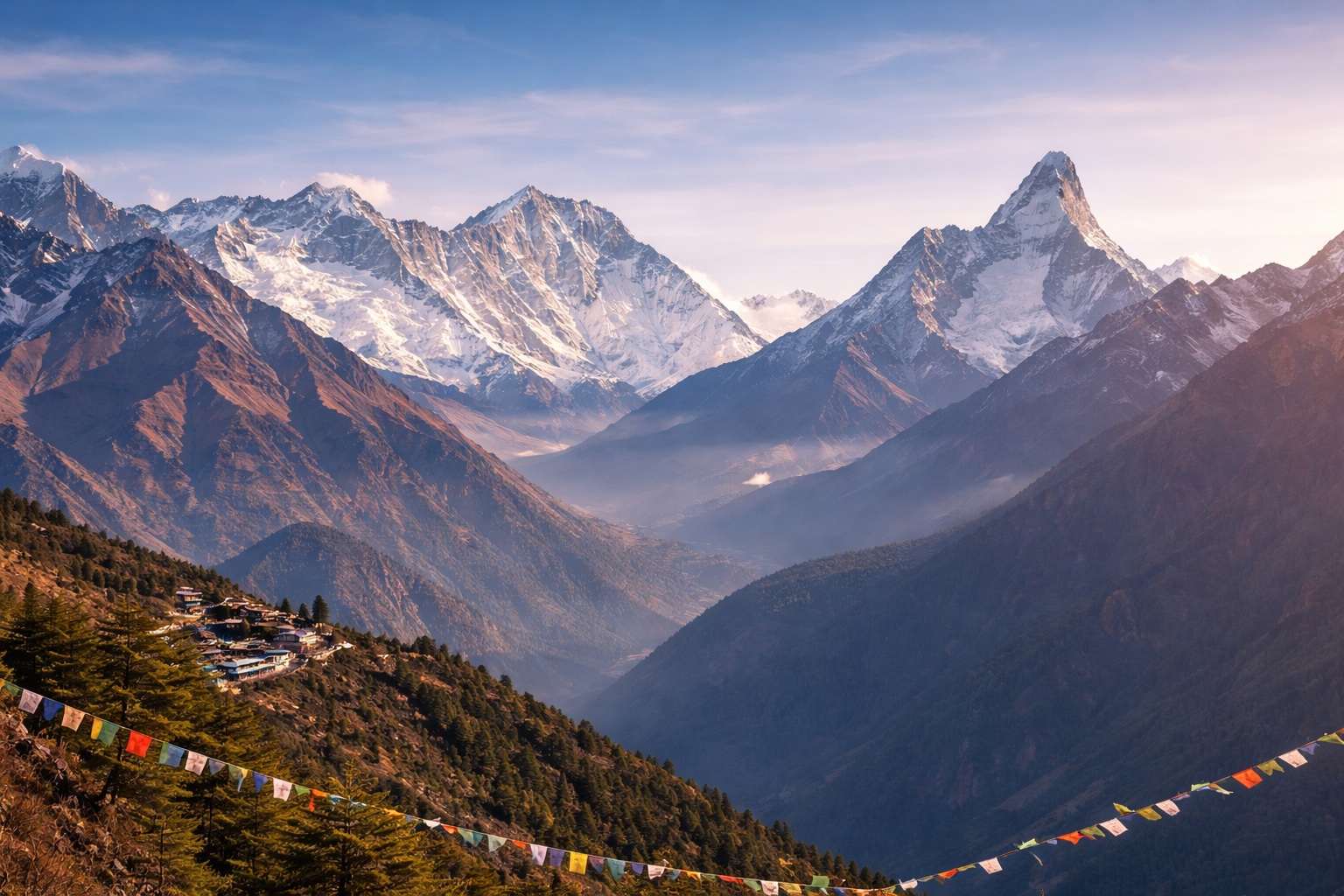
Upper Pisang is the higher of the two settlements that make up Pisang village on the Annapurna Circuit, reached via a steeper climb from the main valley trail and rewarding trekkers with a more traditional Tibetan Buddhist atmosphere and superior mountain views compared to its lower counterpart. The village's striking large monastery, perched prominently above the settlement, is one of the most photographed religious structures found along this stretch of the Annapurna Circuit.
Trekkers who choose the upper route through Pisang, rather than the more straightforward valley floor path, are typically rewarded with excellent views toward the Annapurna range and a genuinely more atmospheric village experience, its stone houses and prayer flags reflecting the strong Tibetan Buddhist heritage found throughout the upper Manang valley. The additional effort required to reach Upper Pisang is generally considered well worth it by trekkers seeking a richer cultural and scenic experience on this section of the circuit.
From Upper Pisang, the higher alternate trail continues toward Manang via Ngawal and Braga, passing through several traditional villages away from the busier valley floor route, before rejoining the standard path ahead of the essential acclimatisation stop at Manang itself. For trekkers with the time and inclination, this upper route through Upper Pisang and beyond offers one of the more rewarding variations available anywhere on the classic Annapurna Circuit itinerary.
Facilities along this stretch of trail remain simple, and trekkers should carry sufficient cash, since cards are not accepted and ATMs do not exist beyond the larger towns.
Mobile signal in the area is patchy at best, and travellers should not rely on constant connectivity once they are this far into the trail network.
Weather at this elevation can change quickly, and a flexible itinerary with a buffer day or two is generally recommended for anyone travelling through this part of the route.
Local guides with specific knowledge of this stretch of trail add real value, both for navigation and for the cultural context they can offer along the way.