
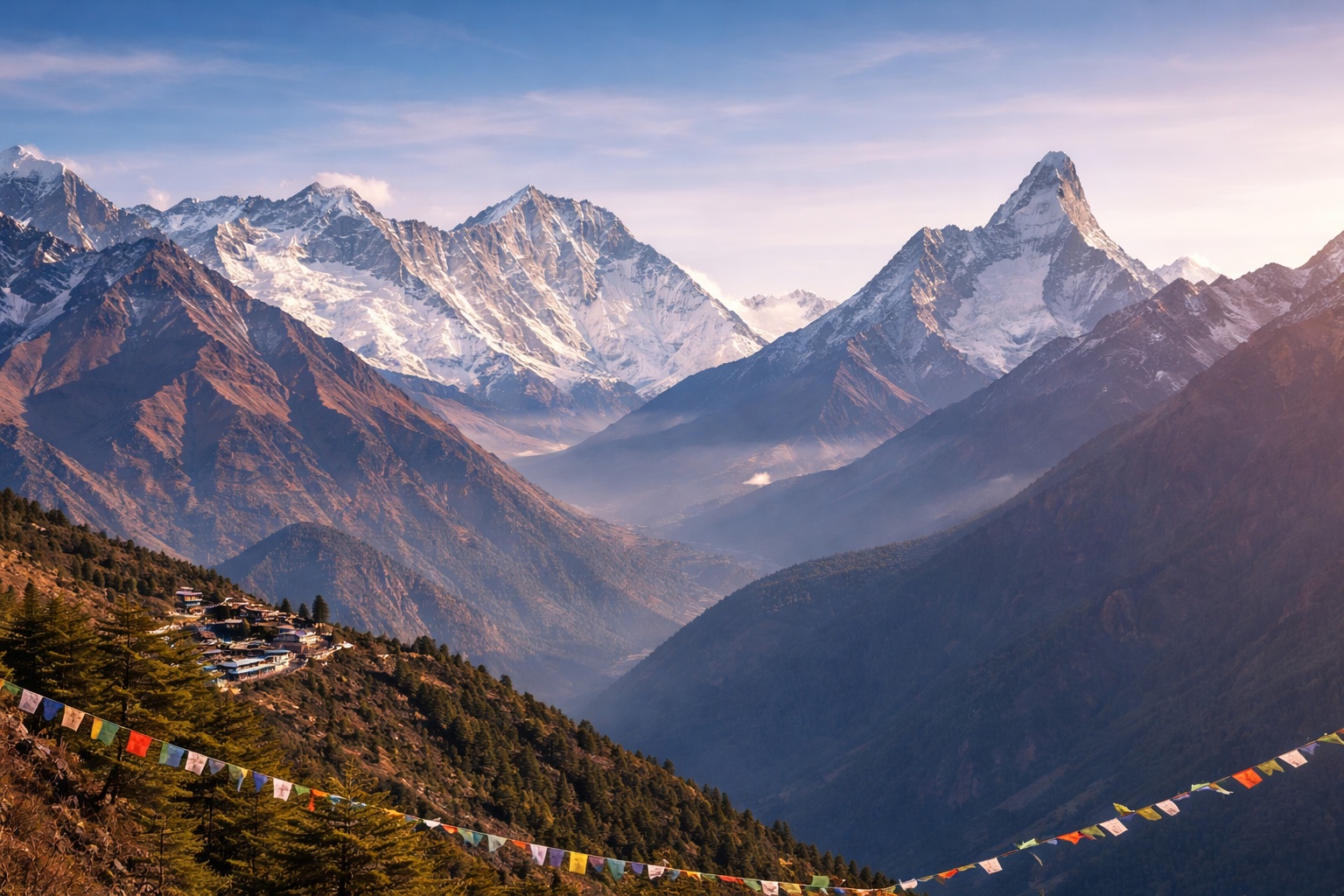
Tsho Rolpa is the largest glacial lake in Nepal, set in the remote Rolwaling valley below the peaks of Gaurishankar and neighbouring giants, and a camp near its shores serves as the destination for trekkers exploring this comparatively little-visited region east of the Kathmandu Valley. The lake's formation, fed by the retreating Trakarding Glacier, has made it a subject of significant scientific interest and concern, given the potential flood risk posed by glacial lakes of this scale throughout the Himalaya.
The trek to Tsho Rolpa passes through the dramatic, narrow Rolwaling valley, home to small Sherpa communities whose relative isolation has preserved a traditional way of life distinct from the more famous, heavily trekked Khumbu region despite considerable cultural similarity. The valley's steep walls and glacially carved terrain create a genuinely dramatic setting, and the lake itself, set against a backdrop of high peaks, ranks among the most visually striking glacial lakes found anywhere in Nepal.
For trekkers seeking a quieter, more adventurous alternative to Nepal's busier trekking regions, the Rolwaling valley and its camp near Tsho Rolpa offer a rewarding combination of dramatic scenery, genuine solitude, and scientific significance related to the ongoing effects of glacial retreat in the high Himalaya. The valley's relative remoteness, combined with its historic role as an alternative route linking toward the Khumbu via the technical Tashi Lapcha pass, makes it one of eastern Nepal's most underrated trekking destinations.
Basic but adequate teahouse facilities are typically available, offering a hot meal and a simple bed for trekkers passing through.
Facilities along this stretch of trail remain simple, and trekkers should carry sufficient cash, since cards are not accepted and ATMs do not exist beyond the larger towns.
Mobile signal in the area is patchy at best, and travellers should not rely on constant connectivity once they are this far into the trail network.
Weather at this elevation can change quickly, and a flexible itinerary with a buffer day or two is generally recommended for anyone travelling through this part of the route.