
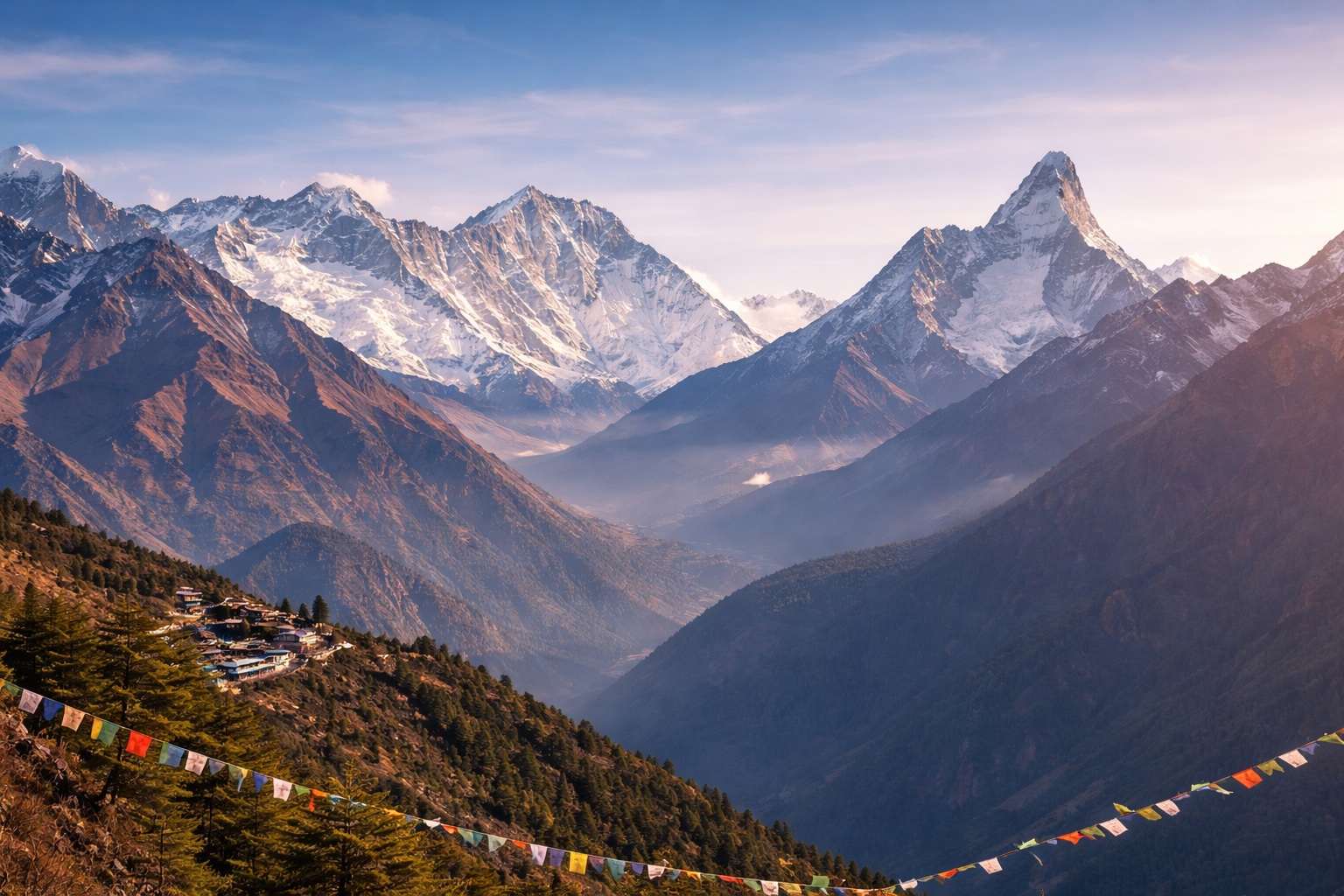
Tarap Valley is a wide, high-altitude valley in Upper Dolpo known for its distinctive Bon and Tibetan Buddhist culture, its broad open landscape a striking contrast to the narrower, steeper gorges found elsewhere in the Dolpo trekking region. Home to several villages practising a traditional agro-pastoral lifestyle centred on yak herding and barley cultivation, Tarap Valley offers one of the most complete glimpses of traditional Tibetan-influenced Himalayan life found anywhere in Nepal.
The valley's relative width and flatness, unusual for this generally rugged region, has allowed for a settled way of life that has persisted largely unchanged for generations, supported by the area's several monasteries representing both Bon and Tibetan Buddhist traditions existing side by side. This religious diversity within a single valley is a distinctive feature of Tarap, reflecting Dolpo's unique position as one of the last strongholds of the older Bon faith in the Himalaya.
For trekkers who make the demanding journey required to reach Upper Dolpo, Tarap Valley represents one of the region's most significant cultural destinations, offering days of walking through a landscape where traditional customs, dress, and religious practice remain vividly present. The valley's remoteness, requiring restricted-area permits and a considerable trekking commitment, has helped preserve a way of life increasingly rare even within Nepal's wider trekking landscape, making Tarap one of the most genuinely rewarding destinations for travellers seeking authentic cultural discovery.
Weather at this elevation can change quickly, and a flexible itinerary with a buffer day or two is generally recommended for anyone travelling through this part of the route.
Local guides with specific knowledge of this stretch of trail add real value, both for navigation and for the cultural context they can offer along the way.
A gradual, well-paced ascent through this section remains the best defence against altitude-related discomfort further along the route.
Basic but adequate teahouse facilities are typically available, offering a hot meal and a simple bed for trekkers passing through.