
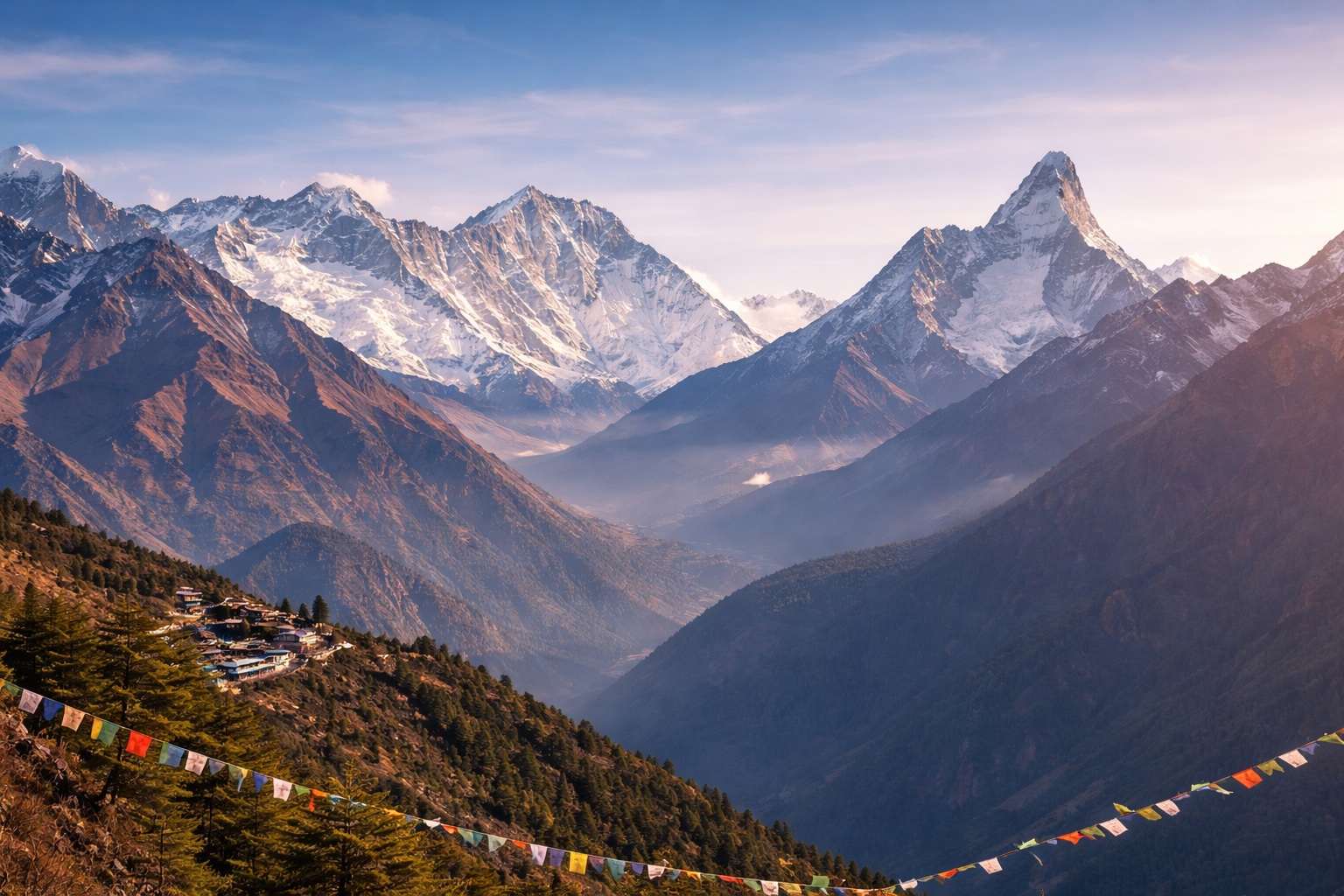
Kala Patthar, at 5,644 metres, is the most celebrated viewpoint in the Everest region, climbed almost universally before dawn to catch sunrise light striking Everest's summit pyramid, a view considered by many the finest available anywhere on the entire Everest Base Camp trek. Unlike Everest Base Camp itself, which sits too close to the mountain for a clear view of its summit, Kala Patthar offers an unobstructed panorama that includes Everest, Nuptse, and a wide sweep of surrounding Khumbu peaks.
The pre-dawn climb from Gorak Shep, the nearest overnight stop, is cold and demanding at this altitude, typically undertaken by headlamp in temperatures well below freezing, but trekkers who make the effort are rewarded with the mountain's upper slopes catching the first golden light of day, a moment widely regarded as one of the most memorable in all of Himalayan trekking. Most itineraries schedule the Kala Patthar climb either the morning after visiting Everest Base Camp or on the same acclimatisation rotation, depending on weather and energy levels.
Because of the extreme altitude and cold conditions typically encountered, proper acclimatisation earlier in the trek is essential before attempting Kala Patthar, and trekkers should be prepared for a slow, careful pace on the exposed final approach to the summit viewpoint. For nearly every trekker who reaches it, the sunrise view from Kala Patthar stands as the single most powerful visual memory of an Everest Base Camp trek, a fitting climax to one of the world's most famous trekking journeys.
A gradual, well-paced ascent through this section remains the best defence against altitude-related discomfort further along the route.
Basic but adequate teahouse facilities are typically available, offering a hot meal and a simple bed for trekkers passing through.
Facilities along this stretch of trail remain simple, and trekkers should carry sufficient cash, since cards are not accepted and ATMs do not exist beyond the larger towns.
Mobile signal in the area is patchy at best, and travellers should not rely on constant connectivity once they are this far into the trail network.