
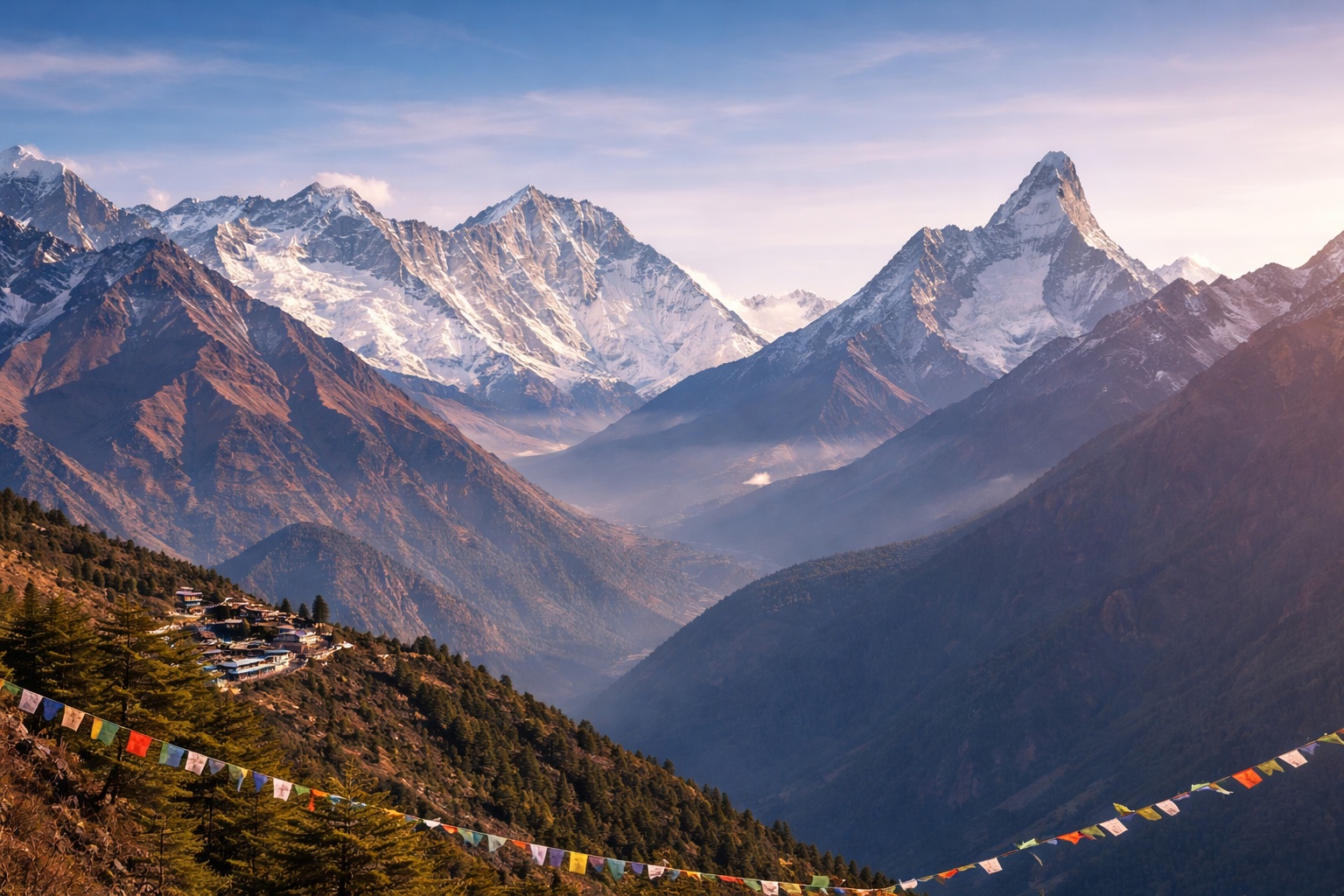
Dragnag, also spelled Thangnak, is a small settlement on the Everest Three Passes trek, used as a staging point either before crossing the Ngozumpa Glacier toward Gokyo or before attempting the technical Cho La pass that links the Everest Base Camp trail to the Gokyo valley. Sitting at a significant altitude in a stark, glacier-influenced landscape, Dragnag has a noticeably different character from the greener villages lower in the Khumbu, surrounded by moraine and the vast icy expanse of the Ngozumpa, the longest glacier in the Himalaya.
The crossing from Dragnag over the Ngozumpa Glacier to Gokyo is itself a notable feature of the more adventurous Everest itineraries, requiring careful navigation across uneven, rocky ice terrain that differs considerably from standard trail walking. Basic teahouses in Dragnag cater to the relatively modest number of trekkers who undertake this more demanding route compared to the standard out-and-back Everest Base Camp trek.
For trekkers approaching from the Cho La side, Dragnag often serves as a rest and preparation stop before the pass crossing itself, a full day of sustained climbing over sometimes icy, occasionally snow-covered terrain that represents one of the more technical sections of the full Three Passes circuit. The settlement's remote, high-altitude position underscores just how far into serious Himalayan terrain this route travels compared to the busier, more developed trail through Namche Bazaar and Tengboche used by standard Everest Base Camp itineraries.
A gradual, well-paced ascent through this section remains the best defence against altitude-related discomfort further along the route.
Basic but adequate teahouse facilities are typically available, offering a hot meal and a simple bed for trekkers passing through.
Facilities along this stretch of trail remain simple, and trekkers should carry sufficient cash, since cards are not accepted and ATMs do not exist beyond the larger towns.
A gradual, well-paced ascent through this section remains the best defence against altitude-related discomfort further along the route.
Basic but adequate teahouse facilities are typically available, offering a hot meal and a simple bed for trekkers passing through.