
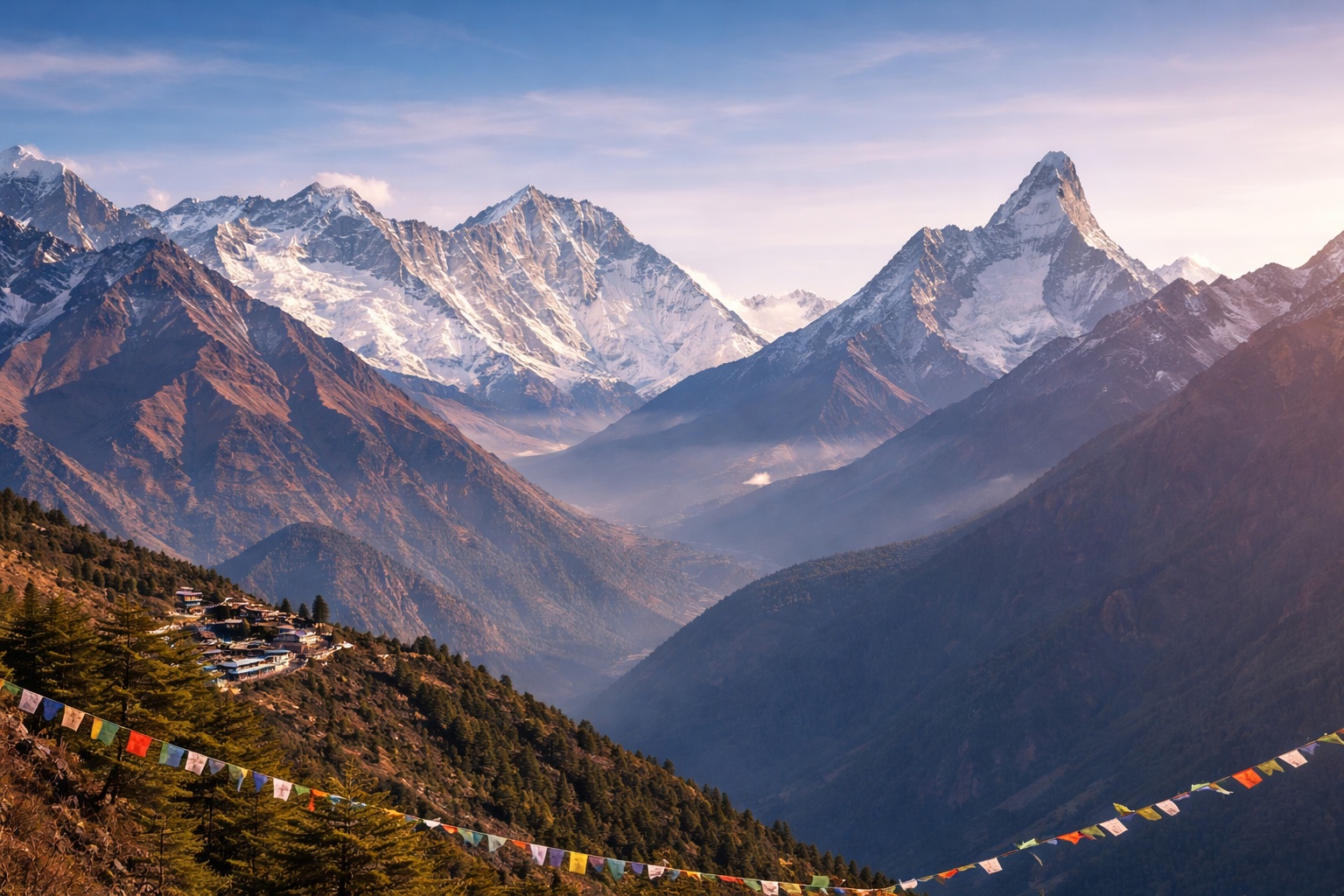
Chele is a small village on the Upper Mustang trek, set in the high desert landscape of the Kali Gandaki valley beyond Kagbeni, marking one of the first proper stops after trekkers cross into the restricted region and leave the greener, more populated lower valley behind. The landscape here shifts abruptly: the lush terraced fields and pine forest common further south give way to wind-eroded cliffs, ochre and red rock formations, and a stark, high-altitude aridity that defines the rest of the Upper Mustang trek.
Chele sits at a significant elevation gain above Kagbeni, and the climb to reach it is one of the more demanding single stages of the standard Upper Mustang itinerary, following a trail carved into the canyon walls above the Kali Gandaki riverbed. The village itself is small, its stone and mud-brick houses built in the same style found throughout the Mustang region, closely resembling the architecture of the Tibetan plateau just across the nearby border, a reflection of Mustang's deep cultural and historical ties to Tibet rather than to lowland Nepal.
Wind is a constant feature of this part of Mustang, building through the morning and becoming strong enough by early afternoon that trekkers are generally advised to complete each day's walking before the worst of it arrives. Chele's teahouses, though basic, offer a welcome respite from this wind and a first genuine taste of the isolation and stark beauty that make Upper Mustang such a distinctive trekking destination, a high desert kingdom that feels closer to the Tibetan plateau than to any other part of Nepal.
Layered clothing suited to sudden temperature swings is essential through this stretch of the trek, since mornings can be crisp while midday sun on the exposed rock can feel surprisingly intense despite the altitude.
A short rest here before continuing to Samar and Syangboche is common practice among well-paced itineraries.