
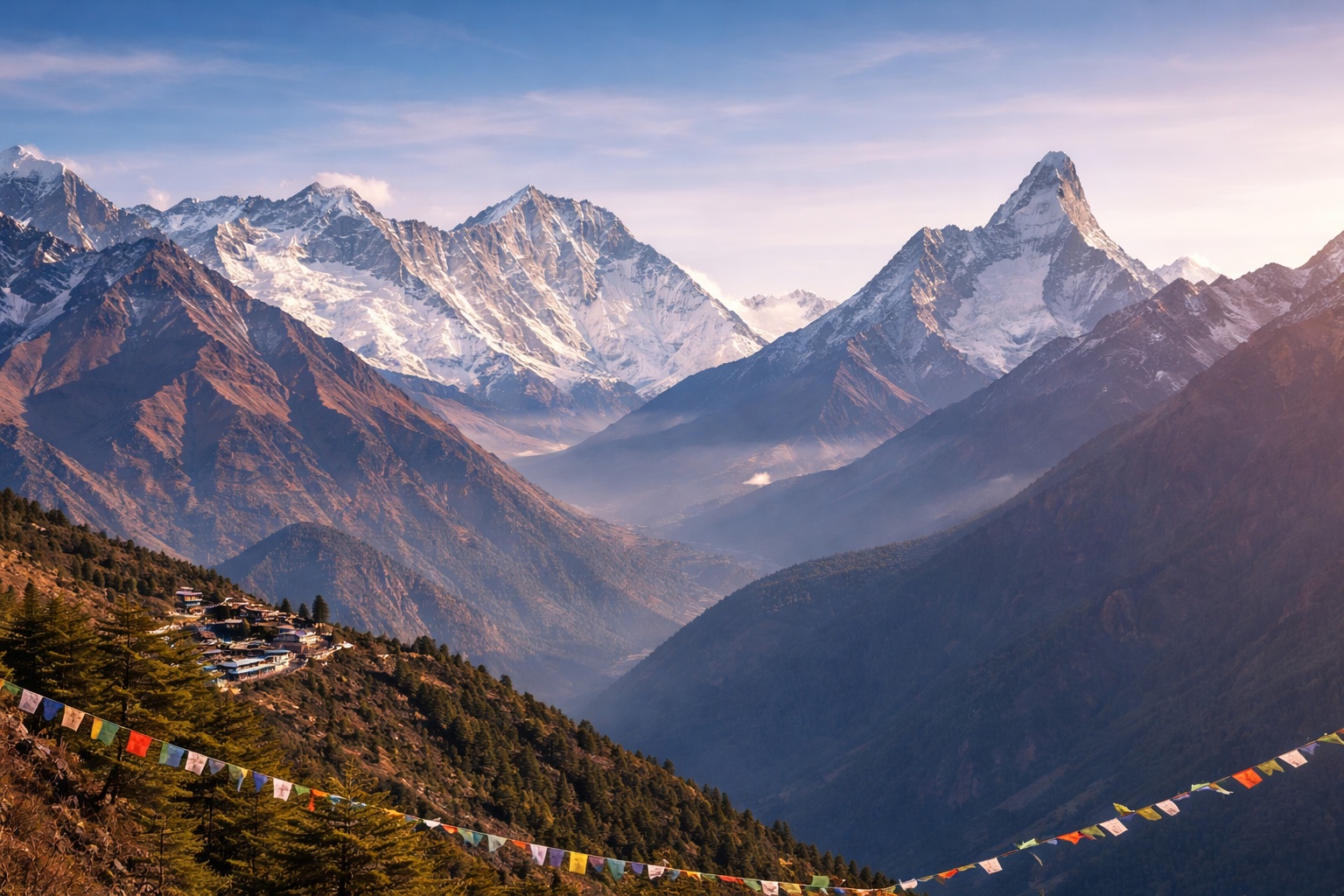
Beding is the largest Sherpa settlement in the remote Rolwaling valley, a high, glacier-carved gorge tucked between the Everest and Langtang regions that remains one of Nepal's least visited major trekking corridors. Sitting at a substantial altitude with views up toward the peaks that separate Rolwaling from the Khumbu, Beding has long served as the cultural and logistical anchor for this isolated community, home to a monastery, a school, and a population whose Sherpa Buddhist traditions closely mirror those of the more famous Khumbu villages, despite Rolwaling's far lower visitor numbers.
The village's relative isolation, reached only after several days of walking from the roadhead at Charikot with no possibility of a shortcut by air, has preserved a way of life that has changed comparatively little over recent decades. Stone houses, terraced barley fields clinging to the steep valley sides, and prayer flags strung between chortens give Beding a lived-in, working-village character rather than the more tourism-oriented feel of busier trekking hubs elsewhere in Nepal.
For trekkers, Beding is the last major settlement before the trail continues to the smaller hamlet of Na and then into the high, technical terrain leading toward the demanding Tashi Lapcha Pass, one of the most difficult crossings on any standard Nepal trekking route. This makes Beding an essential acclimatisation stop: the jump in altitude and difficulty beyond this point is considerable, and most itineraries build in extra time here to let trekkers adjust properly before the technical glacier travel required to cross into the Khumbu on the far side of the pass. The valley's dramatic scenery, framed by peaks rising steeply on both sides, rewards the extra effort required to reach it.
Yak herding remains an important part of the local economy in Beding, and trekkers passing through will often see animals grazing on the steep hillsides above the village, a reminder of how central pastoral farming still is to daily life in this remote corner of Nepal.